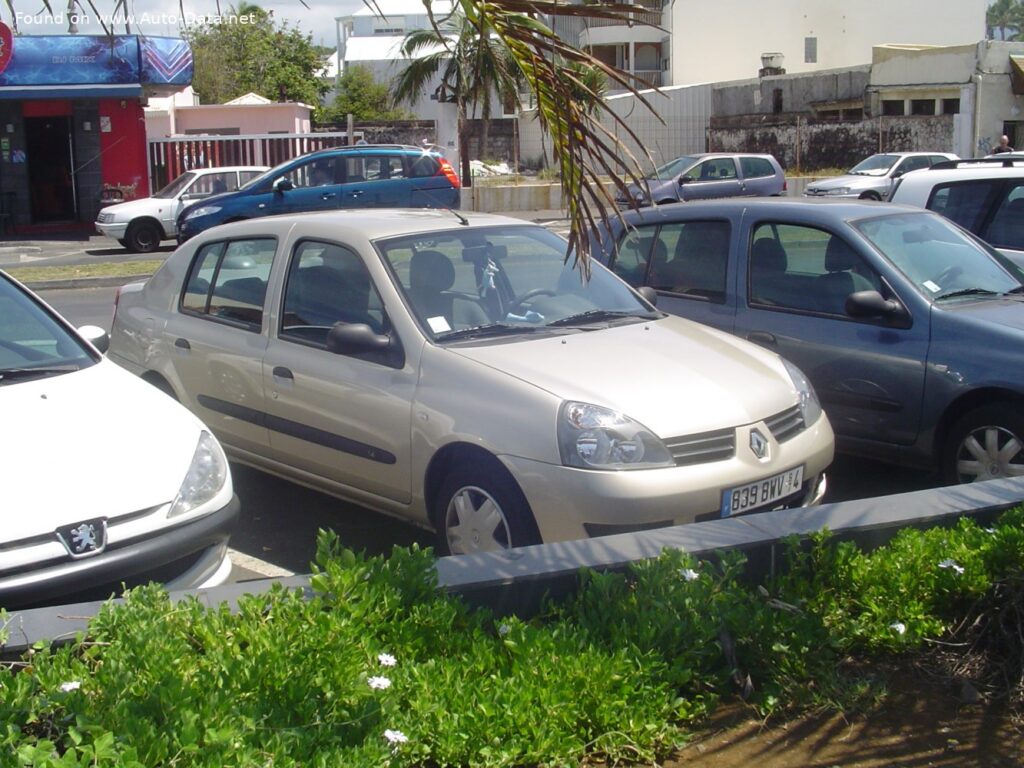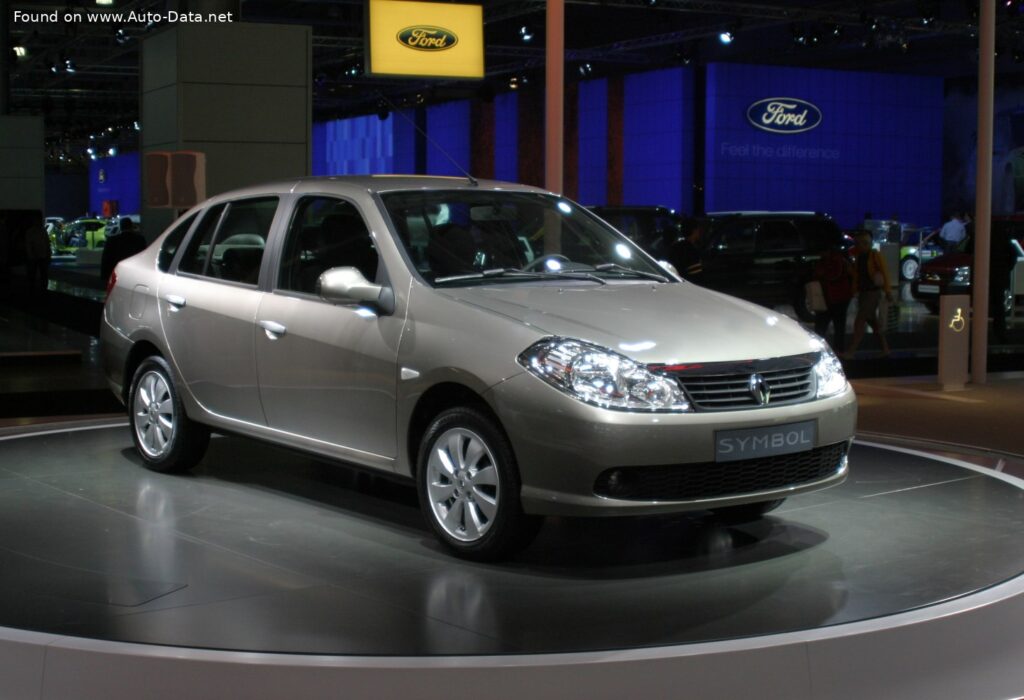
The Renault Symbol II, specifically the 1.2 16V (75 Hp) variant produced between 2008 and 2012, represents a significant chapter in Renault’s strategy for emerging markets and regions where compact, affordable sedans were, and continue to be, highly sought after. While largely unknown in the North American market, the Symbol, also marketed as the Thalia in some regions, carved out a niche as a practical, economical, and robust family car. This second generation of the Symbol built upon the success of its predecessor, offering improved aesthetics, enhanced features, and a more refined driving experience, all while maintaining its core appeal as a value-oriented vehicle. Positioned as a B-segment sedan, it provided a compelling package of space, efficiency, and reliability, making it a popular choice for budget-conscious buyers across Eastern Europe, the Middle East, North Africa, and parts of South America.
The Renault Symbol II: A Global Compact Sedan
The Renault Symbol’s lineage traces back to the Renault Clio, with the first generation being essentially a sedan derivative of the popular Clio hatchback. The Symbol II, launched in 2008, marked a more distinct evolution, moving away from a direct visual link to the Clio III, despite sharing underlying platforms and components. This generation aimed for a more sophisticated and independent identity, reflecting Renault’s understanding of the specific demands of its target markets. In these regions, the sedan body style is often preferred over hatchbacks due to perceptions of prestige, security, and practicality, particularly concerning trunk space. The Symbol II was designed to meet these expectations head-on, offering a conventional three-box sedan silhouette that exuded a sense of understated elegance and functionality.
Its role in its primary markets was crucial. It served as an accessible entry point into the sedan segment for many families, often as a step up from smaller city cars or older, less sophisticated vehicles. Renault ensured that the Symbol II was engineered to withstand varying road conditions and climates, a testament to its robust construction and focus on durability. This made it a reliable workhorse for everyday commuting, family duties, and even light commercial use, cementing its reputation as a dependable and low-maintenance vehicle. The discontinuation in 2012 paved the way for newer models, but the Symbol II left a lasting impression as a well-rounded and strategically important model for Renault’s global footprint.
Powertrain and Performance: The Renault Symbol II 1.2 16V (75 Hp)
Engine Architecture and Output
At the heart of the Renault Symbol II 1.2 16V (75 Hp) lies a compact yet capable internal combustion engine, designated by the model code D4F 728. This naturally aspirated, inline four-cylinder gasoline engine boasts a displacement of 1149 cubic centimeters (70.12 cu. in.), making it a modest but efficient powerplant. The engine’s architecture features a Double Overhead Camshaft (DOHC) valvetrain with four valves per cylinder, totaling 16 valves. This multi-valve setup is crucial for optimizing airflow into and out of the combustion chambers, contributing to better engine breathing and, consequently, improved power delivery and fuel efficiency compared to simpler two-valve-per-cylinder designs. With a cylinder bore of 69 mm (2.72 in.) and a piston stroke of 76.8 mm (3.02 in.), the engine employs an oversquare design, which typically favors higher revving characteristics and power output.
The D4F 728 engine generates a respectable 75 horsepower at 5500 revolutions per minute (rpm). While not designed for outright speed, this power output is perfectly adequate for the Symbol II’s intended purpose as a practical urban and intercity commuter. Torque is equally important for everyday drivability, and this engine delivers 105 Newton-meters (77.44 lb.-ft.) at 4250 rpm. This torque figure, delivered at a relatively accessible engine speed, ensures that the Symbol II feels responsive in city traffic and capable of maintaining highway speeds without excessive effort. Fuel is delivered via a multi-port manifold injection system, a proven and reliable method that ensures precise fuel atomization and efficient combustion. The engine’s oil capacity is 4 liters (4.23 US quarts), and it requires 5 liters (5.28 US quarts) of coolant, indicating a well-engineered thermal management system for durability.
Driving Dynamics and Efficiency
The performance metrics of the Renault Symbol II 1.2 16V (75 Hp) underscore its focus on economy and ease of use. Acceleration from 0 to 60 mph is achieved in a measured 12.4 seconds, which is competitive for its class and engine size, especially considering its role in markets where rapid acceleration is less of a priority than reliability and cost-effectiveness. The vehicle’s maximum speed is 103.77 mph (167 km/h), allowing for comfortable cruising on highways. Power is sent to the front wheels via a 5-speed manual transmission, a choice that emphasizes driver engagement and allows for optimal gear selection to maximize either efficiency or performance, depending on driving conditions. The front-wheel-drive architecture is typical for compact cars, providing predictable handling and efficient packaging.
Fuel economy is a strong suit for the Symbol II 1.2 16V. It achieves an impressive combined fuel consumption of 39.9 US mpg (5.9 l/100 km). In urban driving, it delivers 30.9 US mpg (7.6 l/100 km), while extra-urban driving sees a remarkable 49 US mpg (4.8 l/100 km). These figures highlight the engine’s efficiency, making it an economical choice for daily commuting and longer journeys. The vehicle also meets the Euro 5 emission standard, reflecting Renault’s commitment to environmental considerations even in its more budget-friendly offerings. With a curb weight of 1992.98 lbs (904 kg), the Symbol II boasts a weight-to-power ratio of 12.1 kg/Hp (83 Hp/tonne) and a weight-to-torque ratio of 8.6 kg/Nm (116.2 Nm/tonne), further illustrating its lightweight design and efficient power utilization for its segment.
Design, Features, and Practicality
Exterior and Interior Design
The design of the Renault Symbol II is a testament to functional aesthetics. As a 4-door sedan with seating for five, its proportions are well-balanced, emphasizing interior and trunk space. With a length of 167.72 inches (4260 mm), a width of 64.57 inches (1640 mm), and a height of 56.3 inches (1430 mm), the Symbol II maintains a compact footprint, making it maneuverable in crowded urban environments while still offering substantial interior volume. The wheelbase of 97.24 inches (2470 mm) contributes to a stable ride and maximizes passenger comfort within its class. The exterior styling is clean and uncluttered, with a focus on practicality rather than ostentation. The front fascia features Renault’s corporate grille design of the era, flanked by simple yet effective headlamps. The overall silhouette is classic sedan, ensuring broad appeal in its target markets.
Inside, the Symbol II prioritizes ergonomics and user-friendliness. While materials may not be premium, they are chosen for durability and ease of cleaning, essential for a family car in diverse conditions. The cabin is designed to comfortably accommodate five occupants, with particular attention paid to rear-seat legroom and headroom, which are often critical factors for buyers in its segment. One of the standout features of the Symbol II is its generous trunk space, offering a minimum of 506 liters (17.87 cu. ft.). This substantial cargo capacity is a major selling point, allowing families to transport luggage, groceries, or other goods with ease, reinforcing its utility as a versatile family vehicle. The fuel tank capacity of 13.21 US gallons (50 liters) provides a good cruising range, complementing its fuel-efficient engine.
Chassis, Suspension, and Safety
The driving dynamics of the Renault Symbol II are characterized by a suspension setup designed for comfort and durability over varying road surfaces. The front suspension employs an independent McPherson strut system, a widely used and effective design that provides a good balance of ride comfort and handling stability. At the rear, an elastic beam suspension is utilized, a robust and space-efficient solution that is well-suited to the demands of a compact sedan and contributes to the ample trunk volume. This combination ensures that the Symbol II can absorb road imperfections effectively, providing a relatively smooth ride for its occupants. The minimum turning circle of 35.1 feet (10.7 meters) highlights its agility in urban settings, making parking and maneuvering in tight spaces less challenging.
For braking, the Symbol II is equipped with ventilated discs at the front, offering effective stopping power and heat dissipation, which is crucial for safety. The rear wheels utilize drum brakes, a common and cost-effective solution for compact vehicles that provides reliable performance. An essential safety feature for its era, the Anti-lock Braking System (ABS) comes standard, enhancing driver control during emergency braking situations by preventing wheel lock-up. The steering system is a rack and pinion type, complemented by electric power steering, which provides light and effortless steering at low speeds, aiding maneuverability, and a more weighted feel at higher speeds for stability. The vehicle rides on 175/65 R14T tires mounted on 5.5J x 14 wheel rims, a practical choice that balances ride comfort, grip, and replacement cost, aligning with the Symbol II’s overall value proposition.
Technical Specifications
| Brand | Renault |
| Model | Symbol |
| Generation | Symbol II |
| Type (Engine) | 1.2 16V (75 Hp) |
| Start of production | 2008 year |
| End of production | 2012 year |
| Powertrain Architecture | Internal Combustion engine |
| Body type | Sedan |
| Seats | 5 |
| Doors | 4 |
| Fuel consumption (economy) – urban | 7.6 l/100 km (30.9 US mpg) |
| Fuel consumption (economy) – extra urban | 4.8 l/100 km (49 US mpg) |
| Fuel consumption (economy) – combined | 5.9 l/100 km (39.9 US mpg) |
| Fuel Type | Petrol (Gasoline) |
| Acceleration 0 – 100 km/h | 13 sec |
| Acceleration 0 – 62 mph | 13 sec |
| Acceleration 0 – 60 mph (Calculated by Auto-Data.net) | 12.4 sec |
| Maximum speed | 167 km/h (103.77 mph) |
| Emission standard | Euro 5 |
| Weight-to-power ratio | 12.1 kg/Hp (83 Hp/tonne) |
| Weight-to-torque ratio | 8.6 kg/Nm (116.2 Nm/tonne) |
| Power | 75 Hp @ 5500 rpm. |
| Power per litre | 65.3 Hp/l |
| Torque | 105 Nm @ 4250 rpm (77.44 lb.-ft. @ 4250 rpm) |
| Engine Model/Code | D4F 728 |
| Engine displacement | 1149 cm3 (70.12 cu. in.) |
| Number of cylinders | 4 |
| Engine configuration | Inline |
| Cylinder Bore | 69 mm (2.72 in.) |
| Piston Stroke | 76.8 mm (3.02 in.) |
| Number of valves per cylinder | 4 |
| Fuel injection system | Multi-port manifold injection |
| Engine aspiration | Naturally aspirated engine |
| Valvetrain | DOHC |
| Engine oil capacity | 4 l (4.23 US qt) |
| Coolant | 5 l (5.28 US qt) |
| Kerb Weight | 904 kg (1992.98 lbs) |
| Max. weight | 1430 kg (3152.61 lbs) |
| Max load | 526 kg (1159.63 lbs) |
| Trunk (boot) space – minimum | 506 l (17.87 cu. ft.) |
| Fuel tank capacity | 50 l (13.21 US gal) |
| Length | 4260 mm (167.72 in.) |
| Width | 1640 mm (64.57 in.) |
| Height | 1430 mm (56.3 in.) |
| Wheelbase | 2470 mm (97.24 in.) |
| Minimum turning circle (turning diameter) | 10.7 m (35.1 ft.) |
| Drivetrain Architecture | The Internal combustion engine (ICE) drives the front wheels of the vehicle. |
| Drive wheel | Front wheel drive |
| Number of gears and type of gearbox | 5 gears, manual transmission |
| Front suspension | Independent type McPherson |
| Rear suspension | Elastic beam |
| Front brakes | Ventilated discs |
| Rear brakes | Drum |
| Assisting systems | ABS (Anti-lock braking system) |
| Steering type | Steering rack and pinion |
| Power steering | Electric Steering |
| Tires size | 175/65 R14T |
| Wheel rims size | 5.5J x 14 |