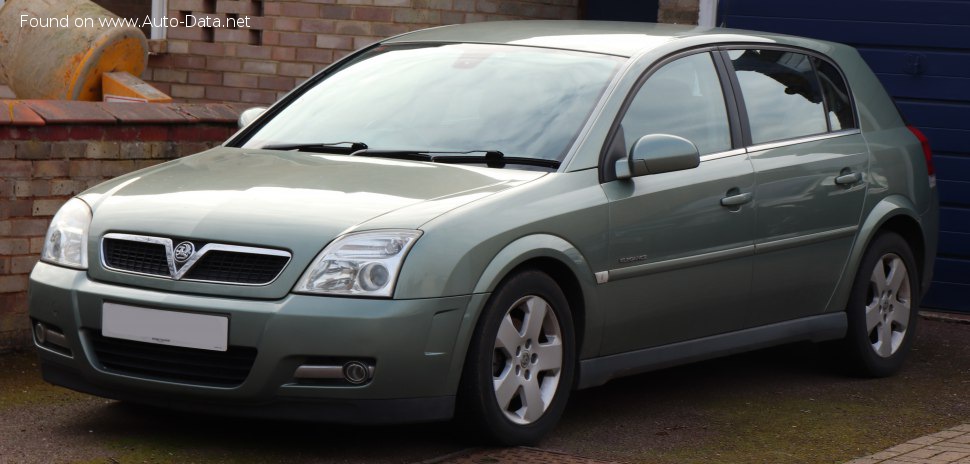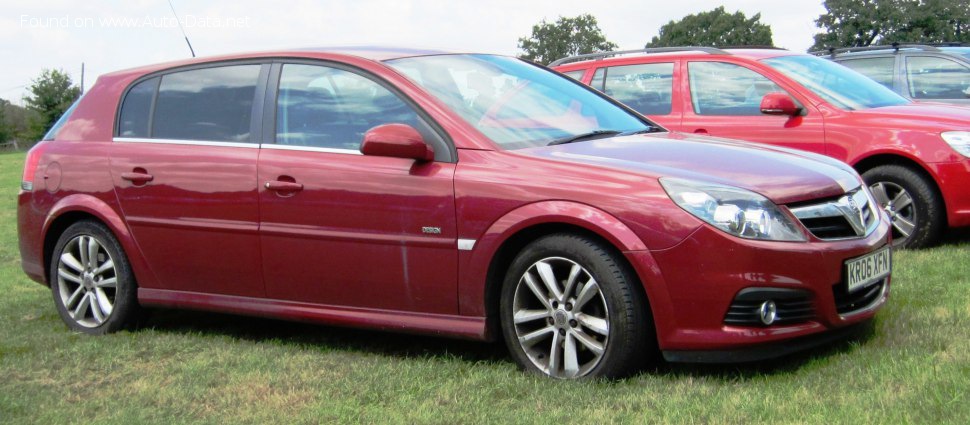
The Vauxhall Signum, particularly the facelifted generation launched in 2005, represented a distinctive and somewhat experimental venture by General Motors’ British subsidiary into the premium-midsize segment. Positioned above the conventional Vectra, the Signum was designed to offer a unique blend of executive comfort, enhanced versatility, and a more upmarket appeal within the European market, where it was primarily sold. Unlike its more traditional sedan and wagon counterparts, the Signum adopted a large, four-door hatchback body type, emphasizing passenger space and flexible seating configurations over outright cargo volume or conventional executive sedan aesthetics. This specific variant, equipped with the 1.8-liter (122 horsepower) engine, aimed to provide a balance of adequate performance and reasonable efficiency for the discerning European buyer during its production run from 2005 to 2008.
The Vauxhall Signum: A European Executive Hatchback
The Vauxhall Signum’s existence was predicated on a unique market proposition: to bridge the gap between traditional D-segment family cars and more premium, executive-level vehicles. Launched initially in 2003, the Signum received a significant facelift in 2005, which refined its exterior styling, updated its interior, and introduced a range of powertrain enhancements. This refreshed model sought to address some of the initial criticisms regarding its styling and market positioning, aiming for a more cohesive and sophisticated aesthetic. In the UK, where Vauxhall is a prominent brand, the Signum was marketed as a practical yet luxurious alternative for company car drivers and private buyers seeking something beyond the conventional sedan or estate car.
Its design philosophy revolved around maximizing interior space and passenger comfort, particularly for those in the rear seats. The “Hatchback” body type, while offering practical access to the cargo area, was complemented by a distinctive four-seat layout, which was unusual for a vehicle of its class. This configuration suggested a focus on individual passenger comfort, often associated with higher-end executive transport, rather than simply maximizing seating capacity. The Signum was built on a stretched version of GM’s Epsilon platform, shared with the Vectra, providing a longer wheelbase that directly contributed to its generous rear legroom and stable ride quality. For the 2005 facelift, subtle changes to the grille, headlights, and bumpers gave the Signum a fresher, more contemporary appearance, aligning it with Vauxhall’s evolving design language of the mid-2000s.
Powertrain and Performance of the Vauxhall Signum 1.8 (122 Hp)
Engine Specifications and Dynamics
At the heart of this particular Vauxhall Signum variant lies the Z18XE, a naturally aspirated 1.8-liter (1796 cubic centimeters or 109.6 cubic inches) inline four-cylinder engine. This powerplant delivered a respectable 122 horsepower at 6000 revolutions per minute, making it a capable engine for daily driving and highway cruising. Its power per liter stood at 67.9 horsepower per liter, a solid figure for a naturally aspirated engine of its era. Torque output was rated at 167 Newton-meters, which translates to approximately 123.17 pound-feet of torque, peaking at a relatively accessible 3800 rpm. This low-end to mid-range torque delivery ensured decent responsiveness in urban environments and provided sufficient pulling power for overtaking maneuvers.
The engine featured a DOHC (Double Overhead Camshaft) valvetrain with four valves per cylinder, a common and efficient setup that allowed for better airflow and combustion, contributing to both power output and fuel efficiency. Fuel delivery was managed by a multi-port manifold injection system, a reliable and well-proven technology at the time. With a compression ratio of 10.5:1, the engine was designed to run on petrol (gasoline). Power was transmitted to the front wheels via a five-speed manual transmission, offering direct engagement and control over the engine’s output. The vehicle’s kerb weight of 3295.91 pounds (1495 kg) resulted in a weight-to-power ratio of 12.3 kg/Hp (81.6 Hp/tonne) and a weight-to-torque ratio of 9 kg/Nm (111.7 Nm/tonne), indicating a balanced performance profile rather than outright sportiness. The Signum 1.8 (122 Hp) was capable of reaching a maximum speed of 122.41 miles per hour (197 km/h), making it suitable for the Autobahns and motorways of Europe.
Fuel Economy and Environmental Considerations
Fuel efficiency was a key consideration for European buyers, and the Signum 1.8 aimed to deliver competitive figures for its class. The combined fuel consumption was rated at 7.9 liters per 100 kilometers, which translates to an estimated 29.8 US miles per gallon (35.8 UK mpg). For urban driving, the consumption increased to 11 liters per 100 kilometers (21.4 US mpg), reflecting the stop-and-go nature of city traffic. On extra-urban routes, the Signum was more frugal, achieving 6.1 liters per 100 kilometers (38.6 US mpg). These figures were respectable for a vehicle of its size and power output in the mid-2000s. The CO2 emissions stood at 190 grams per kilometer, placing it within a typical range for a gasoline engine of its displacement at the time, indicating its compliance with contemporary European emission standards.
The engine oil capacity was 5.18 US quarts (4.9 liters), and the cooling system required 5.81 US quarts (5.5 liters) of coolant, standard capacities for a four-cylinder engine of this size. The fuel tank capacity of 15.85 US gallons (60 liters) provided a decent cruising range, reducing the frequency of fuel stops on longer journeys.
Design, Features, and Ergonomics
Exterior and Interior Design Philosophy
The 2005 facelift of the Vauxhall Signum refined its exterior, giving it a more assertive and contemporary stance. Its overall length measured 183.11 inches (4651 mm), with a width of 70.79 inches (1798 mm) and a height of 57.72 inches (1466 mm). Including mirrors, the width extended to 80.16 inches (2036 mm). The substantial wheelbase of 111.42 inches (2830 mm) was a critical factor in the Signum’s design, directly contributing to its expansive interior, particularly the rear legroom that was a hallmark of its design. The minimum turning circle of 39.11 feet (11.92 meters) was quite reasonable for a car of its length, aiding maneuverability in tighter urban spaces.
Inside, the focus on the four-seat configuration allowed for greater individual comfort. While the data does not explicitly detail “FlexSpace,” the Signum was known for its innovative rear seating, which could slide, recline, and be folded in various ways, offering flexibility between passenger space and cargo capacity. The quality of materials and fit and finish were generally considered to be a step above the Vectra, aligning with its premium aspirations. The maximum roof load capacity was 220.46 pounds (100 kg), allowing for additional luggage solutions via roof racks.
Chassis, Safety, and Convenience
The Signum’s chassis was engineered to provide a comfortable and stable ride, crucial for its executive positioning. The front suspension utilized an independent McPherson strut setup with coil springs and an anti-roll bar, complemented by wishbones, a tried-and-tested configuration for balancing ride comfort and handling precision. The rear suspension employed a torsion beam, which is a more compact and cost-effective solution, yet capable of delivering a compliant ride, especially when tuned for comfort. This combination aimed to absorb road imperfections effectively while maintaining composure during cornering.
Braking performance was handled by ventilated disc brakes at the front and solid disc brakes at the rear, providing strong and consistent stopping power. An Anti-lock Braking System (ABS) was a standard assisting system, enhancing safety by preventing wheel lock-up during hard braking and allowing the driver to maintain steering control. The steering system was a hydraulic rack and pinion setup, offering direct feedback and a natural steering feel, characteristic of cars from this era before the widespread adoption of electric power steering. The vehicle rode on 215/55 R16 tires mounted on 6.5J x 16-inch wheel rims, a common size that offered a good balance of grip, comfort, and durability for its class. Overall, the Vauxhall Signum (facelift 2005) 1.8 (122 Hp) presented a well-rounded package for the European market, blending unique design, practical features, and a comfortable driving experience.
Technical Specifications
| Brand | Vauxhall |
| Model | Signum |
| Generation | Signum (facelift 2005) |
| Type (Engine) | 1.8 (122 Hp) |
| Start of production | 2005 year |
| End of production | 2008 year |
| Powertrain Architecture | Internal Combustion engine |
| Body type | Hatchback |
| Seats | 4 |
| Doors | 4 |
| Fuel consumption (economy) – urban | 11 l/100 km (21.4 US mpg, 25.7 UK mpg) |
| Fuel consumption (economy) – extra urban | 6.1 l/100 km (38.6 US mpg, 46.3 UK mpg) |
| Fuel consumption (economy) – combined | 7.9 l/100 km (29.8 US mpg, 35.8 UK mpg) |
| CO2 emissions | 190 g/km |
| Fuel Type | Petrol (Gasoline) |
| Maximum speed | 197 km/h (122.41 mph) |
| Weight-to-power ratio | 12.3 kg/Hp (81.6 Hp/tonne) |
| Weight-to-torque ratio | 9 kg/Nm (111.7 Nm/tonne) |
| Power | 122 Hp @ 6000 rpm |
| Power per litre | 67.9 Hp/l |
| Torque | 167 Nm @ 3800 rpm (123.17 lb.-ft. @ 3800 rpm) |
| Engine layout | Front, Transverse |
| Engine Model/Code | Z18XE |
| Engine displacement | 1796 cm3 (109.6 cu. in.) |
| Number of cylinders | 4 |
| Engine configuration | Inline |
| Cylinder Bore | 80.5 mm (3.17 in.) |
| Piston Stroke | 88.2 mm (3.47 in.) |
| Compression ratio | 10.5:1 |
| Number of valves per cylinder | 4 |
| Fuel injection system | Multi-port manifold injection |
| Engine aspiration | Naturally aspirated engine |
| Valvetrain | DOHC |
| Engine oil capacity | 4.9 l (5.18 US qt | 4.31 UK qt) |
| Coolant | 5.5 l (5.81 US qt | 4.84 UK qt) |
| Kerb Weight | 1495 kg (3295.91 lbs) |
| Fuel tank capacity | 60 l (15.85 US gal | 13.2 UK gal) |
| Max. roof load | 100 kg (220.46 lbs) |
| Length | 4651 mm (183.11 in.) |
| Width | 1798 mm (70.79 in.) |
| Width including mirrors | 2036 mm (80.16 in.) |
| Height | 1466 mm (57.72 in.) |
| Wheelbase | 2830 mm (111.42 in.) |
| Minimum turning circle (turning diameter) | 11.92 m (39.11 ft.) |
| Drivetrain Architecture | The Internal combustion engine (ICE) drives the front wheels of the vehicle. |
| Drive wheel | Front wheel drive |
| Number of gears and type of gearbox | 5 gears, manual transmission |
| Front suspension | Independent, type McPherson with coil spring and anti-roll bar, Wishbone |
| Rear suspension | Torsion |
| Front brakes | Ventilated discs |
| Rear brakes | Disc |
| Assisting systems | ABS (Anti-lock braking system) |
| Steering type | Steering rack and pinion |
| Power steering | Hydraulic Steering |
| Tires size | 215/55 R16 |
| Wheel rims size | 6.5J x 16 |