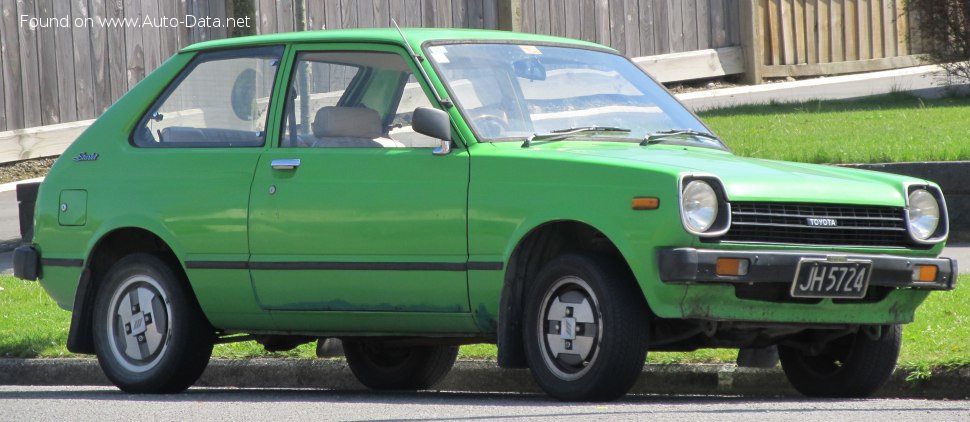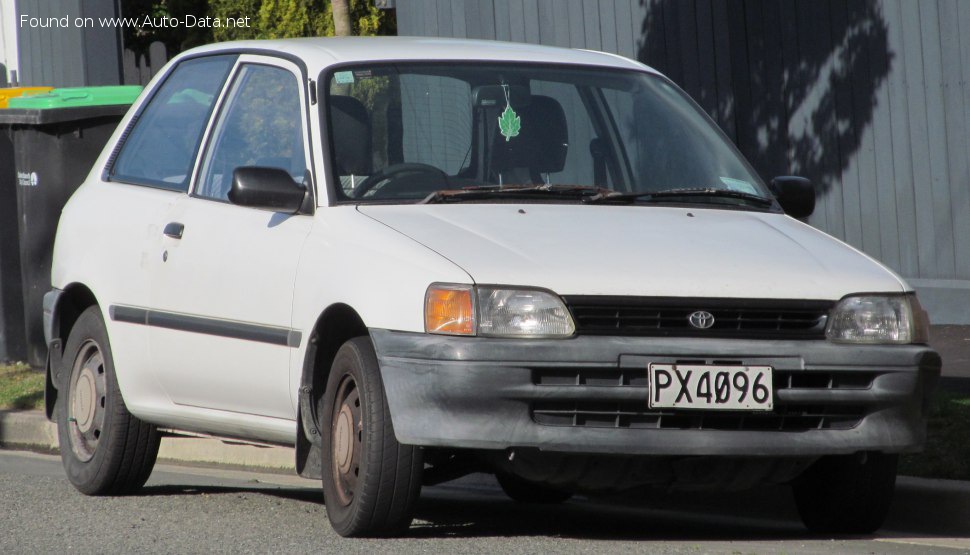
The Toyota Starlet IV 1.3 16V (82 Hp) Automatic, produced from 1989 to 1996, represents a significant chapter in the history of compact, economical automobiles. This fourth-generation Starlet, known internally as the P80 series, cemented its reputation as a reliable and practical choice in various international markets, particularly in Europe and Asia, where small, efficient hatchbacks were highly prized. Though never officially sold in the United States, its influence on the global automotive landscape as a robust and accessible daily driver is undeniable. The Starlet IV was engineered with a clear focus on affordability, fuel efficiency, and Toyota’s hallmark dependability, making it a popular option for urban commuters and first-time car buyers. Available in both three-door and five-door hatchback configurations, it offered a versatile platform that catered to diverse consumer needs, from personal transport to small family duties. This particular variant, equipped with a 1.3-liter 16-valve engine and an automatic transmission, epitomized the blend of convenience and economy that defined the Starlet’s appeal during its production run, navigating the late 20th-century automotive landscape with a no-frills, high-value proposition.
Engine and Performance of the Toyota Starlet IV 1.3 16V (82 Hp) Automatic
At the heart of the Toyota Starlet IV 1.3 16V (82 Hp) Automatic lay a meticulously engineered powertrain designed for efficiency and durability. The vehicle featured a 1.3-liter (1331 cm³, or 81.22 cu. in.) inline four-cylinder engine, a configuration celebrated for its inherent balance and smooth operation. This naturally aspirated unit boasted a 16-valve cylinder head, a relatively advanced feature for a compact car of its era, allowing for improved airflow and combustion efficiency compared to traditional 8-valve designs. With a compression ratio of 9.6:1, the engine delivered a respectable 82 horsepower at a peaky 6400 rpm, translating to a power per liter output of 61.6 horsepower per liter. Torque figures stood at 110 Nm (81.13 lb.-ft.) delivered at a more accessible 3600 rpm, providing adequate thrust for city driving and modest highway cruising.
Fueling the engine was a carburettor system, a common technology at the time, which, despite being less precise than modern electronic fuel injection, was known for its simplicity and robustness. This powertrain architecture, with the engine mounted transversely at the front and driving the front wheels, contributed to efficient packaging and maximized interior space. The automatic transmission, a 3-speed unit, was geared towards ease of use and relaxed driving rather than outright performance. While it might not offer the rapid shifts of contemporary multi-speed automatics, it provided a smooth, predictable driving experience, particularly beneficial in congested urban environments.
Performance metrics for the Toyota Starlet IV 1.3 16V (82 Hp) Automatic reflected its economical design. It achieved a maximum speed of 175 km/h (108.74 mph), which was competitive for its segment. Fuel economy was a strong suit, with urban consumption rated at 9 liters per 100 km (26.1 US mpg) and an impressive extra-urban figure of 5 liters per 100 km (47 US mpg). These numbers underscore the vehicle’s role as a cost-effective mode of transport. The car’s light curb weight of 710 kg (1565.28 lbs) contributed significantly to both its agility and fuel efficiency. This resulted in a favorable weight-to-power ratio of 8.7 kg per horsepower and a weight-to-torque ratio of 6.5 kg per Newton-meter, indicating a well-matched powertrain for its intended purpose.
Design and Features of the Toyota Starlet IV
The design philosophy behind the Toyota Starlet IV was one of practical functionality and understated aesthetics. As a classic compact hatchback, it embodied the utilitarian spirit of its era, prioritizing interior volume and ease of maneuverability over flamboyant styling. The P80 generation Starlet featured a clean, somewhat boxy profile that maximized cabin space within its diminutive footprint. Its dimensions—a length of 3720 mm (146.46 in), a width of 1600 mm (62.99 in), and a height of 1380 mm (54.33 in)—made it exceptionally agile and easy to park, characteristics that were highly valued in its primary markets. The choice of 3-door or 5-door body styles further enhanced its versatility, catering to individuals seeking a sportier appearance or families requiring easier access to the rear seats, respectively.
Inside, the Starlet IV provided a straightforward and ergonomic cabin. While devoid of luxury appointments, the interior was built to Toyota’s exacting standards of quality and durability, ensuring that components would withstand years of daily use. Seating for five passengers was provided, with adequate head and legroom for a vehicle of its class. Cargo capacity was a notable strength, offering a minimum trunk space of 225 liters (7.95 cu. ft.), expandable to a generous 490 liters (17.3 cu. ft.) with the rear seats folded down. This flexibility made the Starlet a surprisingly capable hauler for groceries, luggage, or other everyday items.
Underpinning the Starlet IV was a robust chassis designed for comfortable urban travel. The front suspension utilized a Wishbone setup, known for its ability to provide a good balance of ride comfort and handling stability. The rear featured a coil spring suspension, a simple yet effective arrangement for a front-wheel-drive compact car. Braking performance was managed by disc brakes at the front and drum brakes at the rear, a common and reliable configuration. A significant safety feature for its time was the inclusion of ABS (Anti-lock Braking System), enhancing control during emergency braking maneuvers. Steering was facilitated by a rack and pinion system, complemented by hydraulic power steering, which made parking and low-speed maneuvers effortless. The vehicle rode on 165/70 R13 tires mounted on 13-inch wheel rims, a practical choice that balanced grip, ride comfort, and replacement cost. The Starlet IV’s enduring legacy is largely due to its unwavering reliability and low running costs, attributes that underscored Toyota’s global reputation for building cars that simply worked, day in and day out.
Technical Specifications
| Brand | Toyota |
| Model | Starlet |
| Generation | Starlet IV |
| Type (Engine) | 1.3 16V (82 Hp) Automatic |
| Start of production | 1989 year |
| End of production | 1996 year |
| Powertrain Architecture | Internal Combustion engine |
| Body type | Hatchback |
| Seats | 5 |
| Doors | 3/5 |
| Fuel consumption (economy) – urban | 9 l/100 km (26.1 US mpg) |
| Fuel consumption (economy) – extra urban | 5 l/100 km (47 US mpg) |
| Fuel Type | Petrol (Gasoline) |
| Maximum speed | 175 km/h (108.74 mph) |
| Weight-to-power ratio | 8.7 kg/Hp (115.5 Hp/tonne) |
| Weight-to-torque ratio | 6.5 kg/Nm (154.9 Nm/tonne) |
| Power | 82 Hp @ 6400 rpm |
| Power per liter | 61.6 Hp/l |
| Torque | 110 Nm @ 3600 rpm (81.13 lb.-ft. @ 3600 rpm) |
| Engine layout | Front, Transverse |
| Engine displacement | 1331 cm³ (81.22 cu. in.) |
| Number of cylinders | 4 |
| Engine configuration | Inline |
| Cylinder Bore | 74 mm (2.91 in.) |
| Piston Stroke | 77.4 mm (3.05 in.) |
| Compression ratio | 9.6:1 |
| Number of valves per cylinder | 4 |
| Fuel injection system | Carburettor |
| Engine aspiration | Naturally aspirated engine |
| Kerb Weight | 710 kg (1565.28 lbs) |
| Trunk (boot) space – minimum | 225 l (7.95 cu. ft.) |
| Trunk (boot) space – maximum | 490 l (17.3 cu. ft.) |
| Fuel tank capacity | 40 l (10.57 US gal) |
| Length | 3720 mm (146.46 in.) |
| Width | 1600 mm (62.99 in.) |
| Height | 1380 mm (54.33 in.) |
| Wheelbase | 2300 mm (90.55 in.) |
| Front track | 1390 mm (54.72 in.) |
| Rear (Back) track | 1370 mm (53.94 in.) |
| Minimum turning circle (turning diameter) | 9.8 m (32.15 ft.) |
| Drivetrain Architecture | The Internal combustion engine (ICE) drives the front wheels of the vehicle. |
| Drive wheel | Front wheel drive |
| Number of gears and type of gearbox | 3 gears, automatic transmission |
| Front suspension | Wishbone |
| Rear suspension | Coil spring |
| Front brakes | Disc |
| Rear brakes | Drum |
| Assisting systems | ABS (Anti-lock braking system) |
| Steering type | Steering rack and pinion |
| Power steering | Hydraulic Steering |
| Tires size | 165/70 R13 |
| Wheel rims size | 13 |