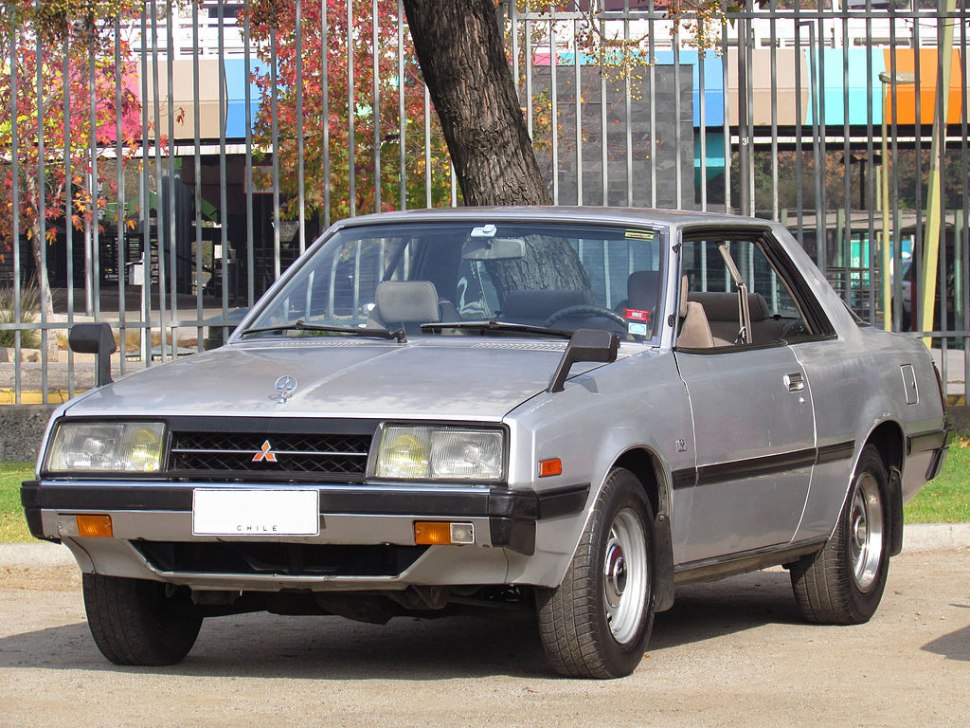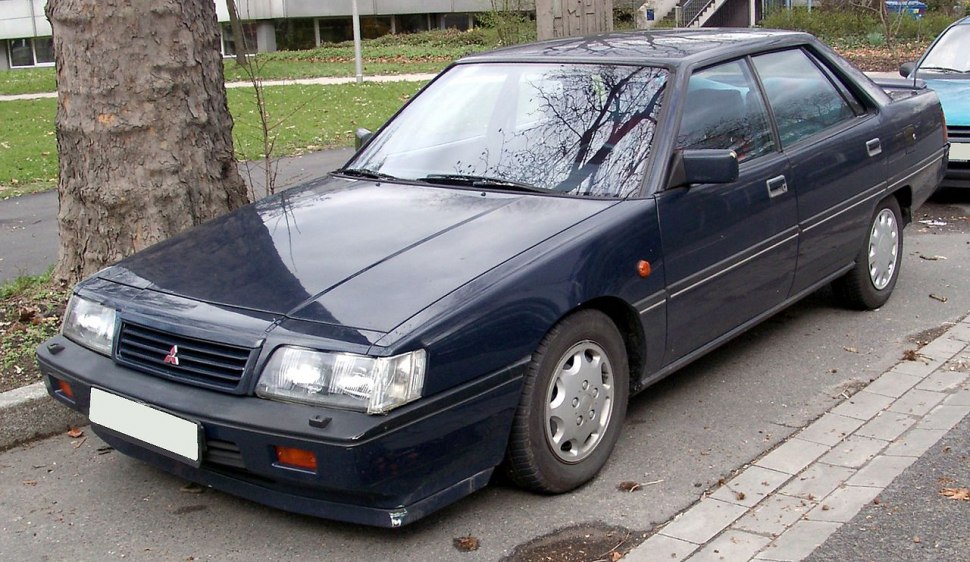
The Mitsubishi Sapporo II (A16_A) 2.0 Turbo ECi (A164), produced between 1982 and 1983, represents a significant, albeit niche, chapter in Mitsubishi’s automotive history. As the second generation of the Sapporo line, this particular variant, distinguished by its powerful 2.0-liter turbocharged engine with Electronic Controlled Injection (ECi) delivering 170 horsepower, solidified its position as a compelling personal luxury and performance coupe. While the Sapporo nameplate itself might not be universally recognized in North America for this specific generation, its roots are deeply intertwined with Mitsubishi’s global strategy of offering stylish and technologically advanced vehicles. This A16_A generation, often marketed alongside or as a derivative of the Galant Lambda in various international markets, was designed to appeal to buyers seeking a blend of comfort, distinctive styling, and spirited performance, setting it apart in the competitive coupe segment of the early 1980s.
The Mitsubishi Sapporo II (A16_A) in Context
The Mitsubishi Sapporo II (A16_A) emerged during a pivotal era for Japanese automakers, who were increasingly focusing on refining their offerings for discerning global markets. Following the success of the first-generation Sapporo (which was notably rebadged as the Dodge Challenger and Plymouth Sapporo in North America, and the Colt Galant Lambda in other regions), the A16_A generation sought to build upon that foundation with a more modern design and enhanced mechanical sophistication. While the first-generation Sapporo shared much of its underpinnings with the Galant, the second generation, particularly in its home market of Japan where it was sometimes known as the Galant Eterna Lambda or simply Sapporo, further refined its identity as a distinct, upscale coupe. In Europe and other export markets, it was typically sold as the Sapporo, cementing its status as a stand-alone model in Mitsubishi’s lineup.
Positioned as a grand tourer and a sporty personal coupe, the Sapporo II (A16_A) was designed to offer a more luxurious and performance-oriented experience than its more utilitarian sedan counterparts. Its primary markets were Japan and Europe, where there was a strong demand for stylish two-door vehicles that combined reliability with a touch of performance flair. For Mitsubishi, the Sapporo II was a showcase of their engineering capabilities, particularly with the introduction of advanced features like turbocharging and electronic fuel injection – technologies that were still relatively novel and premium in the early 1980s. This commitment to innovation allowed the Sapporo II to compete with offerings from other Japanese and European manufacturers, carving out a niche for itself among enthusiasts who appreciated its blend of distinctive aesthetics and responsive power delivery. Its role was to elevate Mitsubishi’s brand image, demonstrating that the company could produce vehicles that were not only practical but also exciting and aspirational.
Engine & Performance: The 2.0 Turbo ECi (A164)
At the heart of the Mitsubishi Sapporo II (A16_A) 2.0 Turbo ECi (A164) was its formidable powertrain, a 2.0-liter inline-four engine equipped with a turbocharger and Mitsubishi’s Electronic Controlled Injection (ECi) system. This combination was a true marvel of engineering for its time, delivering an impressive 170 horsepower. In an era when many naturally aspirated 2.0-liter engines struggled to break the 100-horsepower barrier, the Sapporo II’s output was exceptionally potent, placing it firmly in the performance car category. The adoption of a turbocharger significantly boosted the engine’s volumetric efficiency, forcing more air into the cylinders and allowing for a greater combustion yield. This resulted in a substantial increase in torque and horsepower, providing exhilarating acceleration and robust mid-range punch, which was a hallmark of performance driving in the early 1980s.
The Electronic Controlled Injection (ECi) system was equally crucial to the engine’s performance and refinement. Unlike older, less precise carbureted systems, ECi precisely metered fuel delivery to each cylinder, optimizing the air-fuel mixture for various engine loads and speeds. This not only contributed to the engine’s higher power output but also improved fuel efficiency, reduced emissions, and enhanced throttle response. The precise control offered by ECi also allowed the engine to run smoother and more reliably, especially under the increased stresses of turbocharging. The engine’s aspiration was purely turbocharger-driven, without any supercharging, emphasizing a focus on maximizing power density. Running on petrol (gasoline), this engine configuration made the Sapporo II 2.0 Turbo ECi a highly desirable vehicle for those who valued spirited driving and cutting-edge technology. The 170 hp output, channeled through an internal combustion engine architecture, provided a dynamic driving experience that was both engaging and sophisticated, distinguishing it from many of its contemporaries and contributing significantly to its appeal as a true performance coupe.
Design & Features: A Classic Coupe Aesthetic
The Mitsubishi Sapporo II (A16_A) 2.0 Turbo ECi (A164) embodied the distinctive design language prevalent among Japanese personal luxury coupes of the early 1980s. Its body type was a classic two-door coupe, characterized by sleek, angular lines that were considered modern and aerodynamic for its time. The design often featured a long hood, a sharply raked windshield, and a truncated rear deck, creating a profile that exuded sportiness and elegance. The Sapporo II’s styling was a departure from the more boxy designs of the previous decade, embracing a more sculpted and purposeful aesthetic. Details such as flush-mounted headlights, a distinctive grille, and integrated bumpers contributed to its contemporary appeal, giving it a sophisticated road presence.
Inside, the Sapporo II was designed to offer a comfortable and driver-focused environment. While specific features can vary by market and trim level, typical amenities for a car of this caliber in the early 1980s would have included well-bolstered sport seats, often upholstered in premium cloth or leather, designed to provide support during dynamic driving. Power windows, air conditioning, and a sophisticated audio system with a cassette player were common luxury features that enhanced the driving experience. The dashboard layout would have been ergonomic, with clear instrumentation and easily accessible controls. For a performance-oriented model like the 2.0 Turbo ECi, a boost gauge and other performance-monitoring instruments would likely have been included, appealing to the enthusiast driver. Safety features, while not as advanced as modern vehicles, would have included seatbelts for all occupants and possibly reinforced body structures. The overall design philosophy aimed to create a harmonious blend of style, comfort, and performance, making the Sapporo II a desirable choice for those seeking a distinguished and engaging coupe experience.
Technical Specifications
| Brand | Mitsubishi |
| Model | Sapporo |
| Generation | Sapporo II (A16_A) |
| Type (Engine) | 2.0 Turbo ECi (A164) (170 Hp) |
| Start of production | 1982 year |
| End of production | 1983 year |
| Powertrain Architecture | Internal Combustion engine |
| Body type | Coupe |
| Fuel Type | Petrol (Gasoline) |
| Power | 170 Hp |
| Engine aspiration | Turbocharger |