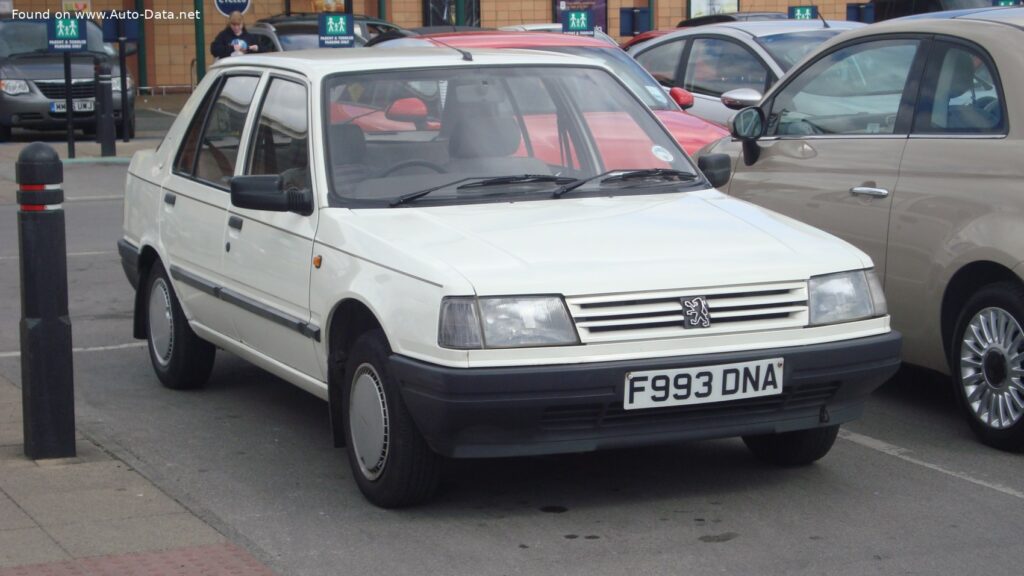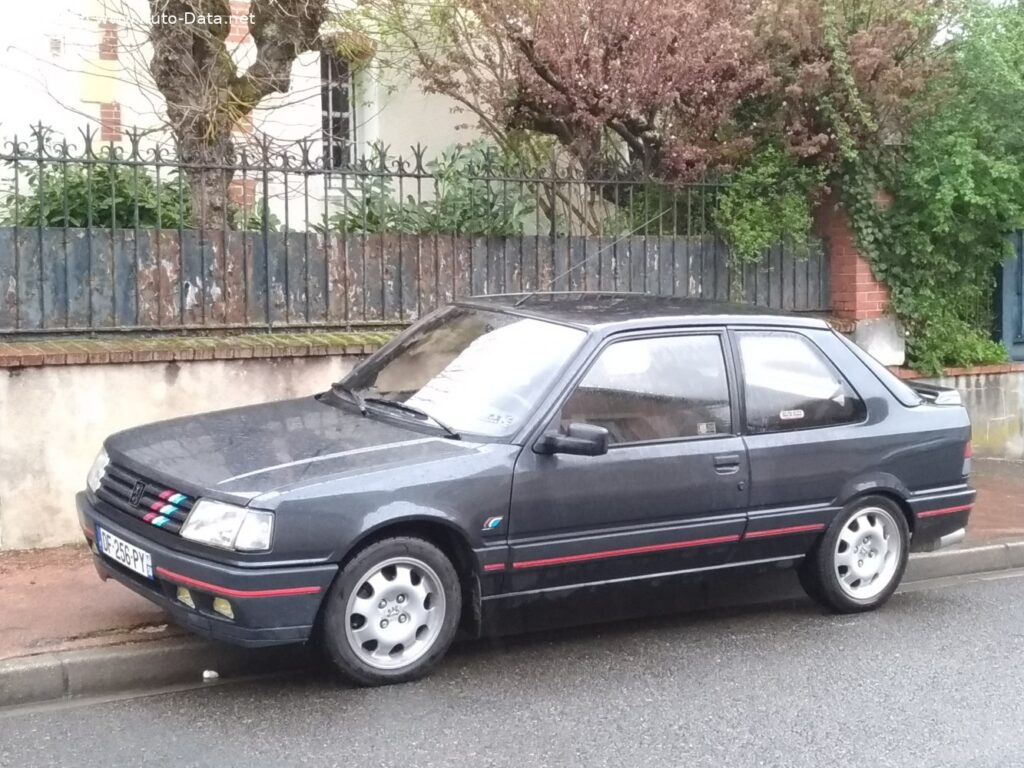
The Peugeot 309 is a small family car produced by the French manufacturer Peugeot between 1985 and 1993. Positioned as a replacement for the Peugeot 104, it was a significant model for Peugeot, representing a move towards more modern, streamlined designs. The 309 was primarily a European market vehicle and wasn’t officially sold in the United States. However, it gained popularity for its practicality, fuel efficiency, and relatively sporty handling. This article focuses on the facelifted 3-door 1.9 Diesel version introduced in 1989, a common variant particularly popular in European markets seeking economical transportation.
Peugeot 309 (3C, 3A Facelift 1989) Overview
The 1989 facelift brought subtle but noticeable changes to the 309, including revised front and rear styling, interior improvements, and refinements to the engine range. The 3-door hatchback body style was favored for its compact size and youthful appeal. The 1.9 Diesel engine option was a key selling point, offering excellent fuel economy for the time, making it a popular choice for commuters and those seeking a cost-effective vehicle. The 309 competed with other small hatchbacks like the Renault 5, Citroën AX, and Volkswagen Polo.
Engine & Performance
The heart of the 1989 Peugeot 309 1.9 Diesel is the XUD9 engine, a 1.9-liter (1905 cm3 or 116.25 cu. in.) inline-four cylinder diesel engine. This naturally aspirated engine produces 64 horsepower (Hp) at 4600 rpm and 118 Newton-meters (87.03 lb.-ft.) of torque at 2000 rpm. While not a performance powerhouse, the XUD9 engine is renowned for its durability and fuel efficiency. The engine utilizes a precombustion chamber injection system, a common technology for diesel engines of that era. Power is delivered to the front wheels via a 5-speed manual transmission. Acceleration from 0 to 100 km/h (0-62 mph) takes 15.3 seconds, and 0 to 60 mph is achieved in approximately 14.5 seconds. The top speed is rated at 160 km/h (99.42 mph). The weight-to-power ratio is 14.3 kg/Hp, and the weight-to-torque ratio is 7.7 kg/Nm, reflecting the engine’s focus on usability rather than outright speed.
Design & Features
The 1989 Peugeot 309 3-door is a classic example of 1980s hatchback design. Its compact dimensions – 4051 mm (159.49 in.) in length, 1628 mm (64.09 in.) in width, and 1380 mm (54.33 in.) in height – make it easy to maneuver in urban environments. The 3-door configuration emphasizes a sporty aesthetic. The interior offers seating for five passengers, although rear space is somewhat limited. The hatchback body style provides a practical cargo area, offering 397 liters (14.02 cu. ft.) of space with the rear seats up and expanding to 1279 liters (45.17 cu. ft.) with the seats folded down. Safety features for the time included a steering rack and pinion system and, importantly, an Anti-lock Braking System (ABS), which was becoming increasingly common on European vehicles. The 309’s drag coefficient of 0.33 was respectable for its era, contributing to improved fuel efficiency. The vehicle’s kerb weight is 912 kg (2010.62 lbs), with a maximum permissible weight of 1370 kg (3020.33 lbs).
Technical Specifications
| Brand | Peugeot |
| Model | 309 |
| Generation | 309 (3C, 3A facelift 1989) 3-door |
| Type (Engine) | 1.9 Diesel (64 Hp) |
| Start of production | 1989 |
| End of production | 1993 |
| Powertrain Architecture | Internal Combustion engine |
| Body type | Hatchback |
| Seats | 5 |
| Doors | 3 |
| Fuel consumption (urban) | 7 l/100 km (33.6 US mpg, 40.4 UK mpg, 14.3 km/l) |
| Fuel consumption (extra urban) | 4.4 l/100 km (53.5 US mpg, 64.2 UK mpg, 22.7 km/l) |
| Fuel Type | Diesel |
| Acceleration 0 – 100 km/h | 15.3 sec |
| Acceleration 0 – 62 mph | 15.3 sec |
| Acceleration 0 – 60 mph | 14.5 sec |
| Maximum speed | 160 km/h (99.42 mph) |
| Weight-to-power ratio | 14.3 kg/Hp |
| Weight-to-torque ratio | 7.7 kg/Nm |
| Power | 64 Hp @ 4600 rpm |
| Power per litre | 33.6 Hp/l |
| Torque | 118 Nm @ 2000 rpm (87.03 lb.-ft. @ 2000 rpm) |
| Engine layout | Front, Transverse |
| Engine Model/Code | XUD9 |
| Engine displacement | 1905 cm3 (116.25 cu. in.) |
| Number of cylinders | 4 |
| Engine configuration | Inline |
| Cylinder Bore | 83 mm (3.27 in.) |
| Piston Stroke | 88 mm (3.46 in.) |
| Compression ratio | 23.5:1 |
| Number of valves per cylinder | 2 |
| Fuel injection system | Precombustion chamber injection |
| Engine aspiration | Naturally aspirated |
| Valvetrain | OHC |
| Engine oil capacity | 5 l (5.28 US qt | 4.4 UK qt) |
| Coolant | 8.5 l (8.98 US qt | 7.48 UK qt) |
| Kerb Weight | 912 kg (2010.62 lbs.) |
| Max. weight | 1370 kg (3020.33 lbs.) |
| Max load | 458 kg (1009.72 lbs.) |
| Trunk (boot) space – minimum | 397 l (14.02 cu. ft.) |
| Trunk (boot) space – maximum | 1279 l (45.17 cu. ft.) |
| Fuel tank capacity | 55 l (14.53 US gal | 12.1 UK gal) |
| Permitted trailer load with brakes (12%) | 800 kg (1763.7 lbs.) |
| Length | 4051 mm (159.49 in.) |
| Width | 1628 mm (64.09 in.) |
| Height | 1380 mm (54.33 in.) |
| Wheelbase | 2469 mm (97.2 in.) |
| Front track | 1408 mm (55.43 in.) |
| Rear track | 1376 mm (54.17 in.) |
| Front overhang | 753 mm (29.65 in.) |
| Rear overhang | 829 mm (32.64 in.) |
| Drag coefficient (Cd) | 0.33 |
| Drivetrain | Front wheel drive |
| Number of gears | 5 |
| Gearbox type | Manual transmission |
| Front suspension | Independent, McPherson with coil spring and anti-roll bar |
| Rear suspension | Torsion |
| Front brakes | Disc |
| Rear brakes | Drum |
| Assisting systems | ABS (Anti-lock braking system) |
| Steering type | Steering rack and pinion |
| Tires size | 165/70 R13 |
The Peugeot 309, particularly the 1.9 Diesel variant, represents a practical and economical choice for European drivers of the late 1980s and early 1990s. While not a performance car, its fuel efficiency, durability, and relatively modern features made it a popular and well-regarded vehicle in its segment.