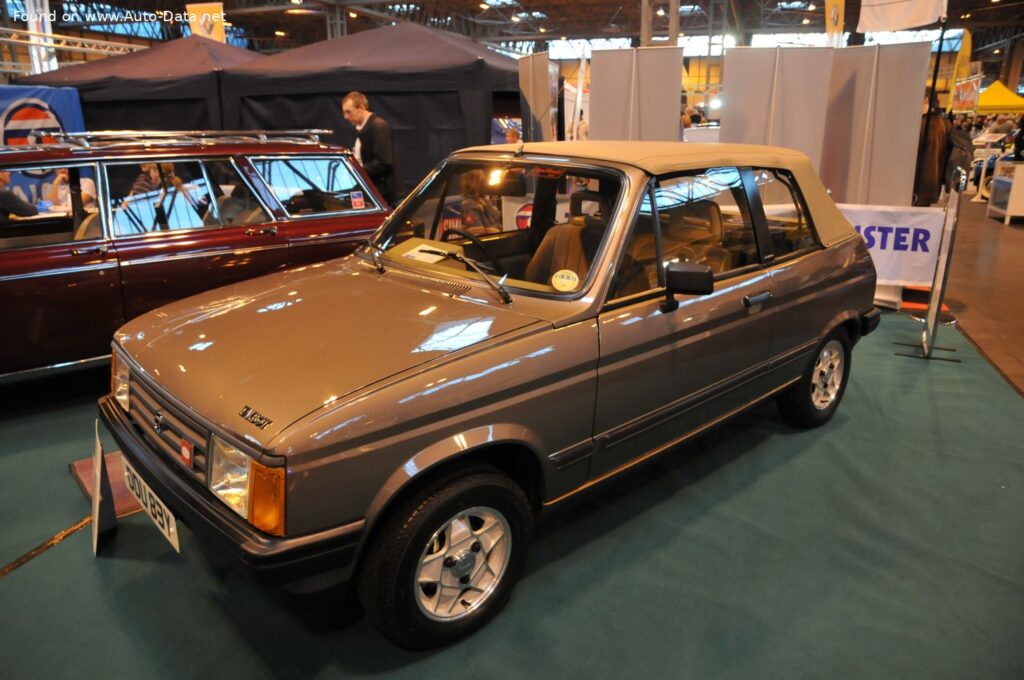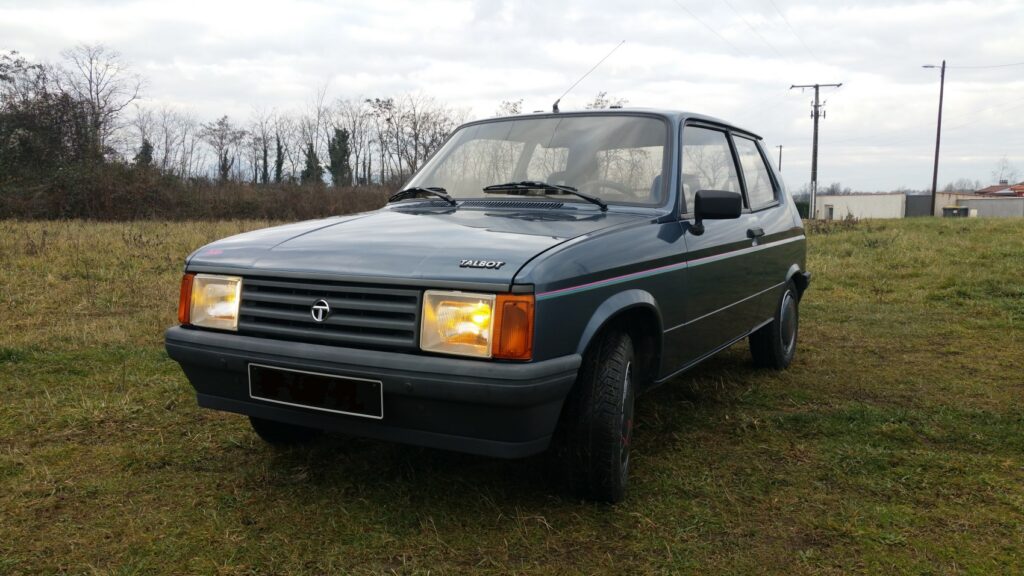
The Talbot Samba was a supermini car produced between 1981 and 1986 by the PSA Group, initially under the Talbot marque. It was a significant model for PSA, representing their entry into the small, affordable hatchback market that was rapidly gaining popularity in Europe during the early 1980s. The Samba was essentially a rebadged and significantly updated version of the earlier Simca 1108, itself a product of Simca’s collaboration with Chrysler Europe (later Talbot). While not officially sold in the United States, the Samba played a crucial role in the European automotive landscape, offering a practical and economical transportation solution during a period of economic uncertainty and rising fuel costs. The 0.9-liter version, producing 45 horsepower, was a mainstay of the range, aimed at budget-conscious buyers.
The Talbot Samba: A European Supermini
The Talbot Samba emerged from a complex period in European automotive history. The Simca brand, originally French, had been absorbed into Chrysler Europe in the 1970s. When Chrysler Europe faced financial difficulties, PSA Group (Peugeot Société Anonyme) acquired the company in 1978, rebranding it as Talbot. The Samba was the first entirely new model developed under the Talbot banner, though heavily based on the preceding Simca 1108. It aimed to compete with popular superminis like the Fiat Uno, Renault 5, and Ford Fiesta. The car’s design was intended to be modern and appealing, with a focus on practicality and fuel efficiency. Despite its relatively short production run, the Samba established a foothold in the European market and laid some groundwork for PSA’s future successes in the small car segment.
Origins and Market Positioning
The Talbot Samba was primarily marketed in Europe, particularly in France, the United Kingdom, and other Western European countries. It filled a gap in PSA’s lineup, offering a smaller and more affordable alternative to the Peugeot 205 and Citroën Visa. The Samba was positioned as a practical, economical, and reliable city car, appealing to first-time buyers, families, and those seeking a low-cost mode of transportation. The 0.9-liter engine variant was the entry-level model, prioritizing fuel economy over outright performance. Higher-spec versions with larger engines and more features were also available, but the 0.9L remained a popular choice due to its affordability.
Engine & Performance
The Talbot Samba 0.9 utilized a naturally aspirated, 954cc inline-four cylinder petrol (gasoline) engine. This engine, derived from the Simca 1108, was known for its simplicity and reliability. While its 45 horsepower output might seem modest by modern standards, it was adequate for the Samba’s lightweight construction and intended purpose as a city car. The engine featured a single overhead camshaft and a two-barrel carburetor. Performance was characterized by modest acceleration and a top speed of around 87 miles per hour (140 kilometers per hour). The focus was on fuel efficiency, with the Samba 0.9 achieving approximately 47-53 miles per gallon (5.0-5.6 liters per 100 kilometers) in typical driving conditions. The engine was mated to a four-speed manual transmission, providing a straightforward and engaging driving experience. The relatively low power output and simple mechanicals made the Samba 0.9 easy to maintain and repair, contributing to its appeal among budget-conscious buyers.
Design & Features
The Talbot Samba was a three-door hatchback, offering a practical and versatile body style. Its design, penned by Italian designer Giorgetto Giugiaro, was characterized by clean lines and a relatively boxy shape, typical of superminis from the early 1980s. The car’s compact dimensions made it easy to maneuver in urban environments and park in tight spaces. The interior was functional and spartan, with a focus on practicality rather than luxury. The seats were typically cloth-upholstered, and the dashboard featured basic instrumentation, including a speedometer, fuel gauge, and temperature gauge. Safety features were limited by the standards of the time, with seatbelts being the primary safety equipment. However, the Samba’s relatively lightweight construction and predictable handling contributed to its overall safety. Later models saw the introduction of minor cosmetic updates, such as revised grille designs and interior trim materials. The Samba’s design, while not groundbreaking, was considered modern and appealing for its time, and it helped the car stand out in a crowded market segment. The hatchback configuration provided reasonable cargo space for a car of its size, making it suitable for everyday use.
Aesthetic and Practical Considerations
The Talbot Samba’s aesthetic was largely dictated by the prevailing design trends of the early 1980s. The car’s angular lines and relatively small size were characteristic of the supermini segment. The interior was designed to be durable and easy to clean, reflecting the car’s intended use as a practical and affordable mode of transportation. While not lavishly equipped, the Samba offered essential features such as heating and ventilation. The car’s simplicity and reliability were key selling points, appealing to buyers who prioritized functionality over luxury. The Samba’s design, while not particularly flamboyant, was considered tasteful and modern for its time, and it helped the car establish a distinct identity in the European market.
Technical Specifications
| Brand | Talbot |
| Model | Samba |
| Generation | Samba (51A) |
| Type (Engine) | 0.9 (45 Hp) |
| Start of production | 1981 |
| End of production | 1985 |
| Powertrain Architecture | Internal Combustion engine |
| Body type | Hatchback |
| Fuel Type | Petrol (Gasoline) |
| Power | 45 Hp |
| Engine aspiration | Naturally aspirated engine |
Despite its relatively short production run, the Talbot Samba remains a fondly remembered car among enthusiasts. It represents a significant chapter in the history of PSA Group and the evolution of the European supermini market. While it never reached American shores, the Samba’s impact on the automotive landscape of Europe was undeniable, offering a practical, economical, and reliable transportation solution for a generation of drivers.