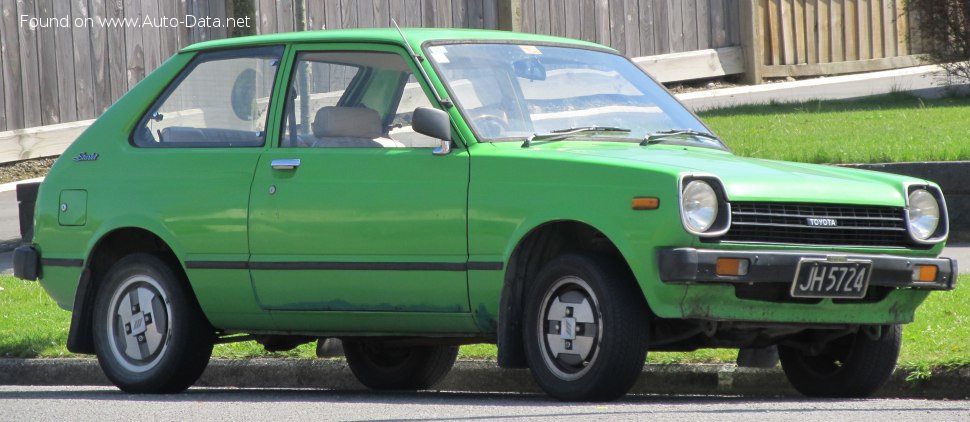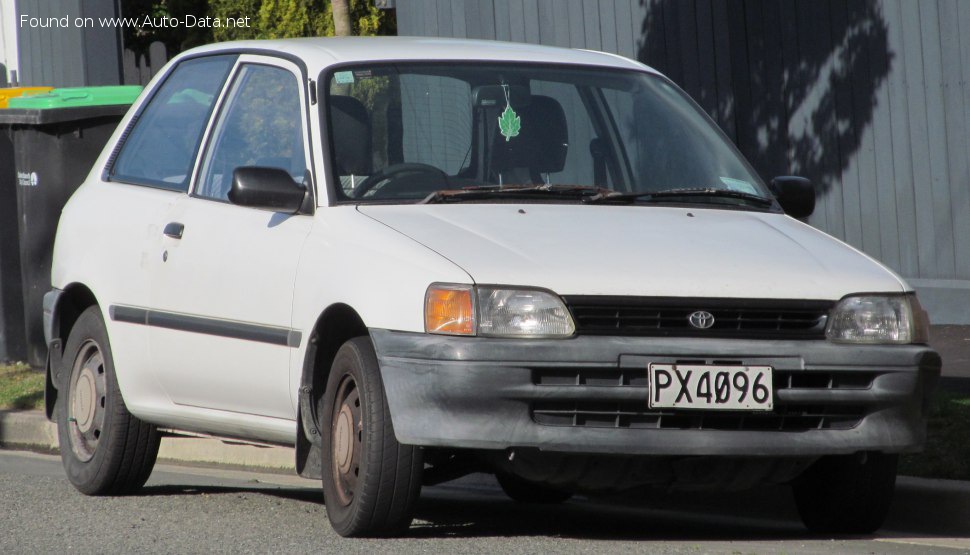
The Toyota Starlet IV 1.3i 16V, produced between 1989 and 1996, represents a significant evolution in Toyota’s compact car lineage. Part of the fourth generation of the Starlet, this model was primarily aimed at the Japanese domestic market (JDM) and European consumers, offering an affordable and reliable option in the supermini segment. While not officially sold in the United States, the Starlet IV gained a following among enthusiasts for its nimble handling, peppy engine, and potential for modification. It served as a practical and economical vehicle for daily commuting and represented Toyota’s commitment to building quality, small cars.
Toyota Starlet IV 1.3i 16V: A Detailed Overview
The Starlet IV, particularly the 1.3i 16V variant, distinguished itself with a focus on improved performance and efficiency compared to its predecessors. This generation saw a refinement of the Starlet’s core attributes – compact size, lightweight construction, and a responsive engine. The 16-valve cylinder head, a key feature of this model, contributed to increased horsepower and torque, making it a more engaging driving experience. The Starlet IV was available in both 3-door and 5-door configurations, catering to different lifestyle needs.
Engine & Performance
At the heart of the Starlet IV 1.3i 16V lies a 1.3-liter (1331 cm3 or 81.22 cu. in.) inline-four cylinder engine. This naturally aspirated powerplant produces 100 horsepower at 6600 rpm and 116 Nm (85.56 lb.-ft.) of torque at 5200 rpm. The engine utilizes a multi-port fuel injection system, contributing to efficient fuel delivery and improved combustion. The power-to-weight ratio of 7.7 kg/Hp (129.9 Hp/tonne) and torque-to-weight ratio of 6.6 kg/Nm (150.6 Nm/tonne) highlight the car’s relatively sprightly performance. The engine’s 9.6:1 compression ratio further aids in maximizing power output. Coupled with a 5-speed manual transmission, the Starlet IV 1.3i 16V could achieve a maximum speed of 185 km/h (114.95 mph).
Design & Features
The Toyota Starlet IV is a compact hatchback, available with either three or five doors. Its design prioritized practicality and efficiency, resulting in a relatively simple yet functional aesthetic. The car’s small footprint made it easy to maneuver in urban environments, while its lightweight construction contributed to its fuel economy. Inside, the Starlet IV offered seating for five passengers, although rear passenger space was somewhat limited due to the car’s compact dimensions. Trunk space varied depending on the rear seats being up or folded down, offering a minimum of 225 liters (7.95 cu. ft.) and a maximum of 490 liters (17.3 cu. ft.). Safety features for the era included an Anti-lock Braking System (ABS) on some models, a notable addition for a vehicle in this class. The steering employed a rack and pinion system with hydraulic power assistance, providing responsive and precise handling. The standard tire size was 165/70 R13, mounted on 13-inch wheel rims.
Technical Specifications
| Brand | Toyota |
| Model | Starlet |
| Generation | Starlet IV |
| Type (Engine) | 1.3i 16V (100 Hp) |
| Start of production | 1989 |
| End of production | 1996 |
| Powertrain Architecture | Internal Combustion engine |
| Body type | Hatchback |
| Seats | 5 |
| Doors | 3/5 |
| Fuel Type | Petrol (Gasoline) |
| Maximum speed | 185 km/h (114.95 mph) |
| Weight-to-power ratio | 7.7 kg/Hp, 129.9 Hp/tonne |
| Weight-to-torque ratio | 6.6 kg/Nm, 150.6 Nm/tonne |
| Power | 100 Hp @ 6600 rpm |
| Power per litre | 75.1 Hp/l |
| Torque | 116 Nm @ 5200 rpm (85.56 lb.-ft. @ 5200 rpm) |
| Engine layout | Front, Transverse |
| Engine displacement | 1331 cm3 (81.22 cu. in.) |
| Number of cylinders | 4 |
| Engine configuration | Inline |
| Cylinder Bore | 74 mm (2.91 in.) |
| Piston Stroke | 77.4 mm (3.05 in.) |
| Compression ratio | 9.6:1 |
| Number of valves per cylinder | 4 |
| Fuel injection system | Multi-port manifold injection |
| Engine aspiration | Naturally aspirated engine |
| Kerb Weight | 770 kg (1697.56 lbs.) |
| Trunk (boot) space – minimum | 225 l (7.95 cu. ft.) |
| Trunk (boot) space – maximum | 490 l (17.3 cu. ft.) |
| Fuel tank capacity | 40 l (10.57 US gal | 8.8 UK gal) |
| Length | 3720 mm (146.46 in.) |
| Width | 1600 mm (62.99 in.) |
| Height | 1380 mm (54.33 in.) |
| Wheelbase | 2300 mm (90.55 in.) |
| Front track | 1390 mm (54.72 in.) |
| Rear (Back) track | 1370 mm (53.94 in.) |
| Minimum turning circle (turning diameter) | 9.8 m (32.15 ft.) |
| Drivetrain Architecture | The Internal combustion engine (ICE) drives the front wheels of the vehicle. |
| Drive wheel | Front wheel drive |
| Number of gears and type of gearbox | 5 gears, manual transmission |
| Front suspension | Wishbone |
| Rear suspension | Coil spring |
| Front brakes | Disc |
| Rear brakes | Drum |
| Assisting systems | ABS (Anti-lock braking system) |
| Steering type | Steering rack and pinion |
| Power steering | Hydraulic Steering |
| Tires size | 165/70 R13 |
| Wheel rims size | 13 |
The Toyota Starlet IV 1.3i 16V, while not a performance car in the modern sense, offered a compelling package of affordability, reliability, and surprisingly engaging driving dynamics. Its legacy lies in its role as a practical and efficient transportation solution for a wide range of drivers, particularly in Europe and Japan, and its enduring appeal to automotive enthusiasts who appreciate its simple yet effective engineering.