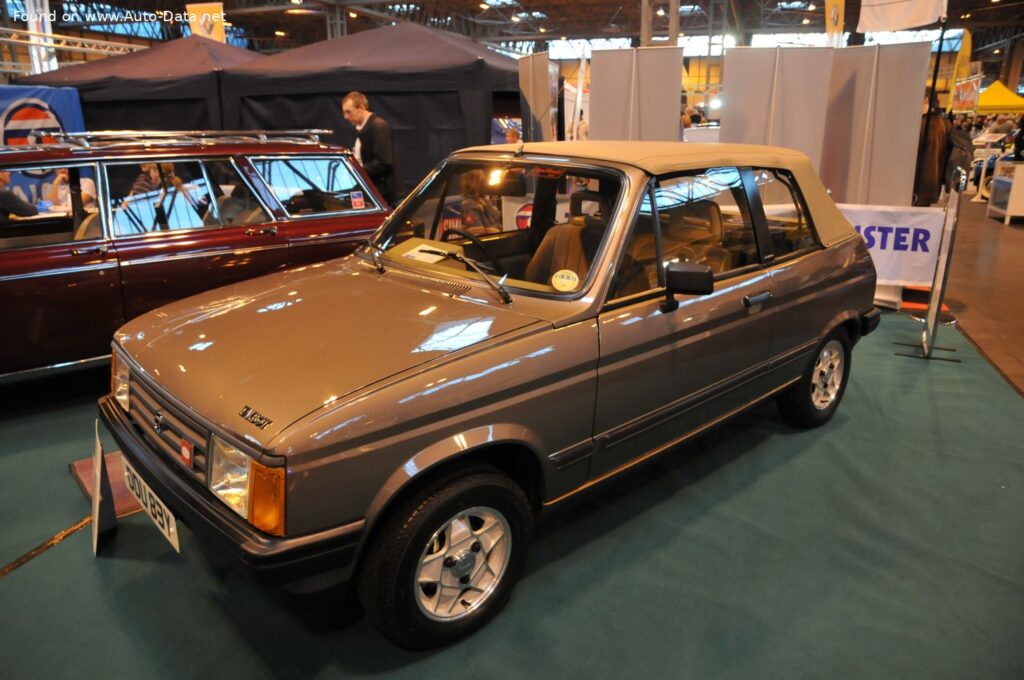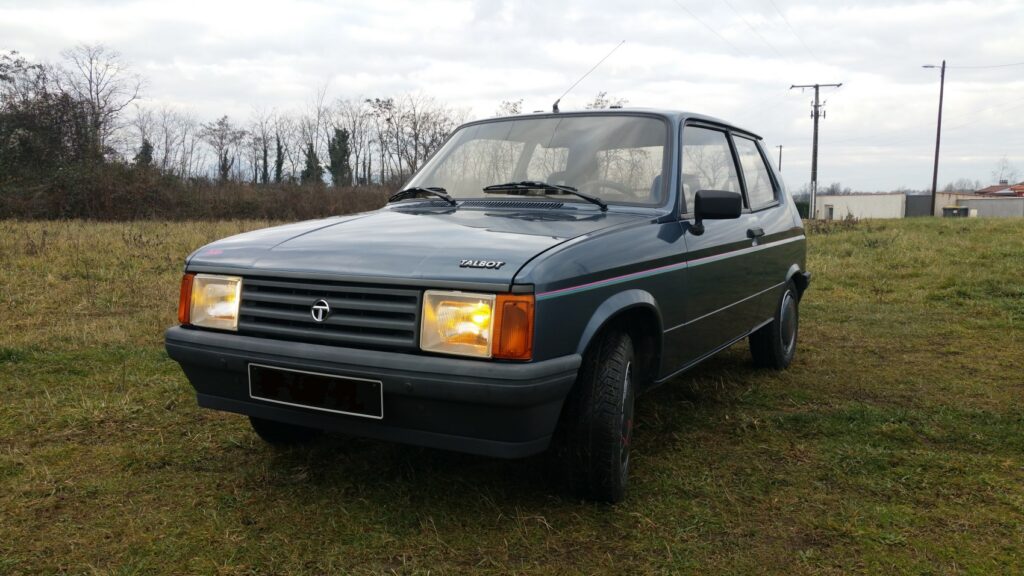
The Talbot Samba was a supermini car produced between 1981 and 1986, primarily for the European market. Developed as part of the joint venture between Peugeot and Simca (later Chrysler Europe, then Talbot), the Samba represented a significant effort to create a modern, efficient, and stylish small car to compete with rivals like the Renault 5, Fiat Uno, and Volkswagen Polo. The 1.2 Rallye variant, produced from 1983 to 1986, was the performance-oriented version of the Samba, aimed at enthusiasts seeking a sporty and economical hatchback. While never officially sold in the United States, the Samba offers a fascinating case study in 1980s European automotive design and engineering, and the Rallye version, in particular, gained a following for its nimble handling and spirited performance.
Talbot Samba 1.2 Rallye: A European Supermini
The Talbot brand itself was a product of corporate restructuring. Following Chrysler’s acquisition of Simca in the 1970s, the European operations were sold to Peugeot in 1978, becoming Chrysler Europe. In 1980, the brand was rebranded as Talbot, named after the pioneering British engineer Clement Talbot. The Samba was one of the first models to bear the Talbot badge, and it was intended to be a key volume seller. The car was based on a shared platform with the Peugeot 104 and Citroën Visa, benefiting from economies of scale and shared development costs. The 1.2 Rallye was positioned as the top-of-the-line Samba, offering increased power and a more focused driving experience compared to the standard models.
Engine & Performance
The heart of the Talbot Samba 1.2 Rallye was its 1,124 cc (1.1L) inline-four cylinder, naturally aspirated gasoline engine. This engine, designated as the XW7, produced 88 horsepower. While this figure might seem modest by modern standards, it was a respectable output for a supermini of the early 1980s. The engine featured a single overhead camshaft and a two-barrel Weber carburetor. The Rallye version benefited from a slightly higher compression ratio and revised engine mapping compared to the standard 1.1-liter Samba, contributing to its increased power output.
Power was delivered to the front wheels through a four-speed manual transmission. The Samba 1.2 Rallye was known for its light weight – typically around 780 kg (1,720 lbs) – which contributed to its lively acceleration and nimble handling. Performance figures were estimated at a 0-60 mph time of around 10.5 seconds and a top speed of approximately 98 mph. The Rallye’s suspension was also tuned for a sportier driving experience, with stiffer springs and dampers compared to the standard Samba. This resulted in reduced body roll and improved cornering stability. While not a dedicated sports car, the 1.2 Rallye offered a surprisingly engaging driving experience for a small, economical hatchback.
Design & Features
The Talbot Samba was designed by Italian firm Bertone, under the direction of Marcello Gandini, who also penned the Lamborghini Countach. The Samba’s styling was characterized by its clean lines, wedge-shaped profile, and large glass areas. The hatchback body style provided practical access to the cargo area, and the relatively spacious interior was a selling point for the car. The 1.2 Rallye variant was visually distinguished from the standard Samba by several features, including a distinctive front spoiler, flared wheel arches, and a rear spoiler. These additions not only enhanced the car’s sporty appearance but also contributed to improved aerodynamics.
Inside, the Rallye featured sport seats with improved bolstering, a three-spoke steering wheel, and a more comprehensive instrument panel. While the Samba was a relatively basic car by modern standards, it offered essential features such as central locking, electric windows (on some models), and a radio. Safety features were limited by the standards of the time, but the Samba did include seat belts and a collapsible steering column. The focus of the Rallye version was primarily on driving enjoyment rather than luxury or advanced technology. The interior materials were durable and practical, reflecting the car’s intended role as an affordable and reliable everyday vehicle.
Technical Specifications
| Brand | Talbot |
| Model | Samba |
| Generation | Samba (51A) |
| Type (Engine) | 1.2 Rallye (88 Hp) |
| Start of production | 1983 |
| End of production | 1986 |
| Powertrain Architecture | Internal Combustion engine |
| Body type | Hatchback |
| Fuel Type | Petrol (Gasoline) |
| Engine Power | 88 Hp |
| Engine Aspiration | Naturally aspirated engine |
| Engine Displacement | 1.124 L (1,124 cc) |
| Number of Cylinders | 4 |
| Transmission | 4-speed Manual |
| Drive Type | Front-Wheel Drive |
| Weight | Approximately 780 kg (1,720 lbs) |
| Top Speed | Approximately 98 mph |
| 0-60 mph | Approximately 10.5 seconds |
The Talbot Samba, and particularly the 1.2 Rallye, represents a significant chapter in the history of European superminis. While the Talbot brand ultimately disappeared in the late 1980s, the Samba remains a fondly remembered car among enthusiasts. Its combination of stylish design, nimble handling, and affordable price made it a popular choice for drivers seeking a practical and enjoyable small car. The Rallye version, with its increased power and sporty features, offered a particularly appealing package for those who wanted a bit more excitement from their daily commute. The car’s legacy continues to be appreciated by classic car collectors and enthusiasts who recognize its importance as a well-engineered and thoughtfully designed vehicle of its era.