
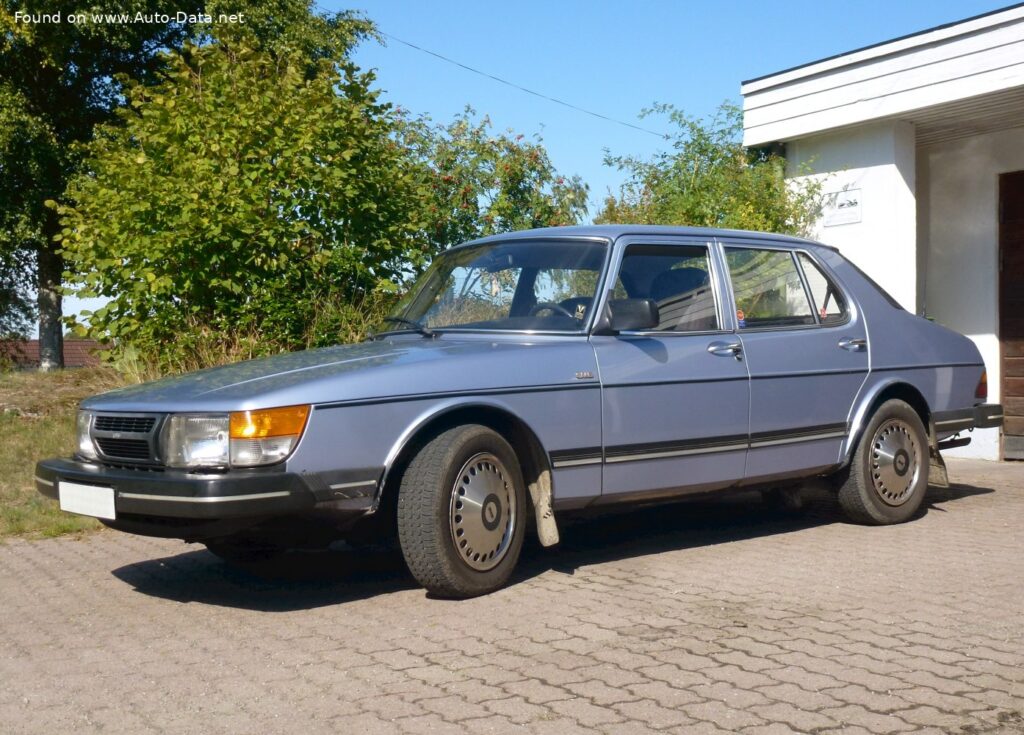
The Saab 900, particularly the first generation (900 I) produced between 1978 and 1987, represents a pivotal moment in the Swedish automaker’s history. Introduced as a replacement for the long-running Saab 96, the 900 aimed to modernize the brand while retaining the quirky engineering and safety focus that defined Saab. The 2.0 c variant, producing 108 horsepower, was a mainstay of the lineup during the early production years (1980-1984), offering a balance of performance and fuel economy for the European market. While never officially sold in large numbers in the United States during this initial generation, the Saab 900 I gained a cult following among enthusiasts who appreciated its distinctive design and robust build quality.
The Saab 900 I 2.0 c: A Detailed Overview
The 900 I marked a significant departure from Saab’s previous models, moving to a more conventional, though still aerodynamically efficient, body style. It was available in both two-door and four-door sedan configurations, as well as a five-door hatchback (Combi Coupé) introduced later in the production run. The 2.0 c model specifically denotes the engine displacement and carburetor fuel system, a common setup for the early 1980s. This model was primarily targeted at the European market, where fuel efficiency and practicality were highly valued.
Engine & Performance
At the heart of the Saab 900 I 2.0 c lies a 1.985-liter (121.13 cubic inches) inline-four cylinder engine, designated the B201. This naturally aspirated engine produced 108 horsepower at 5200 rpm and 161 Nm (118.75 lb.-ft.) of torque at 3500 rpm. While not a powerhouse by modern standards, the engine provided adequate performance for its time, allowing for a top speed of 167 km/h (103.77 mph). The engine featured a relatively high compression ratio of 9.2:1 and a dual overhead camshaft (DOHC) valvetrain with two valves per cylinder. The engine’s transverse mounting and front-wheel drive configuration contributed to its relatively nimble handling. The weight-to-power ratio of 11.2 kg/Hp (89 Hp/tonne) and weight-to-torque ratio of 7.5 kg/Nm (132.6 Nm/tonne) were competitive for vehicles in its class. Power per liter was a respectable 54.4 Hp/l.
Design & Features
The Saab 900 I’s design was characterized by its clean lines and aerodynamic shape, influenced by wind tunnel testing. The body was a unibody construction, prioritizing safety and structural rigidity. The 2.0 c model was typically equipped with a five-speed manual transmission, although a three-speed automatic was also available as an option. Interior features were functional and focused on driver comfort. Saab was renowned for its attention to ergonomics, and the 900 I featured a driver-centric cockpit with well-placed controls. Safety was a key consideration, and the 900 I incorporated features such as a reinforced safety cage and impact-absorbing crumple zones. While not standard equipment on all models, options like power windows and central locking were available. The 900 I’s distinctive wrap-around dashboard and angled console became hallmarks of Saab design.
Technical Specifications
| Brand | Saab |
| Model | 900 |
| Generation | 900 I |
| Type (Engine) | 2.0 c (108 Hp) |
| Start of production | 1980 |
| End of production | 1984 |
| Powertrain Architecture | Internal Combustion engine |
| Body type | Sedan |
| Seats | 5 |
| Doors | 4 |
| Fuel Type | Petrol (Gasoline) |
| Maximum speed | 167 km/h (103.77 mph) |
| Weight-to-power ratio | 11.2 kg/Hp, 89 Hp/tonne |
| Weight-to-torque ratio | 7.5 kg/Nm, 132.6 Nm/tonne |
| Power | 108 Hp @ 5200 rpm |
| Power per litre | 54.4 Hp/l |
| Torque | 161 Nm @ 3500 rpm (118.75 lb.-ft. @ 3500 rpm) |
| Engine layout | Front, Transverse |
| Engine Model/Code | B201 |
| Engine displacement | 1985 cm3 (121.13 cu. in.) |
| Number of cylinders | 4 |
| Engine configuration | Inline |
| Cylinder Bore | 90 mm (3.54 in.) |
| Piston Stroke | 78 mm (3.07 in.) |
| Compression ratio | 9.2:1 |
| Number of valves per cylinder | 2 |
| Fuel injection system | Carburettor |
| Engine aspiration | Naturally aspirated engine |
| Valvetrain | DOHC |
| Engine oil capacity | 3.8 l (4.02 US qt | 3.34 UK qt) |
| Coolant | 10 l (10.57 US qt | 8.8 UK qt) |
| Kerb Weight | 1214 kg (2676.41 lbs.) |
| Length | 4941 mm (194.53 in.) |
| Width | 1690 mm (66.54 in.) |
| Height | 1422 mm (55.98 in.) |
| Wheelbase | 2718 mm (107.01 in.) |
| Drivetrain Architecture | The Internal combustion engine (ICE) drives the front wheels of the vehicle. |
| Drive wheel | Front wheel drive |
| Number of gears and type of gearbox | 5 gears, manual transmission |
The Saab 900 I 2.0 c, while a product of its time, laid the foundation for the continued success of the 900 model line. Its blend of Scandinavian design, engineering innovation, and a focus on driver safety cemented its place as a unique and desirable vehicle, particularly within a dedicated enthusiast community. The first generation 900 remains a sought-after classic, representing a distinctive era in automotive history.
