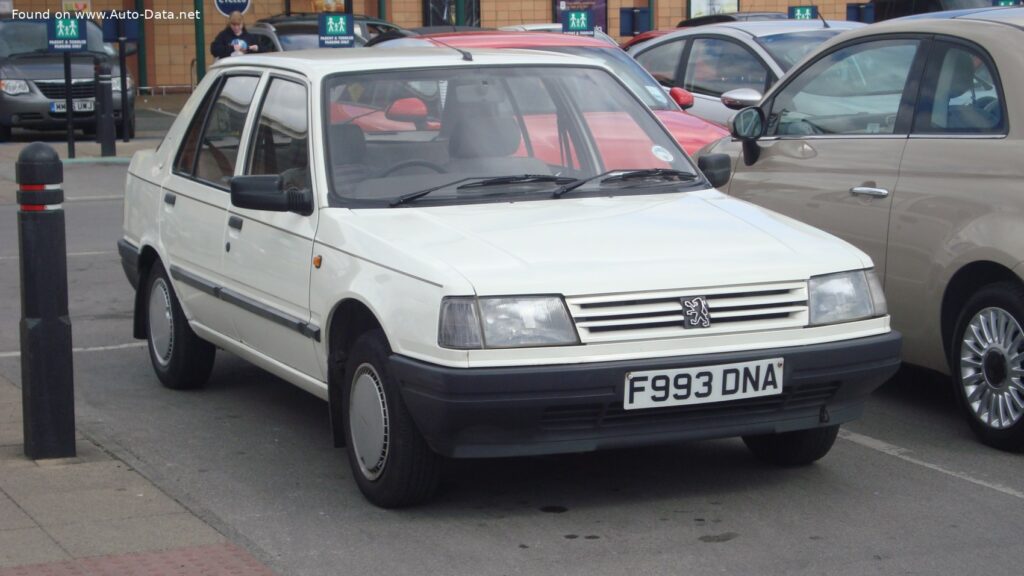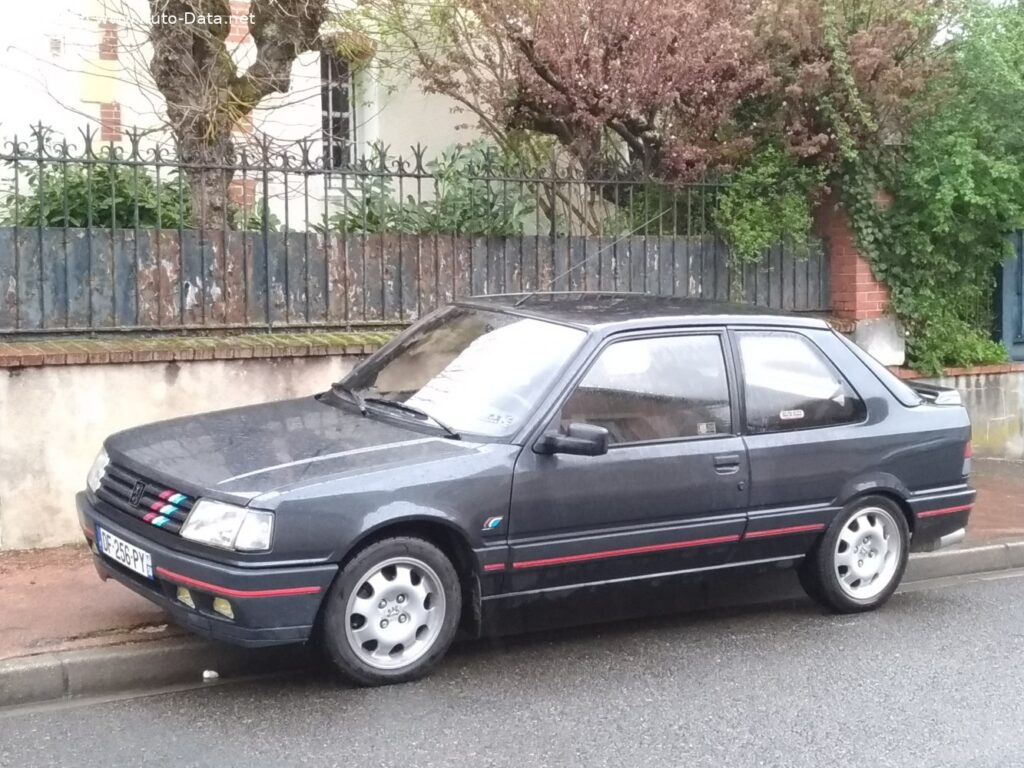
The Peugeot 309 is a small family car produced by the French manufacturer Peugeot between 1985 and 1993. Positioned between the 205 and the larger 405, the 309 aimed to offer a more spacious and practical alternative to the popular 205, while remaining affordable. The model underwent a significant facelift in 1989 (designated 3C/3A), improving its aesthetics and refining its mechanical components. This article focuses on the 3-door 1.9 GTI 16V variant produced between 1989 and 1990, a performance-oriented version of the 309 that offered a compelling driving experience within the hot hatch segment.
Peugeot 309 GTI 16V: A European Performance Hatch
The 309, while never officially sold in the United States, was a significant model for Peugeot in Europe. It represented a move towards more modern design and engineering, incorporating features previously found on more expensive models. The GTI 16V version, in particular, was designed to compete with rivals like the Volkswagen Golf GTI and Ford Escort RS Turbo. It offered a blend of performance, practicality, and affordability that appealed to a wide range of buyers. The 16-valve cylinder head, a key feature of this model, significantly boosted power output compared to earlier 309 variants.
Engine & Performance
The heart of the 309 GTI 16V is its 1.9-liter inline-four cylinder engine, designated D6C XU9J4. This naturally aspirated engine produces 158 horsepower at 6500 rpm and 177 Nm (130.55 lb-ft) of torque at 5000 rpm. The engine features multi-port fuel injection and a compression ratio of 10.4:1. This configuration delivers a power-to-liter ratio of 82.9 hp/l. Power is delivered to the front wheels via a five-speed manual transmission. Performance figures are impressive for its era, with a 0-100 km/h (0-62 mph) acceleration time of 7.8 seconds and a 0-60 mph time of 7.4 seconds. The vehicle boasts a maximum speed of 220 km/h (136.7 mph). The weight-to-power ratio of 6 kg/hp and a weight-to-torque ratio of 5.4 kg/Nm contribute to its responsive driving characteristics.
Design & Features
The 1989 facelifted 309 features a more streamlined and modern aesthetic compared to the original model. The 3-door hatchback body style provides a sporty appearance and relatively easy access to the rear seats. The interior offers seating for five passengers, although rear space is somewhat limited. Key features of the GTI 16V included a sporty interior trim, upgraded suspension, and disc brakes on all four wheels, with the front brakes being ventilated for improved cooling. An anti-lock braking system (ABS) was also included as standard, enhancing safety. The 309’s McPherson strut front suspension and torsion beam rear suspension provide a balance between comfort and handling. The trunk offers 397 liters (14.02 cu. ft.) of space with the rear seats up, expanding to 1279 liters (45.17 cu. ft.) when folded down, providing considerable practicality for a vehicle of its size.
Technical Specifications
| Brand | Peugeot |
| Model | 309 |
| Generation | 309 (3C,3A facelift 1989) 3-door |
| Type (Engine) | 1.9 GTI 16V (158 Hp) |
| Start of production | 1989 |
| End of production | 1990 |
| Powertrain Architecture | Internal Combustion engine |
| Body type | Hatchback |
| Seats | 5 |
| Doors | 3 |
| Fuel consumption (urban) | 11.8 l/100 km (19.9 US mpg / 23.9 UK mpg) |
| Fuel consumption (extra urban) | 6.5 l/100 km (36.2 US mpg / 43.5 UK mpg) |
| Fuel Type | Petrol (Gasoline) |
| Acceleration 0 – 100 km/h | 7.8 sec |
| Acceleration 0 – 62 mph | 7.8 sec |
| Acceleration 0 – 60 mph | 7.4 sec |
| Maximum speed | 220 km/h (136.7 mph) |
| Weight-to-power ratio | 6 kg/Hp |
| Weight-to-torque ratio | 5.4 kg/Nm |
| Power | 158 Hp @ 6500 rpm |
| Torque | 177 Nm @ 5000 rpm (130.55 lb.-ft. @ 5000 rpm) |
| Engine layout | Front, Transverse |
| Engine Model/Code | D6C XU9J4 |
| Engine displacement | 1905 cm3 (116.25 cu. in.) |
| Number of cylinders | 4 |
| Engine configuration | Inline |
| Cylinder Bore | 83 mm (3.27 in.) |
| Piston Stroke | 88 mm (3.46 in.) |
| Compression ratio | 10.4:1 |
| Number of valves per cylinder | 4 |
| Fuel injection system | Multi-port manifold injection |
| Engine aspiration | Naturally aspirated |
| Engine oil capacity | 4.6 l (4.86 US qt | 4.05 UK qt) |
| Coolant | 7.5 l (7.93 US qt | 6.6 UK qt) |
| Kerb Weight | 948 kg (2089.98 lbs.) |
| Max. weight | 1400 kg (3086.47 lbs.) |
| Max load | 452 kg (996.49 lbs.) |
| Trunk (boot) space – minimum | 397 l (14.02 cu. ft.) |
| Trunk (boot) space – maximum | 1279 l (45.17 cu. ft.) |
| Fuel tank capacity | 55 l (14.53 US gal | 12.1 UK gal) |
| Permitted trailer load with brakes (12%) | 900 kg (1984.16 lbs.) |
| Length | 4051 mm (159.49 in.) |
| Width | 1628 mm (64.09 in.) |
| Height | 1380 mm (54.33 in.) |
| Wheelbase | 2469 mm (97.2 in.) |
| Front track | 1405 mm (55.31 in.) |
| Rear track | 1380 mm (54.33 in.) |
| Front overhang | 753 mm (29.65 in.) |
| Rear overhang | 829 mm (32.64 in.) |
| Drag coefficient (Cd) | 0.34 |
| Drive wheel | Front wheel drive |
| Number of gears | 5 gears, manual transmission |
| Front suspension | Independent, type McPherson with coil spring and anti-roll bar |
| Rear suspension | Torsion |
| Front brakes | Ventilated discs |
| Rear brakes | Disc |
| Assisting systems | ABS (Anti-lock braking system) |
| Steering type | Steering rack and pinion |
| Power steering | Hydraulic Steering |
| Tires size | 195/55 R15 |