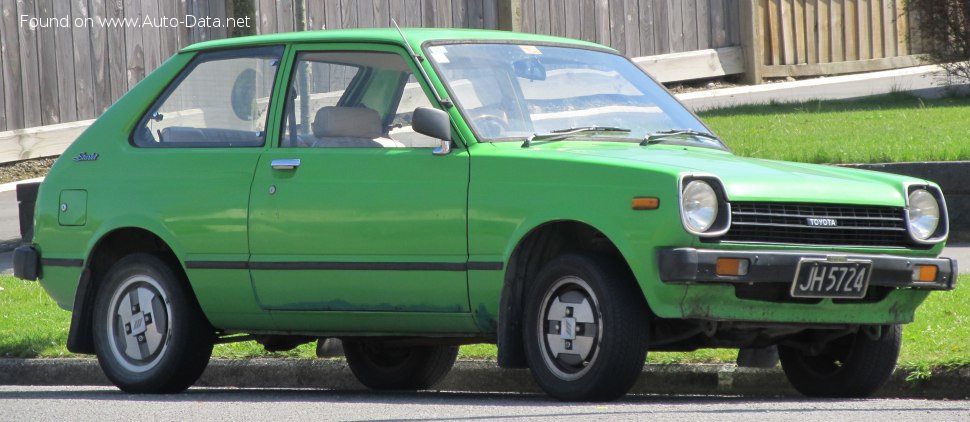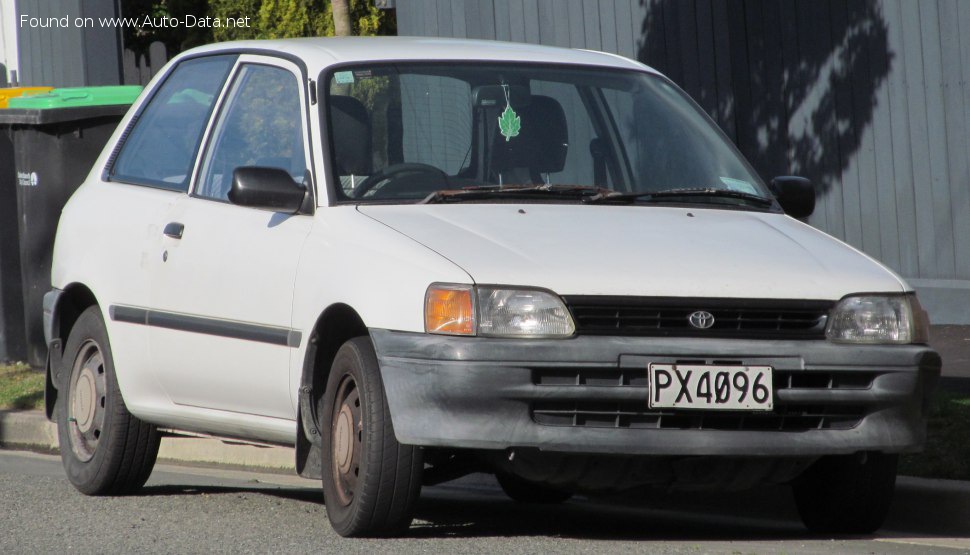
The Toyota Starlet IV 1.3i 16V Turbo, produced between 1989 and 1996, represents a significant iteration in Toyota’s long-running Starlet series. This generation, while not officially sold in the United States, was a popular and affordable compact hatchback primarily marketed in Japan and Europe. It distinguished itself with a focus on nimble handling, fuel efficiency, and, in the 1.3i 16V Turbo variant, surprisingly potent performance for its size and class. The Starlet IV aimed to provide practical transportation with a touch of sporting flair, appealing to a younger demographic and those seeking an economical yet engaging driving experience.
Toyota Starlet IV 1.3i 16V Turbo: A Detailed Overview
The Starlet IV occupied the subcompact hatchback segment, competing with vehicles like the Honda Civic, Nissan Micra (March), and Peugeot 205. It was offered in various trim levels and engine configurations, but the 1.3i 16V Turbo stands out as the performance-oriented model. This variant combined a turbocharged engine with a lightweight chassis, resulting in a spirited driving experience that belied its unassuming appearance. The Starlet IV’s success lay in its ability to offer a balance of practicality, affordability, and driving enjoyment, making it a popular choice in its target markets.
Engine & Performance
The heart of the Starlet IV 1.3i 16V Turbo is its 1.3-liter (1331 cc) inline-four cylinder engine. This engine, equipped with a turbocharger and intercooler, produced 135 horsepower at 6400 rpm and 157 Nm (115.8 lb.-ft.) of torque at 4800 rpm. The turbocharging significantly boosted power output, giving the Starlet a competitive edge in its class. Power per liter was an impressive 101.4 hp/l. This power was delivered to the front wheels via a five-speed manual transmission. The combination of a relatively lightweight body (830 kg or 1829.84 lbs) and the turbocharged engine resulted in a respectable weight-to-power ratio of 6.1 kg/hp and a top speed of 200 km/h (124.27 mph). The engine featured multi-port fuel injection and a compression ratio of 8.2:1, contributing to both performance and reasonable fuel economy.
Design & Features
The Starlet IV maintained the traditional hatchback body style, offering a practical and versatile layout. Its three-door configuration emphasized a sporty aesthetic, while the interior provided seating for five passengers. The design was functional rather than flamboyant, prioritizing practicality and affordability. Key features included disc brakes on all four wheels, a steering rack and pinion system with hydraulic power steering, and an Anti-lock Braking System (ABS) which was becoming increasingly common during this period. The interior was typically equipped with basic amenities, reflecting the car’s price point. Trunk space ranged from 225 liters (7.95 cu. ft.) with the rear seats up to 490 liters (17.3 cu. ft.) with the rear seats folded down, providing reasonable cargo capacity for a vehicle of its size. The vehicle’s dimensions were 3720 mm (146.46 in) in length, 1600 mm (62.99 in) in width, and 1380 mm (54.33 in) in height, with a wheelbase of 2300 mm (90.55 in).
Technical Specifications
| Brand | Toyota |
| Model | Starlet |
| Generation | Starlet IV |
| Type (Engine) | 1.3i 16V Turbo (135 Hp) |
| Start of production | 1989 |
| End of production | 1996 |
| Powertrain Architecture | Internal Combustion engine |
| Body type | Hatchback |
| Seats | 5 |
| Doors | 3 |
| Fuel Type | Petrol (Gasoline) |
| Maximum speed | 200 km/h (124.27 mph) |
| Weight-to-power ratio | 6.1 kg/Hp |
| Weight-to-torque ratio | 5.3 kg/Nm |
| Power | 135 Hp @ 6400 rpm |
| Power per litre | 101.4 Hp/l |
| Torque | 157 Nm @ 4800 rpm (115.8 lb.-ft. @ 4800 rpm) |
| Engine layout | Front, Transverse |
| Engine displacement | 1331 cm3 (81.22 cu. in.) |
| Number of cylinders | 4 |
| Engine configuration | Inline |
| Cylinder Bore | 74 mm (2.91 in.) |
| Piston Stroke | 77.4 mm (3.05 in.) |
| Compression ratio | 8.2:1 |
| Number of valves per cylinder | 4 |
| Fuel injection system | Multi-port manifold injection |
| Engine aspiration | Turbocharger, Intercooler |
| Kerb Weight | 830 kg (1829.84 lbs) |
| Trunk (boot) space – minimum | 225 l (7.95 cu. ft.) |
| Trunk (boot) space – maximum | 490 l (17.3 cu. ft.) |
| Fuel tank capacity | 40 l (10.57 US gal | 8.8 UK gal) |
| Length | 3720 mm (146.46 in.) |
| Width | 1600 mm (62.99 in.) |
| Height | 1380 mm (54.33 in.) |
| Wheelbase | 2300 mm (90.55 in.) |
| Front track | 1390 mm (54.72 in.) |
| Rear (Back) track | 1370 mm (53.94 in.) |
| Minimum turning circle (turning diameter) | 9.8 m (32.15 ft.) |
| Drivetrain Architecture | ICE, Front wheel drive |
| Drive wheel | Front wheel drive |
| Number of gears and type of gearbox | 5 gears, manual transmission |
| Front suspension | Wishbone |
| Rear suspension | Coil spring |
| Front brakes | Disc |
| Rear brakes | Disc |
| Assisting systems | ABS (Anti-lock braking system) |
| Steering type | Steering rack and pinion |
| Power steering | Hydraulic Steering |
| Tires size | 167/70 R13 |
| Wheel rims size | 13 |
The Toyota Starlet IV 1.3i 16V Turbo, while largely unknown in the American market, remains a fondly remembered vehicle for its blend of affordability, practicality, and surprisingly engaging performance. It represents a significant chapter in Toyota’s history, demonstrating the company’s ability to create compelling compact cars that resonated with drivers in Europe and Asia.