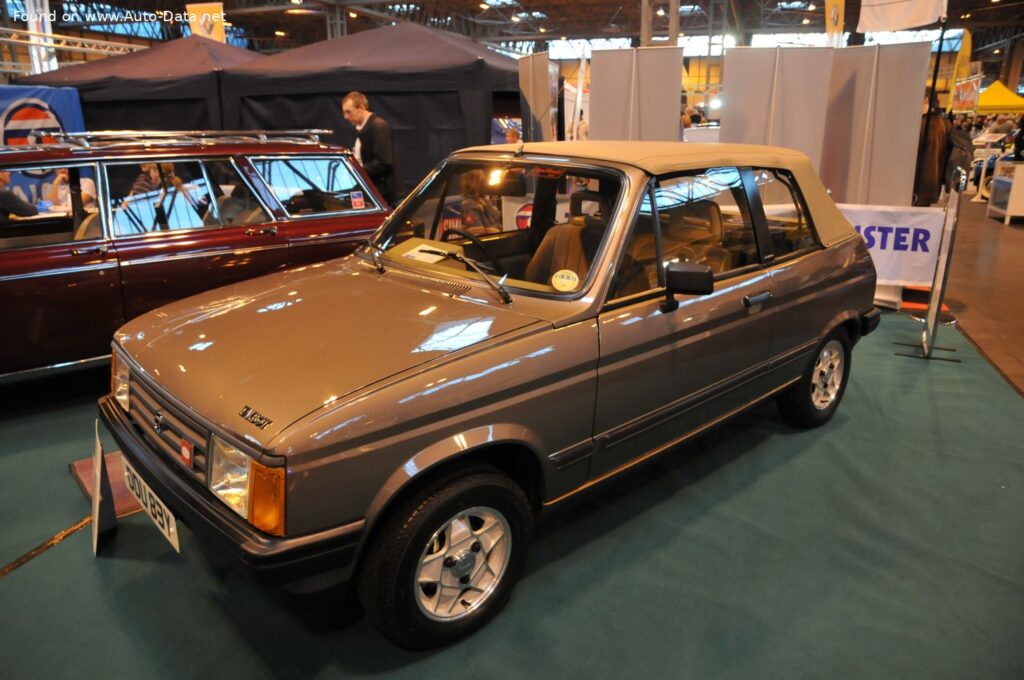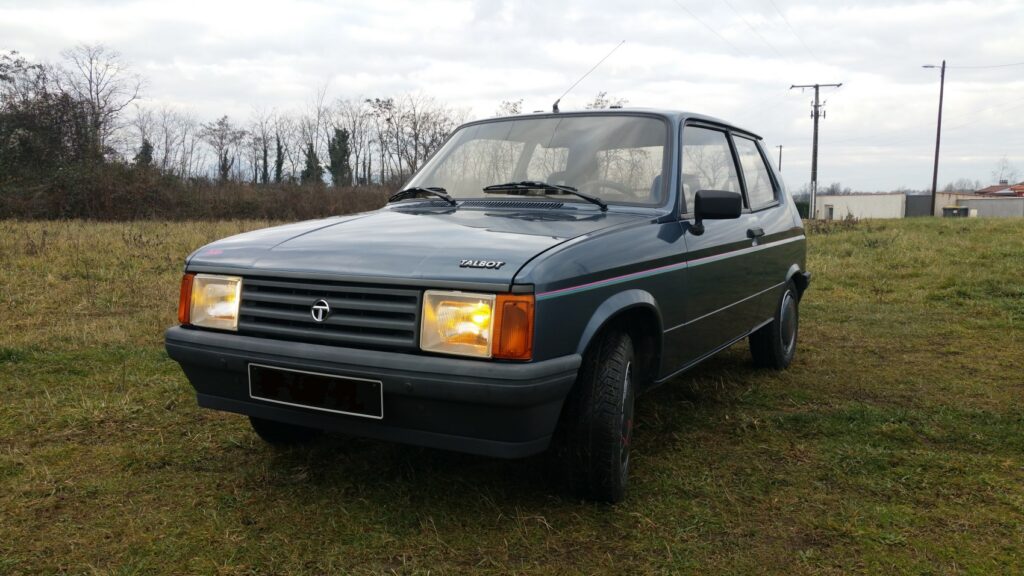
The Talbot Samba was a supermini car produced between 1981 and 1986, primarily for the European market. Developed as part of the joint venture between Peugeot and Simca (later Chrysler Europe, then Talbot), the Samba represented a significant effort to create a modern, efficient, and stylish small car to compete with rivals like the Renault 5, Fiat Uno, and Volkswagen Polo. The 1.4 Rallye variant, produced from 1983 to 1986, was the performance-oriented version of the Samba, aimed at enthusiasts seeking a sporty and affordable hatchback. While never officially sold in the United States, the Samba offers a fascinating case study in 1980s European automotive design and engineering, and the Rallye version, in particular, gained a following for its nimble handling and spirited performance.
Talbot Samba 1.4 Rallye: A European Supermini
The Talbot brand itself was a product of corporate restructuring. Following Chrysler Europe’s financial difficulties, Peugeot acquired the company in 1978, rebranding it as Talbot. The Samba was one of the first models to emerge under the Talbot name, built at the Poissy plant in France. The car was intended to replace both the Simca 1100 and the Chrysler Horizon in the smaller car segment. The 1.4 Rallye was introduced to capitalize on the growing popularity of hot hatches in Europe, offering a more engaging driving experience than the standard Samba models.
Origins and Market Positioning
The Talbot Samba was conceived during a period of significant change in the automotive industry. The oil crises of the 1970s had spurred demand for smaller, more fuel-efficient vehicles. European manufacturers responded with a wave of superminis, and the Samba was designed to be a competitive offering. The Rallye version specifically targeted buyers who wanted a car that was fun to drive, relatively affordable, and stood out from the crowd. It occupied a niche between basic city cars and more expensive, fully-fledged performance models.
Engine & Performance
The heart of the Talbot Samba 1.4 Rallye was a 1.4-liter, naturally aspirated inline-four cylinder gasoline engine. This engine produced 79 horsepower, a respectable figure for a car of its size and weight in the early 1980s. While not a powerhouse, the engine’s relatively light weight – the Samba was a small car, tipping the scales at around 780 kilograms (1720 pounds) – allowed for brisk acceleration and lively performance. The engine was coupled with a four-speed manual transmission, providing direct control over the power delivery.
The Rallye variant featured several modifications to enhance its performance compared to the standard Samba. These included a slightly higher compression ratio, a tuned exhaust system, and a revised carburetor. These changes, while modest, contributed to a noticeable improvement in throttle response and overall driving enjoyment. The suspension was also slightly stiffer, providing better handling and reduced body roll. Top speed was around 97 miles per hour, and acceleration from 0 to 60 mph took approximately 11.5 seconds. While these figures may seem modest by modern standards, they were competitive within the supermini segment at the time. The Rallye’s nimble handling and responsive engine made it a popular choice for drivers who enjoyed spirited driving on winding roads.
Design & Features
The Talbot Samba 1.4 Rallye was a three-door hatchback, characterized by its clean, angular lines and relatively compact dimensions. The design, penned by Italian designer Giorgetto Giugiaro, was modern for its time, featuring a sloping roofline and a distinctive front grille. The Rallye version was visually distinguished from the standard Samba by several features, including a rear spoiler, flared wheel arches, and distinctive alloy wheels. These additions gave the Rallye a more aggressive and sporty appearance.
Inside, the Samba 1.4 Rallye offered a functional and relatively basic interior. The dashboard was straightforward, with clearly labeled controls. The seats were typically upholstered in a sporty fabric pattern, and the Rallye often featured additional instrumentation, such as a rev counter. Safety features were limited by the standards of the time, with seatbelts being the primary safety equipment. Air conditioning and power windows were not typically offered on the Rallye model, reflecting its focus on affordability and performance rather than luxury. The interior space was adequate for a supermini, offering comfortable seating for four adults, although rear legroom was somewhat limited. The hatchback configuration provided a reasonable amount of cargo space, making the Samba a practical choice for everyday use.
Technical Specifications
| Brand | Talbot |
| Model | Samba |
| Generation | Samba (51A) |
| Type (Engine) | 1.4 Rallye (79 Hp) |
| Start of production | 1983 |
| End of production | 1986 |
| Powertrain Architecture | Internal Combustion engine |
| Body type | Hatchback |
| Fuel Type | Petrol (Gasoline) |
| Engine Power | 79 Hp |
| Engine Aspiration | Naturally aspirated engine |
| Engine Displacement | 1.4 Liters |
| Transmission | 4-speed Manual |
| Drive Type | Front-Wheel Drive |
| Weight | Approximately 780 kg (1720 lbs) |
| Top Speed | Approximately 97 mph |
| 0-60 mph | Approximately 11.5 seconds |
The Talbot Samba, and particularly the 1.4 Rallye, represents a significant chapter in the history of European superminis. While the Talbot brand ultimately disappeared in the late 1980s, the Samba left a lasting impression on those who drove it. Its combination of stylish design, spirited performance, and affordability made it a popular choice for a generation of European drivers. The Rallye version, with its sporty enhancements, remains a sought-after classic among enthusiasts, embodying the spirit of the 1980s hot hatch era.