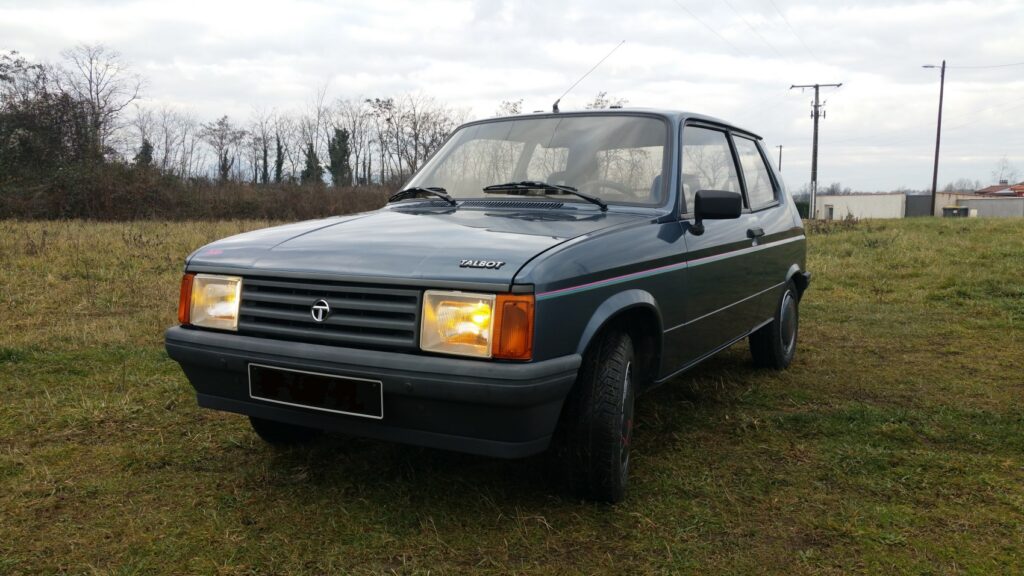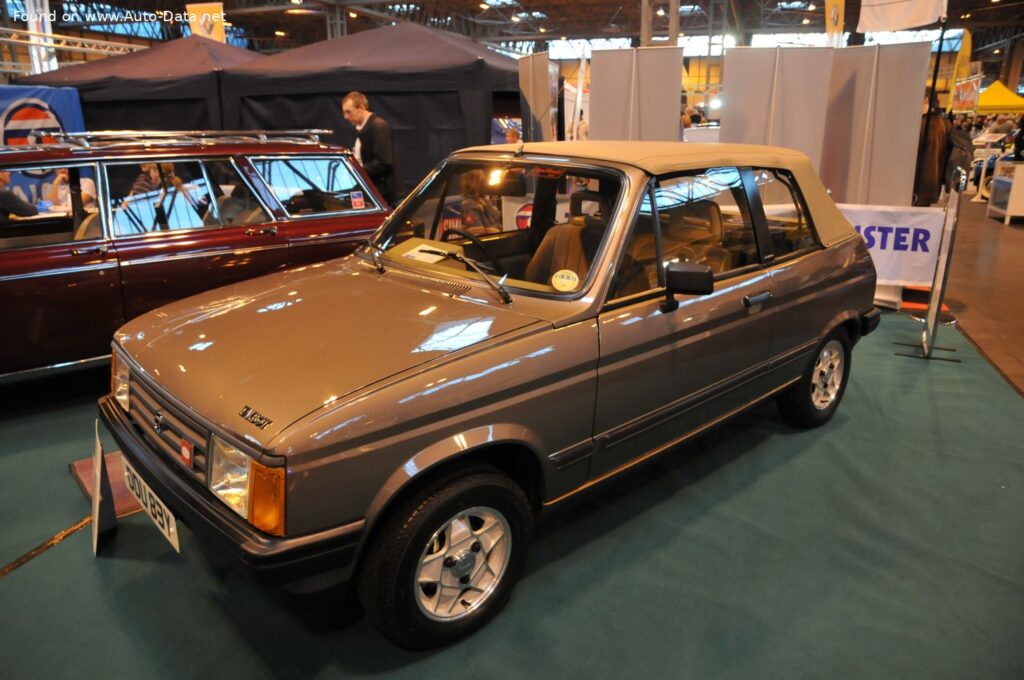
The Talbot Samba Cabrio (51E) 1.4, produced between 1981 and 1986, represents a charming and relatively rare chapter in the history of the British automotive industry. A product of the short-lived Peugeot Talbot joint venture, the Samba was a supermini designed to compete with the likes of the Fiat Panda, Renault 5, and Austin Metro. The Cabriolet version, designated 51E, offered open-air motoring in a small, affordable package, primarily aimed at the European market. While not officially sold in the United States, the Samba Cabrio provides an interesting case study in 1980s European automotive design and the challenges faced by the Peugeot Talbot partnership. It was a final flourish for the Talbot brand before its eventual demise, and the Cabriolet, in particular, is now sought after by classic car enthusiasts.
The Talbot Samba Cabrio: A British-French Collaboration
The Talbot Samba emerged from a period of rationalization within the European automotive industry. Peugeot and Simca (which had been acquired by Chrysler Europe, later sold to Peugeot) merged to form Peugeot Talbot in 1978. The goal was to streamline production and create a more competitive range of vehicles. The Samba, based on the Peugeot 104 platform, was intended to fill the supermini gap in the Talbot lineup. The Cabriolet version, introduced a few years after the initial hatchback, was a response to the growing popularity of small, affordable convertibles. It was largely a French design, with British production, reflecting the complex nature of the Peugeot Talbot operation. The Samba, and especially the Cabriolet, aimed to offer a stylish and accessible alternative to more expensive convertibles of the era.
Engine & Performance
The Talbot Samba Cabrio 1.4 was powered by a 1.4-liter, naturally aspirated inline-four cylinder gasoline engine. This engine, derived from the Peugeot 104’s unit, produced 79 horsepower. While not a performance car by any stretch, the 1.4-liter engine provided adequate power for the Samba’s lightweight chassis. The engine was paired with a four-speed manual transmission, driving the front wheels. Performance figures were modest, with a top speed around 95 miles per hour and acceleration from 0 to 60 mph taking approximately 13 seconds. Fuel economy was a reasonable consideration for the time, averaging around 40-45 miles per gallon. The engine’s simplicity and reliability were key selling points, although it lacked the sophistication of more modern powertrains. The focus was on providing economical and dependable transportation rather than outright speed.
Design & Features
The Talbot Samba Cabrio’s design was distinctly 1980s, characterized by its angular lines and relatively compact dimensions. The Cabriolet version featured a manually operated soft top, which could be folded down to provide open-air driving. The roof design was relatively simple, lacking the complex mechanisms found in more expensive convertibles. The body style was a two-door, four-seater configuration, although rear passenger space was limited. The interior was functional and basic, reflecting the car’s affordable price point. Features included cloth upholstery, a basic instrument cluster, and manually operated windows and door locks. Safety features were limited by the standards of today, consisting primarily of seatbelts. The Samba Cabrio’s appeal lay in its cheerful styling and the novelty of offering a convertible experience at a relatively low cost. The car’s small size made it easy to maneuver in urban environments, and its open-top configuration added a sense of fun and freedom. The exterior trim was typically plastic, keeping weight down and costs manageable. The Samba Cabrio was available in a range of bright, fashionable colors, further enhancing its youthful appeal.
Market Position and Legacy
The Talbot Samba Cabrio was primarily marketed in Europe, particularly in France and the United Kingdom. It occupied a niche segment, appealing to buyers who wanted an affordable and stylish convertible. It competed with other small convertibles, such as the Fiat Panda Cabriolet and the Citroën 2CV Cabriolet. However, the Samba Cabrio offered a more modern design and a slightly more refined driving experience than some of its rivals. Despite its appeal, the Samba Cabrio suffered from the broader challenges facing the Talbot brand. The Peugeot Talbot partnership was plagued by internal conflicts and quality control issues. The Talbot brand was ultimately discontinued in 1986, and the Samba was replaced by the Peugeot 205. Today, the Talbot Samba Cabrio is a relatively rare and collectible classic car. Enthusiasts appreciate its quirky styling, simple mechanics, and the nostalgic charm of 1980s automotive design. It represents a unique and often overlooked chapter in the history of the British and French automotive industries.
Technical Specifications
| Brand | Talbot |
| Model | Samba |
| Generation | Samba Cabrio (51E) |
| Type (Engine) | 1.4 (79 Hp) |
| Start of production | 1981 |
| End of production | 1986 |
| Powertrain Architecture | Internal Combustion engine |
| Body type | Cabriolet |
| Fuel Type | Petrol (Gasoline) |
| Power | 79 Hp |
| Engine aspiration | Naturally aspirated engine |