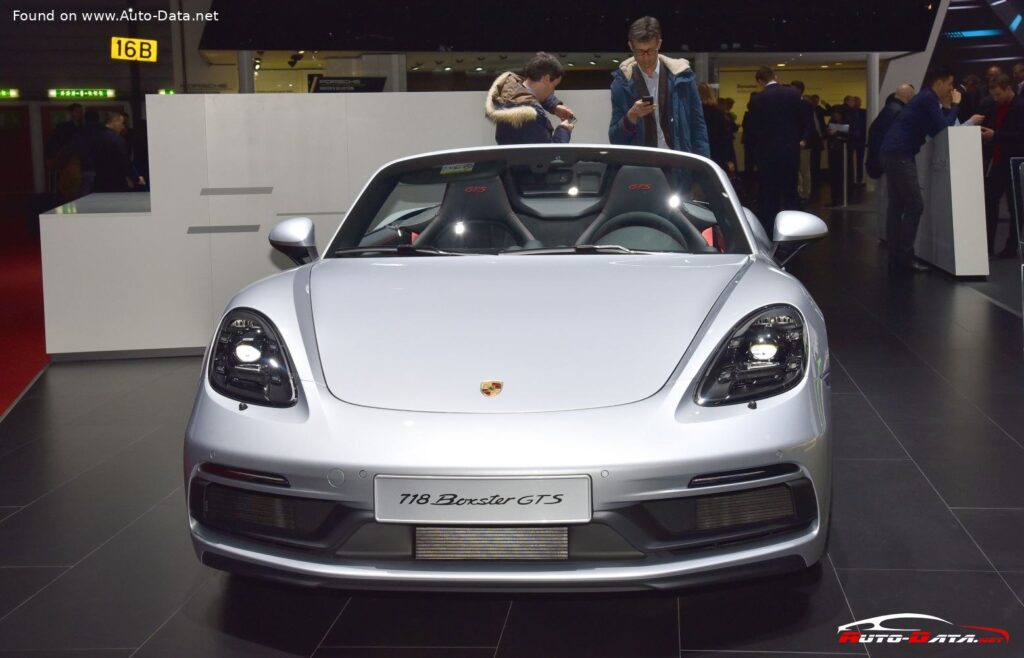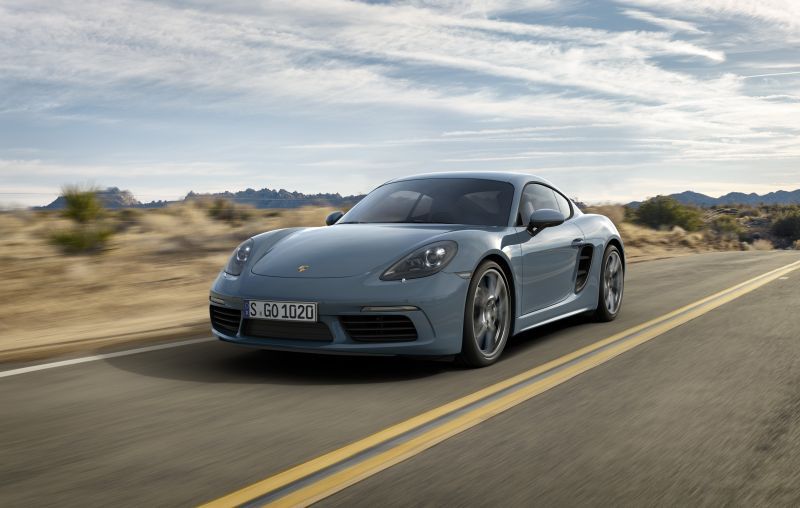
The Porsche 718 Cayman GTS 4.0, introduced in September 2020, represents a significant return to form for the Cayman line. It marks a departure from the turbocharged four-cylinder engines of previous 718 models, opting instead for a naturally aspirated 4.0-liter flat-six engine. Positioned as the performance-oriented variant within the 718 Cayman range, the GTS 4.0 caters to enthusiasts seeking a more visceral and engaging driving experience. This model is primarily sold in global markets, including Europe and North America, and is considered a direct competitor to other high-performance sports coupes like the Chevrolet Corvette and the BMW M2.
Porsche 718 Cayman (982) GTS 4.0: A Return to Naturally Aspirated Power
The 982 generation Cayman, launched in 2016, initially utilized smaller displacement turbocharged engines. However, demand for a naturally aspirated option led Porsche to reintroduce the 4.0-liter engine, previously found in the 718 Spyder and 718 GT4. The GTS 4.0 bridges the gap between these more focused models and the base Cayman, offering a compelling blend of performance, luxury, and everyday usability. It’s a two-door, two-seat coupe designed for drivers who prioritize handling and driver engagement.
Engine & Performance
The heart of the 718 Cayman GTS 4.0 is its 3,995 cc (243.79 cu. in.) naturally aspirated 4.0-liter flat-six engine, designated DKDA. This engine produces 400 horsepower at 7,000 rpm and 430 Nm (317.15 lb.-ft.) of torque at 5,500 rpm. The engine boasts a high compression ratio of 13:1 and utilizes direct fuel injection. Its power-to-weight ratio is an impressive 3.6 kg/Hp, and 278.7 Hp/tonne. The engine is longitudinally mounted in a mid-engine configuration, contributing to the car’s balanced handling characteristics. Power is delivered to the rear wheels via a seven-speed Porsche Doppelkupplung (PDK) dual-clutch automatic transmission. This combination allows for rapid gear changes and contributes to a 0-60 mph acceleration time of just 3.8 seconds, 0-100 km/h in 4.0 seconds, and a top speed of 178.95 mph (288 km/h). The engine’s naturally aspirated design provides a linear power delivery and a distinctive exhaust note, appealing to purists.
Design & Features
The 718 Cayman GTS 4.0 maintains the classic coupe silhouette of the 982 generation Cayman. Key design elements include a low-slung profile, sculpted bodywork, and prominent air intakes. The GTS model receives several visual enhancements, including a unique front fascia, darkened bi-xenon headlights, and a rear diffuser with blacked-out exhaust tips. The interior is focused on the driver, with supportive sport seats, a leather-wrapped steering wheel, and a modern infotainment system. Standard features include Porsche Active Suspension Management (PASM), Porsche Torque Vectoring (PTV), and a sport exhaust system. The car’s relatively compact dimensions – 4,405 mm (173.43 in.) in length, 1,801 mm (70.91 in.) in width, and 1,276 mm (50.24 in.) in height – contribute to its agility. Practicality is considered with 270 liters (9.53 cu. ft.) of trunk space, making it surprisingly usable for a sports car. The car’s drag coefficient is rated at 0.31.
Technical Specifications
| Brand | Porsche |
| Model | 718 |
| Generation | 718 Cayman (982) |
| Type | GTS 4.0 (400 Hp) PDK |
| Start of production | September, 2020 |
| Powertrain Architecture | Internal Combustion engine |
| Body type | Coupe |
| Seats | 2 |
| Doors | 2 |
| Fuel consumption (economy) – urban (NEDC) | 13 l/100 km (18.1 US mpg, 21.7 UK mpg, 7.7 km/l) |
| Fuel consumption (economy) – extra urban (NEDC) | 7.6 l/100 km (30.9 US mpg, 37.2 UK mpg, 13.2 km/l) |
| Fuel consumption (economy) – combined (NEDC) | 9.6 l/100 km (24.5 US mpg, 29.4 UK mpg, 10.4 km/l) |
| CO2 emissions (NEDC) | 219 g/km |
| Fuel Type | Petrol (Gasoline) |
| Acceleration 0 – 100 km/h | 4.0 sec |
| Acceleration 0 – 62 mph | 4.0 sec |
| Acceleration 0 – 60 mph | 3.8 sec |
| Acceleration 0 – 200 km/h | 13.7 sec |
| Maximum speed | 288 km/h (178.95 mph) |
| Emission standard | Euro 6d-ISC-FCM |
| Weight-to-power ratio | 3.6 kg/Hp, 278.7 Hp/tonne |
| Weight-to-torque ratio | 3.3 kg/Nm, 299.7 Nm/tonne |
| Power | 400 Hp @ 7000 rpm |
| Power per litre | 100.1 Hp/l |
| Torque | 430 Nm @ 5500 rpm (317.15 lb.-ft. @ 5500 rpm) |
| Maximum engine speed | 7800 rpm |
| Engine layout | Middle, Longitudinal |
| Engine Model/Code | DKDA |
| Engine displacement | 3995 cm3 (243.79 cu. in.) |
| Number of cylinders | 6 |
| Engine configuration | Boxer |
| Cylinder Bore | 102.01 mm (4.02 in.) |
| Piston Stroke | 81.51 mm (3.21 in.) |
| Compression ratio | 13:1 |
| Number of valves per cylinder | 4 |
| Fuel injection system | Direct injection |
| Engine aspiration | Naturally aspirated engine |
| Engine oil capacity | 8 l (8.45 US qt | 7.04 UK qt) |
| Kerb Weight | 1435 kg (3163.63 lbs.) |
| Max. weight | 1730 kg (3814 lbs.) |
| Max load | 295 kg (650.36 lbs.) |
| Trunk (boot) space – minimum | 270 l (9.53 cu. ft.) |
| Fuel tank capacity | 64 l (16.91 US gal | 14.08 UK gal) |
| Length | 4405 mm (173.43 in.) |
| Width | 1801 mm (70.91 in.) |
| Width including mirrors | 1994 mm (78.5 in.) |
| Height | 1276 mm (50.24 in.) |
| Wheelbase | 2475 mm (97.44 in.) |
| Front track | 1527 mm (60.12 in.) |
| Rear (Back) track | 1535 mm (60.43 in.) |
| Drag coefficient (Cd) | 0.31 |
| Minimum turning circle (turning diameter) | 10.98 m (36.02 ft.) |
| Drive wheel | Rear wheel drive |
| Number of gears and type of gearbox | 7 gears, automatic transmission PDK |
| Front suspension | Independent coil spring |
| Rear suspension | Independent coil spring |
| Front brakes | Ventilated discs, 350×34 mm |
| Rear brakes | Ventilated discs, 330×28 mm |
| Assisting systems | ABS (Anti-lock braking system) |
| Steering type | Steering rack and pinion |
| Power steering | Electric Steering |
| Tires size Front | 235/35 ZR20 88Y |
| Tires size Rear | 265/35 ZR20 95Y |
| Wheel rims size Front | 8.5J x 20 |
| Wheel rims size Rear | 10.5J x 20 |
The Porsche 718 Cayman GTS 4.0 represents a compelling offering in the sports car segment, blending exhilarating performance with a refined driving experience. Its return to a naturally aspirated engine has been widely praised by enthusiasts, solidifying its position as a true driver’s car.