
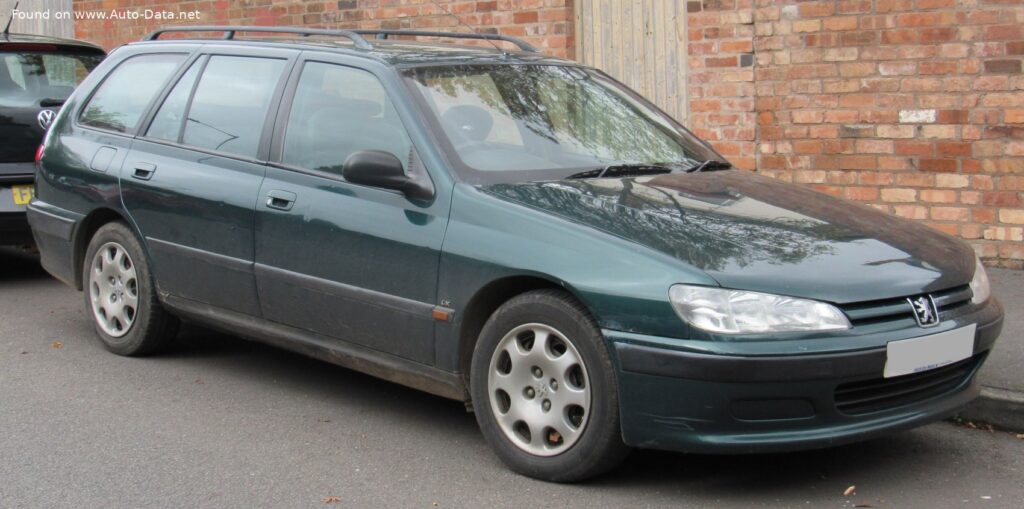
The Peugeot 406 Break, specifically the Phase I model produced between 1996 and 1999, represents a significant offering from the French automaker in the mid-size family car segment. As a station wagon (estate) variant of the popular 406 sedan, the Break prioritized practicality and cargo space without sacrificing the comfortable ride and stylish design that characterized the 406 range. While not officially sold in the United States, the 406 and its Break derivative were highly regarded in Europe for their blend of affordability, refinement, and versatility. This article details the technical specifications and characteristics of the 1.8 16V version of the 406 Break, a popular engine choice for European buyers.
Peugeot 406 Break: A Detailed Overview
The Peugeot 406 was launched in 1995 as a replacement for the 405, aiming to provide a more modern and sophisticated package. The Break version, introduced shortly after, expanded the 406’s appeal to families and those requiring increased load-carrying capacity. The Phase I models (1996-1999) are identifiable by their distinct front-end styling and interior features. The 1.8 16V engine option offered a balance between fuel efficiency and adequate performance, making it a common choice for everyday driving. The 406 Break competed with other European estates like the Ford Mondeo Estate, Vauxhall/Opel Vectra Estate, and Renault Laguna Estate.
Engine & Performance
The 1996 Peugeot 406 Break 1.8 16V is powered by a 1.8-liter inline four-cylinder gasoline engine, designated LFY XU7JP4. This naturally aspirated engine produces 110 horsepower at 5500 rpm and 155 Nm (114.32 lb.-ft.) of torque at 4250 rpm. The engine features multi-port fuel injection and a double overhead camshaft (DOHC) valvetrain with four valves per cylinder, contributing to its relatively efficient operation. The engine’s power-to-liter ratio is 62.5 hp/l. Power is delivered to the front wheels via a five-speed manual transmission. Performance figures include a 0-100 km/h (0-62 mph) acceleration time of 12.6 seconds and a maximum speed of 185 km/h (114.95 mph). The weight-to-power ratio is 11.9 kg/Hp, and the weight-to-torque ratio is 8.5 kg/Nm. Fuel economy is rated at 8.5 l/100 km (27.7 US mpg, 33.2 UK mpg) on a combined cycle, with 12.2 l/100 km (19.3 US mpg, 23.2 UK mpg) in urban conditions and 6.9 l/100 km (34.1 US mpg, 40.9 UK mpg) on the extra-urban cycle.
Design & Features
The Peugeot 406 Break is a five-door, five-seat station wagon. Its design emphasizes flowing lines and a relatively low-slung profile for a vehicle of its type. The Break’s key feature is its expansive cargo area, offering 525 liters (18.54 cu. ft.) of space with the rear seats up and a substantial 1740 liters (61.45 cu. ft.) with the seats folded down. This versatility made it a practical choice for families and those needing to transport larger items. Standard safety features for the era included an Anti-lock Braking System (ABS). The suspension utilizes a wishbone setup at the front and a multi-link arrangement at the rear, designed to provide a comfortable ride and reasonable handling. The steering is rack and pinion with hydraulic power assistance. The vehicle rides on 195/65 R15 tires. The interior, while not overtly luxurious, was well-appointed for its class, offering a comfortable and functional environment for driver and passengers.
Technical Specifications
| Brand | Peugeot |
| Model | 406 |
| Generation | 406 Break (Phase I, 1996) |
| Type (Engine) | 1.8 16V (110 Hp) |
| Start of production | 1996 |
| End of production | 1999 |
| Powertrain Architecture | Internal Combustion engine |
| Body type | Station wagon (estate) |
| Seats | 5 |
| Doors | 5 |
| Fuel consumption (urban) | 12.2 l/100 km (19.3 US mpg, 23.2 UK mpg) |
| Fuel consumption (extra urban) | 6.9 l/100 km (34.1 US mpg, 40.9 UK mpg) |
| Fuel consumption (combined) | 8.5 l/100 km (27.7 US mpg, 33.2 UK mpg) |
| Fuel Type | Petrol (Gasoline) |
| Acceleration 0 – 100 km/h | 12.6 sec |
| Acceleration 0 – 62 mph | 12.6 sec |
| Acceleration 0 – 60 mph | 12 sec |
| Maximum speed | 185 km/h (114.95 mph) |
| Weight-to-power ratio | 11.9 kg/Hp |
| Weight-to-torque ratio | 8.5 kg/Nm |
| Power | 110 Hp @ 5500 rpm |
| Power per litre | 62.5 Hp/l |
| Torque | 155 Nm @ 4250 rpm (114.32 lb.-ft. @ 4250 rpm) |
| Engine layout | Front, Transverse |
| Engine Model/Code | LFY XU7JP4 |
| Engine displacement | 1761 cm3 (107.46 cu. in.) |
| Number of cylinders | 4 |
| Engine configuration | Inline |
| Cylinder Bore | 83 mm (3.27 in.) |
| Piston Stroke | 81.4 mm (3.2 in.) |
| Compression ratio | 10:1 |
| Number of valves per cylinder | 4 |
| Fuel injection system | Multi-port manifold injection |
| Engine aspiration | Naturally aspirated |
| Valvetrain | DOHC |
| Engine oil capacity | 4.25 l (4.49 US qt | 3.74 UK qt) |
| Coolant | 7.4 l (7.82 US qt | 6.51 UK qt) |
| Kerb Weight | 1310 kg (2888.06 lbs.) |
| Max. weight | 1805 kg (3979.34 lbs.) |
| Max load | 495 kg (1091.29 lbs.) |
| Trunk (boot) space – minimum | 525 l (18.54 cu. ft.) |
| Trunk (boot) space – maximum | 1740 l (61.45 cu. ft.) |
| Fuel tank capacity | 70 l (18.49 US gal | 15.4 UK gal) |
| Length | 4725 mm (186.02 in.) |
| Width | 1765 mm (69.49 in.) |
| Height | 1500 mm (59.06 in.) |
| Wheelbase | 2700 mm (106.3 in.) |
| Front track | 1500 mm (59.06 in.) |
| Rear track | 1480 mm (58.27 in.) |
| Drivetrain Architecture | Front wheel drive |
| Number of gears | 5 |
| Gearbox type | Manual transmission |
| Front suspension | Wishbone |
| Rear suspension | Several levers and rods |
| Front brakes | Disc |
| Rear brakes | Drum |
| Assisting systems | ABS (Anti-lock braking system) |
| Steering type | Steering rack and pinion |
| Power steering | Hydraulic |
| Tires size | 195/65 R15 |
The Peugeot 406 Break 1.8 16V offered a compelling package for European buyers seeking a practical, comfortable, and stylish station wagon. While never officially available in the US market, it remains a well-regarded vehicle within its segment, known for its reliability and versatility.
