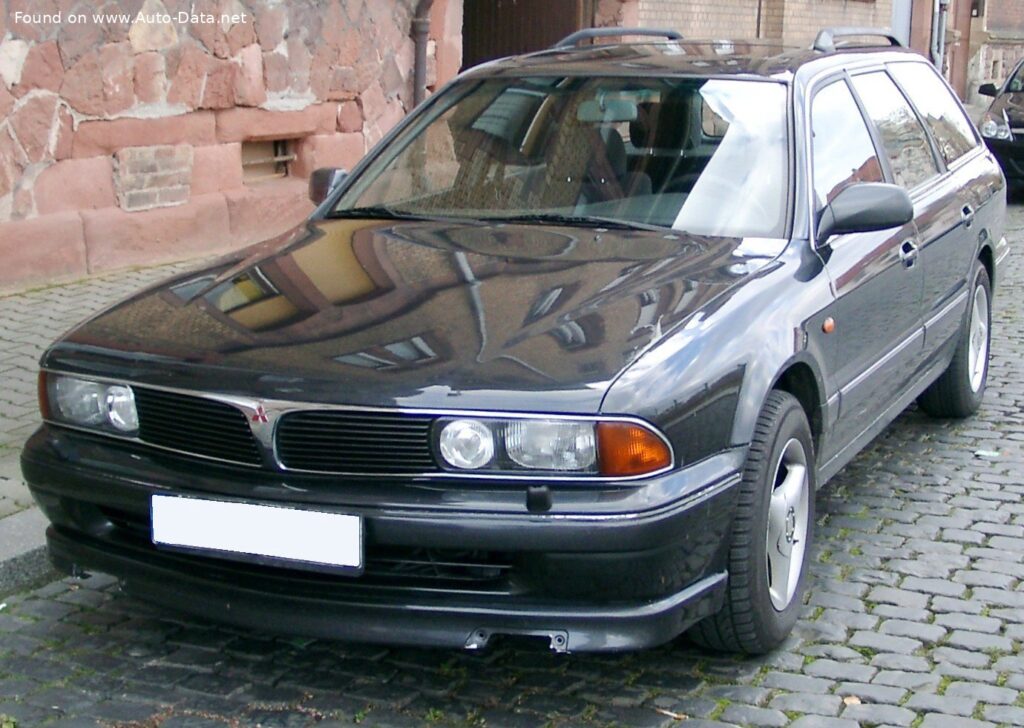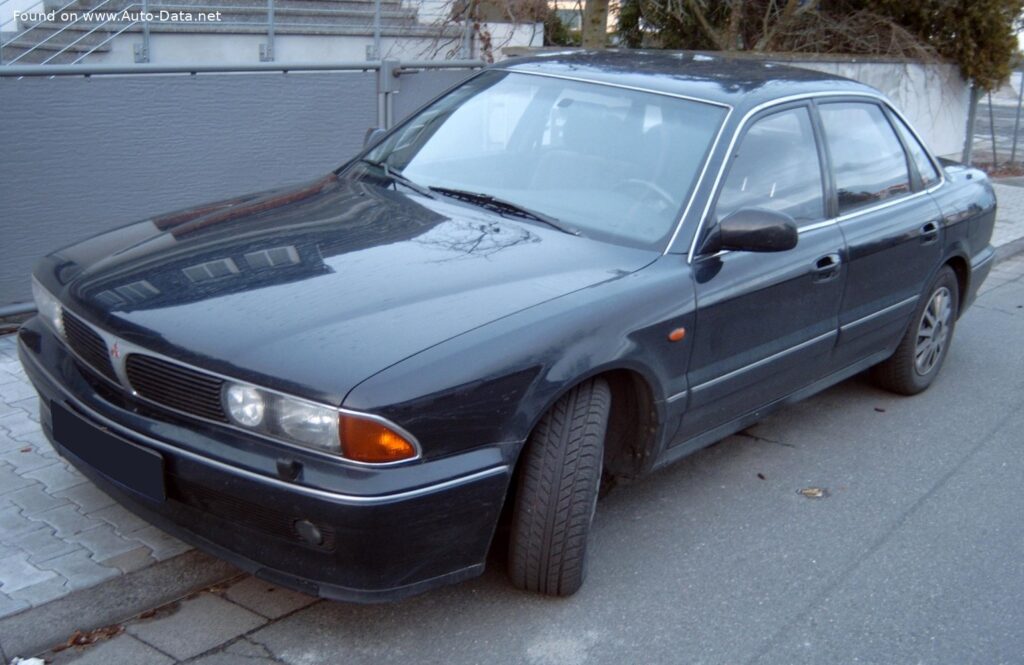
The Mitsubishi Sigma (F16A) is a mid-size sedan produced by Mitsubishi Motors between 1990 and 1996. While not officially sold in the United States, the Sigma was a significant model in the European and Asian markets, particularly as a competitor to vehicles like the Ford Mondeo, Opel Vectra, and Toyota Camry. The Sigma represented Mitsubishi’s attempt to create a more refined and technologically advanced offering in the crowded mid-size segment, focusing on comfort, reliability, and a relatively powerful engine for its class. This article details the specifications and characteristics of the F16A generation Sigma, equipped with the 3.0-liter V6 engine.
Mitsubishi Sigma (F16A): An Overview
The Sigma was positioned as a step up from Mitsubishi’s more basic offerings, aiming for a more premium feel and driving experience. It was available with a range of engines, but the 3.0-liter V6, producing 177 horsepower, was the flagship powertrain. The F16A designation refers to the specific chassis code for this generation of the Sigma. The car’s design emphasized aerodynamic efficiency and a spacious interior, catering to families and drivers seeking a comfortable and practical vehicle. The Sigma’s production run, though relatively short, saw it become a popular choice in its target markets, known for its smooth ride and dependable performance.
Engine & Performance
The heart of the Sigma F16A 3.0 V6 is its 2.972-liter (181.36 cubic inches) naturally aspirated V6 engine. This engine produces 177 horsepower at 5500 rpm and 251 Nm (185.13 lb-ft) of torque at 3000 rpm. The engine features a 10:1 compression ratio and utilizes a multi-port fuel injection system. Power per liter is a respectable 59.6 hp/l. The engine is transversely mounted in the front of the vehicle, driving the front wheels. Acceleration from 0 to 100 km/h (0-62 mph) takes approximately 9 seconds, while 0-60 mph is achieved in 8.6 seconds. The Sigma’s top speed is rated at 220 km/h (136.7 mph). The weight-to-power ratio of 8.3 kg/hp and a weight-to-torque ratio of 5.8 kg/Nm contribute to a responsive driving experience. Fuel consumption is rated at 10.3 liters per 100 kilometers (22.8 US mpg, 27.4 UK mpg, 9.7 km/l).
Design & Features
The Mitsubishi Sigma F16A is a four-door sedan with a traditional three-box design. Its exterior styling was conservative for the early 1990s, prioritizing aerodynamic efficiency and a clean aesthetic. The car’s dimensions are 4750 mm (187.01 inches) in length, 1775 mm (69.88 inches) in width, and 1435 mm (56.5 inches) in height, with a wheelbase of 2720 mm (107.09 inches). The interior offers seating for five passengers and provides a comfortable and spacious cabin. Key features included hydraulic power steering, ventilated disc brakes on all four wheels, and an Anti-lock Braking System (ABS) for enhanced safety. Trunk space is generous, ranging from 447 liters (15.79 cubic feet) with the rear seats up to 892 liters (31.5 cubic feet) with the rear seats folded down. The Sigma’s focus was on providing a practical and comfortable vehicle for everyday use, with a focus on reliability and ease of maintenance.
Technical Specifications
| Brand | Mitsubishi |
| Model | Sigma |
| Generation | Sigma (F16A) |
| Type (Engine) | 3.0 V6 (177 Hp) |
| Start of production | 1990 |
| End of production | 1996 |
| Powertrain Architecture | Internal Combustion engine |
| Body type | Sedan |
| Seats | 5 |
| Doors | 4 |
| Fuel consumption (combined) | 10.3 l/100 km |
| Fuel consumption (US mpg) | 22.8 US mpg |
| Fuel consumption (UK mpg) | 27.4 UK mpg |
| Fuel consumption (km/l) | 9.7 km/l |
| Fuel Type | Petrol (Gasoline) |
| Acceleration 0 – 100 km/h | 9 sec |
| Acceleration 0 – 62 mph | 9 sec |
| Acceleration 0 – 60 mph | 8.6 sec |
| Maximum speed | 220 km/h |
| Maximum speed (mph) | 136.7 mph |
| Weight-to-power ratio | 8.3 kg/Hp |
| Weight-to-torque ratio | 5.8 kg/Nm |
| Power | 177 Hp @ 5500 rpm |
| Power per litre | 59.6 Hp/l |
| Torque | 251 Nm @ 3000 rpm |
| Torque (lb.-ft.) | 185.13 lb.-ft. @ 3000 rpm |
| Engine layout | Front, Transverse |
| Engine displacement | 2972 cm3 |
| Engine displacement (cu. in.) | 181.36 cu. in. |
| Number of cylinders | 6 |
| Engine configuration | V-engine |
| Cylinder Bore | 91.1 mm |
| Cylinder Bore (in.) | 3.59 in. |
| Piston Stroke | 76 mm |
| Piston Stroke (in.) | 2.99 in. |
| Compression ratio | 10:1 |
| Number of valves per cylinder | 2 |
| Fuel injection system | Multi-port manifold injection |
| Engine aspiration | Naturally aspirated engine |
| Valvetrain | OHC |
| Kerb Weight | 1468 kg |
| Kerb Weight (lbs.) | 3236.39 lbs. |
| Max. weight | 2070 kg |
| Max. weight (lbs.) | 4563.57 lbs. |
| Max load | 602 kg |
| Max load (lbs.) | 1327.18 lbs. |
| Trunk (boot) space – minimum | 447 l |
| Trunk (boot) space – minimum (cu. ft.) | 15.79 cu. ft. |
| Trunk (boot) space – maximum | 892 l |
| Trunk (boot) space – maximum (cu. ft.) | 31.5 cu. ft. |
| Fuel tank capacity | 72 l |
| Fuel tank capacity (US gal) | 19.02 US gal |
| Fuel tank capacity (UK gal) | 15.84 UK gal |
| Length | 4750 mm |
| Length (in.) | 187.01 in. |
| Width | 1775 mm |
| Width (in.) | 69.88 in. |
| Height | 1435 mm |
| Height (in.) | 56.5 in. |
| Wheelbase | 2720 mm |
| Wheelbase (in.) | 107.09 in. |
| Front track | 1535 mm |
| Front track (in.) | 60.43 in. |
| Rear (Back) track | 1530 mm |
| Rear (Back) track (in.) | 60.24 in. |
| Drivetrain Architecture | Front wheel drive |
| Number of gears | 5 |
| Type of gearbox | manual transmission |
| Front suspension | Wishbone |
| Rear suspension | Spring Strut |
| Front brakes | Ventilated discs |
| Rear brakes | Ventilated discs |
| Assisting systems | ABS (Anti-lock braking system) |
| Steering type | Steering rack and pinion |
| Power steering | Hydraulic Steering |
| Tires size | 205/65 R15 |