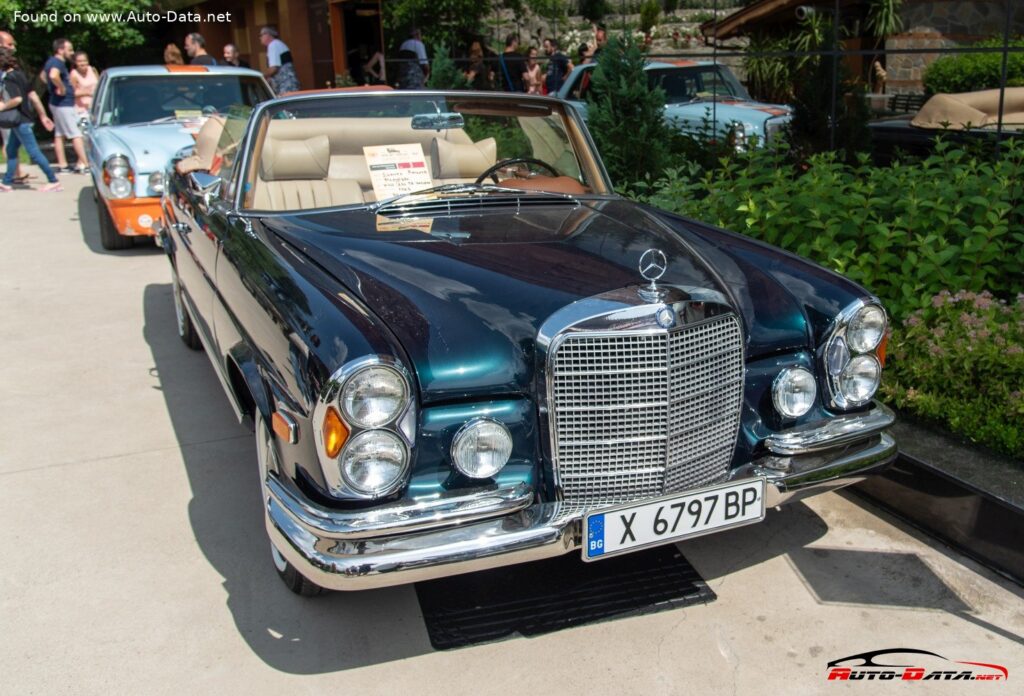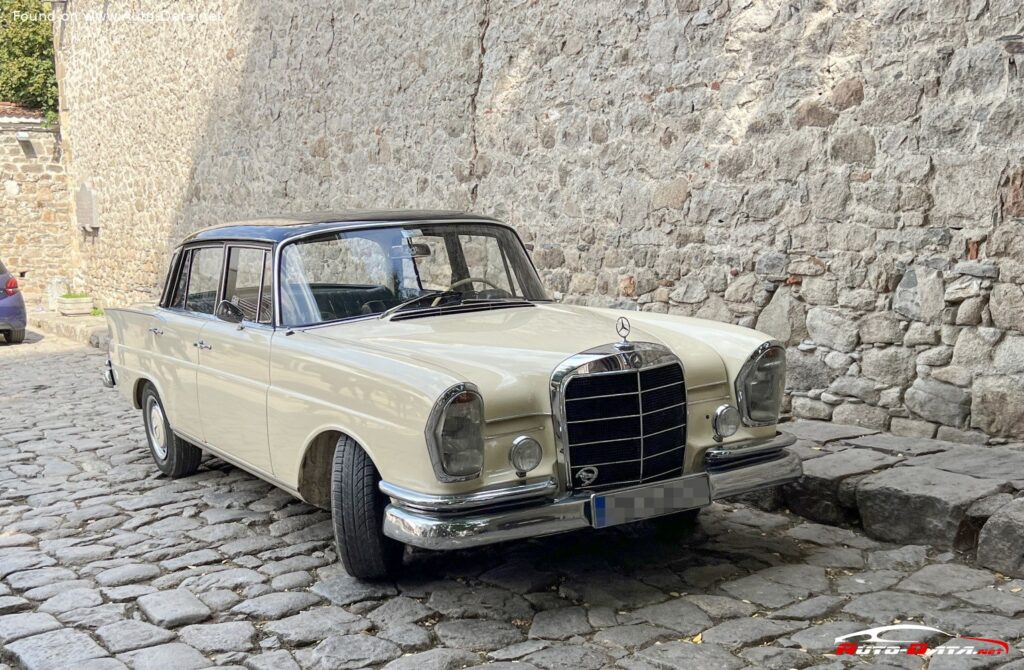
The Mercedes-Benz W111 Coupe 220 SEb, produced between September 1960 and October 1965, represents a pinnacle of 1960s German automotive engineering and design. Part of the larger W111 family – encompassing saloons and cabriolets – the Coupe offered a more sporting and elegant alternative to the four-door models. Positioned in the luxury car segment, the 220 SEb was aimed at discerning buyers who appreciated sophisticated styling, robust build quality, and a refined driving experience. It served as a statement of success and taste, embodying the post-war economic boom and the growing desire for personal mobility. While not initially a high-volume seller compared to its saloon counterparts, the W111 Coupe has become a highly sought-after classic, prized by collectors and enthusiasts alike.
The Mercedes-Benz W111 Coupe 220 SEb: A Detailed Overview
The W111 series, introduced in 1959, was a significant departure for Mercedes-Benz. It represented a move towards more modern styling, incorporating wider bodies and larger glass areas than its predecessors. The “SEb” designation signifies a specific iteration of the model, denoting “Sonderausführung b” (Special Edition b), which featured upgrades including fuel injection. The Coupe, with its two-door configuration and flowing lines, further enhanced the aesthetic appeal of the W111 platform. It was a car designed to be seen in, and to be enjoyed on the open road.
Engine & Performance
The heart of the 220 SEb Coupe is its 2.2-liter (2195 cm3 / 133.95 cu. in.) inline-six cylinder engine. This engine, designated M 127 V / 127.984, produced 120 horsepower at 4800 rpm and 189 Nm (139.4 lb.-ft.) of torque at 3900 rpm. A key feature of the “SEb” model was its adoption of Bosch mechanical multi-port fuel injection, a relatively advanced technology for the time. This system improved fuel efficiency and engine responsiveness compared to earlier carbureted versions. Power per liter was a respectable 54.7 Hp/l. The engine’s longitudinal front-engine layout and naturally aspirated design contributed to a smooth and predictable power delivery. Performance figures included a 0-60 mph (0-96 km/h) acceleration time of approximately 12.2 seconds and a top speed of 170 km/h (105.63 mph). While not overtly sporty by modern standards, these figures were competitive for a luxury coupe of its era. The weight-to-power ratio of 11.8 kg/Hp and weight-to-torque ratio of 7.5 kg/Nm provided a balanced driving experience.
Design & Features
The W111 Coupe’s design is characterized by its elegant proportions and understated sophistication. The two-door coupe body style, with its long hood and short deck, exudes a sense of classic beauty. The car’s styling incorporated elements of American design trends of the late 1950s and early 1960s, such as prominent tailfins, while retaining a distinctly European sensibility. Inside, the 220 SEb offered a luxurious and comfortable cabin, capable of seating five passengers. The interior was typically trimmed with high-quality materials, including leather upholstery and wood veneer. While safety features were relatively basic by today’s standards, the car did incorporate disc brakes on the front wheels, a significant advancement for the time. The steering system employed a cone worm with recirculation balls, providing precise and responsive handling. The car’s suspension utilized a double wishbone setup with a transverse stabilizer at the front and a trailing arm configuration at the rear, offering a comfortable ride and good road holding. The 65-liter (17.17 US gal) fuel tank provided a reasonable driving range.
Technical Specifications
| Brand | Mercedes-Benz |
| Model | W111 |
| Generation | W111 Coupe |
| Type (Engine) | 220 SEb (120 Hp) |
| Start of production | September, 1960 |
| End of production | October, 1965 |
| Powertrain Architecture | Internal Combustion engine |
| Body type | Coupe |
| Seats | 5 |
| Doors | 2 |
| Fuel consumption (combined) | 10.7 l/100 km (22 US mpg / 26.4 UK mpg / 9.3 km/l) |
| Fuel Type | Petrol (Gasoline) |
| Acceleration 0 – 100 km/h | 12.8 sec |
| Acceleration 0 – 62 mph | 12.8 sec |
| Acceleration 0 – 60 mph | 12.2 sec |
| Maximum speed | 170 km/h (105.63 mph) |
| Weight-to-power ratio | 11.8 kg/Hp |
| Weight-to-torque ratio | 7.5 kg/Nm |
| Power | 120 Hp @ 4800 rpm |
| Power per litre | 54.7 Hp/l |
| Torque | 189 Nm @ 3900 rpm (139.4 lb.-ft. @ 3900 rpm) |
| Engine layout | Front, Longitudinal |
| Engine Model/Code | M 127 V / 127.984 |
| Engine displacement | 2195 cm3 (133.95 cu. in.) |
| Number of cylinders | 6 |
| Engine configuration | Inline |
| Cylinder Bore | 80 mm (3.15 in.) |
| Piston Stroke | 72.8 mm (2.87 in.) |
| Compression ratio | 8.7:1 |
| Number of valves per cylinder | 2 |
| Fuel injection system | Multi-port manifold injection |
| Engine aspiration | Naturally aspirated engine |
| Valvetrain | SOHC |
| Kerb Weight | 1410 kg (3108.52 lbs.) |
| Max. weight | 1880 kg (4144.69 lbs.) |
| Max load | 470 kg (1036.17 lbs.) |
| Fuel tank capacity | 65 l (17.17 US gal | 14.3 UK gal) |
| Length | 4880 mm (192.13 in.) |
| Width | 1845 mm (72.64 in.) |
| Height | 1445 mm (56.89 in.) |
| Wheelbase | 2750 mm (108.27 in.) |
| Front track | 1482 mm (58.35 in.) |
| Rear (Back) track | 1485 mm (58.46 in.) |
| Drivetrain Architecture | The Internal combustion engine (ICE) drives the rear wheels of the vehicle. |
| Drive wheel | Rear wheel drive |
| Number of gears and type of gearbox | 4 gears, manual transmission |
| Front suspension | Double wishbone, Transverse stabilizer |
| Rear suspension | Trailing arm |
| Front brakes | Disc |
| Rear brakes | Drum |
| Steering type | Cone worm with recirculation balls |
| Wheel rims size | 5J x 13 |
The Mercedes-Benz W111 Coupe 220 SEb remains a highly desirable classic car, representing a significant chapter in the company’s history. Its combination of elegant styling, robust engineering, and refined performance continues to captivate enthusiasts and collectors worldwide.