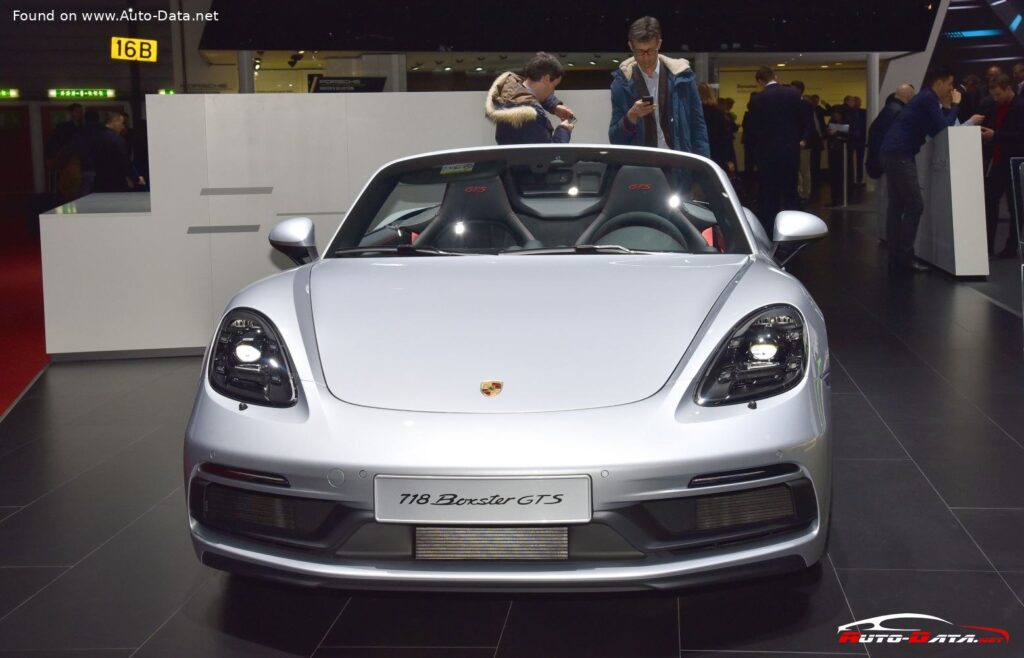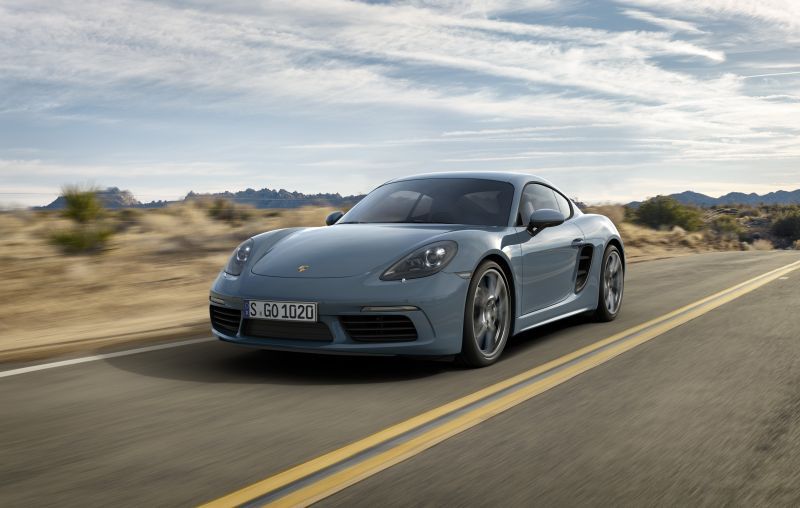
The Porsche 718 Cayman (982) S 2.5, produced from 2016 to 2018, represents a significant evolution in Porsche’s mid-engine sports car lineage. Part of the 982 generation, it marked a departure from the naturally aspirated flat-six engines of its predecessor, the 981 Cayman, adopting a turbocharged four-cylinder configuration. This shift, while initially met with some purist resistance, aimed to improve fuel efficiency and broaden the powerband without sacrificing the engaging driving experience Porsche is renowned for. The 718 Cayman S 2.5 occupies the premium sports car segment, competing with models like the Audi TTS and BMW M2.
The 718 Cayman S 2.5: A New Era for Porsche
The introduction of the 718 series signaled Porsche’s commitment to downsizing and turbocharging across its model range. The “718” designation is a nod to Porsche’s historic 718 RSK race car from the 1950s and 60s, linking the modern vehicle to a rich motorsport heritage. The 982 generation Cayman, and specifically the S 2.5 variant, was designed to offer a more accessible and efficient sports car experience, appealing to a wider audience while maintaining the core Porsche values of performance, precision, and driver involvement.
Engine & Performance
At the heart of the 718 Cayman S 2.5 lies a 2.5-liter flat-four engine, designated MDD.NC, which produces 350 horsepower at 6,500 rpm and 309.78 lb.-ft. of torque between 1,900 and 4,500 rpm. This engine utilizes direct fuel injection and a single twin-scroll turbocharger with an intercooler to deliver a responsive and potent power delivery. The engine’s power-to-liter ratio is an impressive 140.2 hp/l. The engine is mounted longitudinally in a mid-engine configuration, contributing to the car’s balanced handling characteristics.
Performance figures are noteworthy. Acceleration from 0 to 60 mph is achieved in approximately 4.4 seconds, while 0-100 km/h takes 4.6 seconds, and 0-200 km/h is dispatched in 15.2 seconds. The car boasts a maximum speed of 177.09 mph (285 km/h). The 6-speed manual transmission provides a direct connection to the drivetrain, enhancing the driving experience. The rear-wheel-drive configuration further contributes to the car’s dynamic capabilities. The weight-to-power ratio of 3.9 kg/Hp and a weight-to-torque ratio of 3.2 kg/Nm highlight the car’s efficient design.
Design & Features
The 718 Cayman S 2.5 is a two-door, two-seat coupe characterized by its sleek and aerodynamic profile. The body design emphasizes Porsche’s signature styling cues, including sculpted lines, prominent wheel arches, and a low-slung stance. The mid-engine layout necessitates a distinct shape, with a more pronounced rear section compared to front-engined sports cars.
Inside, the cabin is driver-focused, with a modern and minimalist design. High-quality materials and meticulous craftsmanship are evident throughout. Standard features include a touchscreen infotainment system, sport seats, and a leather-wrapped steering wheel. Safety features, crucial in modern sports cars, include ABS (Anti-lock Braking System) and ventilated disc brakes on all four wheels. The McPherson suspension system, both front and rear, provides a balance between comfort and handling precision. The drag coefficient of 0.31 contributes to the car’s aerodynamic efficiency. Trunk space is a practical 11.8 cubic feet (334 liters).
Technical Specifications
| Brand | Porsche |
| Model | 718 |
| Generation | 718 Cayman (982) |
| Type (Engine) | S 2.5 (350 Hp) |
| Start of production | September, 2016 |
| End of production | August, 2018 |
| Powertrain Architecture | Internal Combustion engine |
| Body type | Coupe |
| Seats | 2 |
| Doors | 2 |
| Fuel consumption (urban) | 10.7 l/100 km (22 US mpg, 26.4 UK mpg, 9.3 km/l) |
| Fuel consumption (extra urban) | 6.5 l/100 km (36.2 US mpg, 43.5 UK mpg, 15.4 km/l) |
| Fuel consumption (combined) | 8.1 l/100 km (29 US mpg, 34.9 UK mpg, 12.3 km/l) |
| CO2 emissions | 184 g/km |
| Fuel Type | Petrol (Gasoline) |
| Acceleration 0 – 100 km/h | 4.6 sec |
| Acceleration 0 – 62 mph | 4.6 sec |
| Acceleration 0 – 60 mph | 4.4 sec |
| Acceleration 0 – 200 km/h | 15.2 sec |
| Maximum speed | 285 km/h (177.09 mph) |
| Emission standard | Euro 6 |
| Weight-to-power ratio | 3.9 kg/Hp, 258.3 Hp/tonne |
| Weight-to-torque ratio | 3.2 kg/Nm, 310 Nm/tonne |
| Power | 350 Hp @ 6500 rpm |
| Power per litre | 140.2 Hp/l |
| Torque | 420 Nm @ 1900-4500 rpm (309.78 lb.-ft. @ 1900-4500 rpm) |
| Maximum engine speed | 7500 rpm |
| Engine layout | Middle, Longitudinal |
| Engine Model/Code | MDD.NC |
| Engine displacement | 2497 cm3 (152.38 cu. in.) |
| Number of cylinders | 4 |
| Engine configuration | Boxer |
| Cylinder Bore | 102 mm (4.02 in.) |
| Piston Stroke | 76.4 mm (3.01 in.) |
| Compression ratio | 9.5:1 |
| Number of valves per cylinder | 4 |
| Fuel injection system | Direct injection |
| Engine aspiration | Turbocharger, Intercooler |
| Engine oil capacity | 5.7 l (6.02 US qt | 5.02 UK qt) |
| Kerb Weight | 1355 kg (2987.26 lbs.) |
| Max. weight | 1665 kg (3670.7 lbs.) |
| Max load | 310 kg (683.43 lbs.) |
| Trunk (boot) space – minimum | 334 l (11.8 cu. ft.) |
| Fuel tank capacity | 64 l (16.91 US gal | 14.08 UK gal) |
| Length | 4379 mm (172.4 in.) |
| Width | 1801 mm (70.91 in.) |
| Width including mirrors | 1994 mm (78.5 in.) |
| Height | 1284 mm (50.55 in.) |
| Wheelbase | 2475 mm (97.44 in.) |
| Front track | 1515 mm (59.65 in.) |
| Rear (Back) track | 1540 mm (60.63 in.) |
| Drag coefficient (Cd) | 0.31 |
| Minimum turning circle (turning diameter) | 10.98 m (36.02 ft.) |
| Drive wheel | Rear wheel drive |
| Number of gears and type of gearbox | 6 gears, manual transmission |
| Front suspension | Independent, type McPherson with coil spring and anti-roll bar |
| Rear suspension | McPherson |
| Front brakes | Ventilated discs |
| Rear brakes | Ventilated discs |
| Tires size | 235/40 ZR 19; 265/40 ZR 19 |
| Wheel rims size | 8J x 19 ET 57; 10J x 19 ET 45 |
The Porsche 718 Cayman S 2.5 (982) represents a compelling blend of performance, efficiency, and driving enjoyment. While the shift to a turbocharged four-cylinder engine sparked debate, the car ultimately delivered a refined and engaging sports car experience that continues to appeal to enthusiasts today.