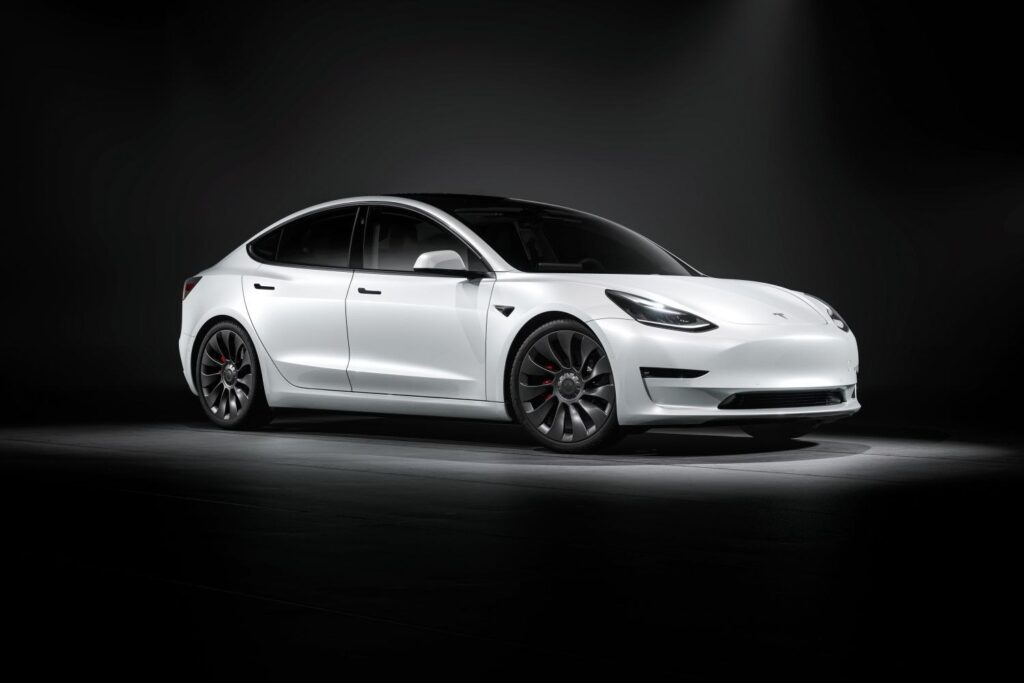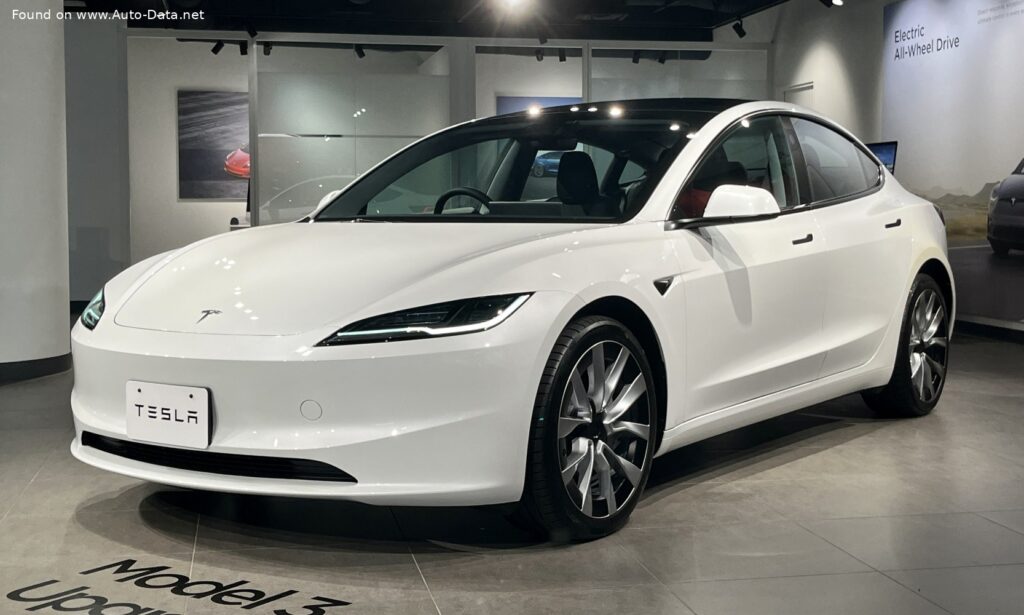
The Tesla Model 3 Highland, a significantly updated version of Tesla’s popular electric sedan, represents the company’s ongoing commitment to refining its core product. Introduced in September 2023, the Highland revision focuses on enhancing interior quality, improving aerodynamics, and increasing real-world range. Positioned in the compact executive car segment, the Model 3 competes with vehicles like the BMW i4, Polestar 2, and Hyundai Ioniq 6. This iteration, specifically the 60 kWh variant producing 283 horsepower, aims to offer a balance of performance, efficiency, and affordability within the electric vehicle market. Production is expected to continue through 2025, with further refinements likely in subsequent model years.
Tesla Model 3 (Highland, Facelift 2023)
The Model 3 Highland isn’t a ground-up redesign, but rather a comprehensive refresh of the original Model 3. Tesla’s approach with the Highland centers on addressing customer feedback and improving the overall ownership experience. Key changes include a redesigned front and rear fascia, updated interior materials, a new infotainment system, and enhanced noise insulation. The 60 kWh version is designed to be an entry point into the Model 3 range, offering a competitive range and performance profile.
Engine & Performance
The Tesla Model 3 Highland 60 kWh is powered by a single electric motor located on the rear axle. This motor delivers a maximum power output of 283 horsepower and 420 Nm (309.78 lb.-ft.) of torque. The powertrain utilizes a synchronous electric motor, model code 3D7, and a single-speed automatic transmission. This configuration allows for brisk acceleration, with a 0-60 mph time of 5.8 seconds and a 0-100 km/h time of 6.1 seconds. The vehicle boasts a maximum speed of 201 km/h (124.9 mph). The weight-to-power ratio is 6.2 kg/Hp, or 160.3 Hp/tonne, and the weight-to-torque ratio is 4.2 kg/Nm, or 238 Nm/tonne. The battery pack, utilizing Lithium Iron Phosphate (LiFePO4) technology, has a gross capacity of 60 kWh and a usable capacity of 57.3 kWh, operating at 355V.
Design & Features
The Model 3 Highland maintains the sleek, fastback sedan profile of its predecessor, but with subtle yet impactful design changes. The front fascia has been redesigned with new headlights and a revised bumper, improving aerodynamic efficiency. The rear also receives updates, including new taillights and a redesigned trunk lid. The vehicle’s drag coefficient is an impressive 0.219, contributing to its range and efficiency. Inside, the Highland features a minimalist cabin dominated by a large central touchscreen. The interior materials have been upgraded, with a focus on improving perceived quality and comfort. The vehicle seats five passengers and offers 594 liters (20.98 cu. ft.) of trunk space. Key features include Tesla’s Autopilot driver-assistance system, over-the-air software updates, and access to the Tesla Supercharger network. Safety features include ABS (Anti-lock braking system) and a comprehensive suite of airbags. The vehicle’s dimensions are 4720 mm (185.83 in.) in length, 1850 mm (72.83 in.) in width, and 1441 mm (56.73 in.) in height, with a wheelbase of 2875 mm (113.19 in.).
Technical Specifications
| Brand | Tesla |
| Model | Model 3 |
| Generation | Model 3 (Highland, facelift 2023) |
| Type (Engine) | 60 kWh (283 Hp) |
| Start of production | September, 2023 |
| End of production | 2025 |
| Powertrain Architecture | BEV (Electric Vehicle) |
| Body type | Sedan, Fastback |
| Seats | 5 |
| Doors | 4 |
| Fuel Type | Electricity |
| Acceleration 0 – 100 km/h | 6.1 sec |
| Acceleration 0 – 62 mph | 6.1 sec |
| Acceleration 0 – 60 mph | 5.8 sec |
| Maximum speed | 201 km/h / 124.9 mph |
| Weight-to-power ratio | 6.2 kg/Hp, 160.3 Hp/tonne |
| Weight-to-torque ratio | 4.2 kg/Nm, 238 Nm/tonne |
| Gross battery capacity | 60 kWh |
| Net (usable) battery capacity | 57.3 kWh |
| Battery voltage | 355 V |
| Battery technology | Lithium iron phosphate (LiFePO4) |
| Battery location | Below the floor |
| All-electric range (WLTP) | 513 km / 318.76 mi |
| All-electric range (EPA) | 438 km / 272.16 mi |
| Average Energy consumption (WLTP) | 13.2 kWh/100 km / 21.24 kWh/100 mi / 159 MPGe / 7.6 km/kWh / 4.7 mi/kWh |
| Electric motor | 1 |
| Electric motor power | 283 Hp |
| Electric motor Torque | 420 Nm / 309.78 lb.-ft. |
| Electric motor model/code | 3D7 |
| Electric motor location | Rear axle, Transverse |
| Electric motor type | Synchronous |
| System power | 283 Hp |
| System torque | 420 Nm / 309.78 lb.-ft. |
| Kerb Weight | 1765 kg / 3891.16 lbs. |
| Max. weight | 2149 kg / 4737.73 lbs. |
| Max load | 384 kg / 846.58 lbs. |
| Trunk (boot) space – minimum | 594 l / 20.98 cu. ft. |
| Permitted trailer load with brakes (12%) | 1000 kg / 2204.62 lbs. |
| Permitted trailer load without brakes | 750 kg / 1653.47 lbs. |
| Length | 4720 mm / 185.83 in. |
| Width | 1850 mm / 72.83 in. |
| Width with mirrors folded | 1933 mm / 76.1 in. |
| Width including mirrors | 2089 mm / 82.24 in. |
| Height | 1441 mm / 56.73 in. |
| Wheelbase | 2875 mm / 113.19 in. |
| Front track | 1584 mm / 62.36 in. |
| Rear (Back) track | 1584 mm / 62.36 in. |
| Front overhang | 868 mm / 34.17 in. |
| Rear overhang | 977 mm / 38.46 in. |
| Ride height (ground clearance) | 138 mm / 5.43 in. |
| Drag coefficient (Cd) | 0.219 |
| Minimum turning circle (turning diameter) | 11.7 m / 38.39 ft. |
| Drivetrain Architecture | One electric motor drives the rear wheels. |
| Drive wheel | Rear wheel drive |
| Number of gears and type of gearbox | 1 gears, automatic transmission |
| Front suspension | Coil spring, Double wishbone, Transverse stabilizer |
| Rear suspension | Independent multi-link suspension, Coil spring |
| Front brakes | Ventilated discs, 320×25 mm |
| Rear brakes | Ventilated discs, 335×20 mm |
| Assisting systems | ABS (Anti-lock braking system) |
| Steering type | Steering rack and pinion |
| Power steering | Electric Steering |
| Tires size | 235/45 R18; 235/40 R19 |
| Wheel rims size | 8.5J x 18; 8.5J x 19 |