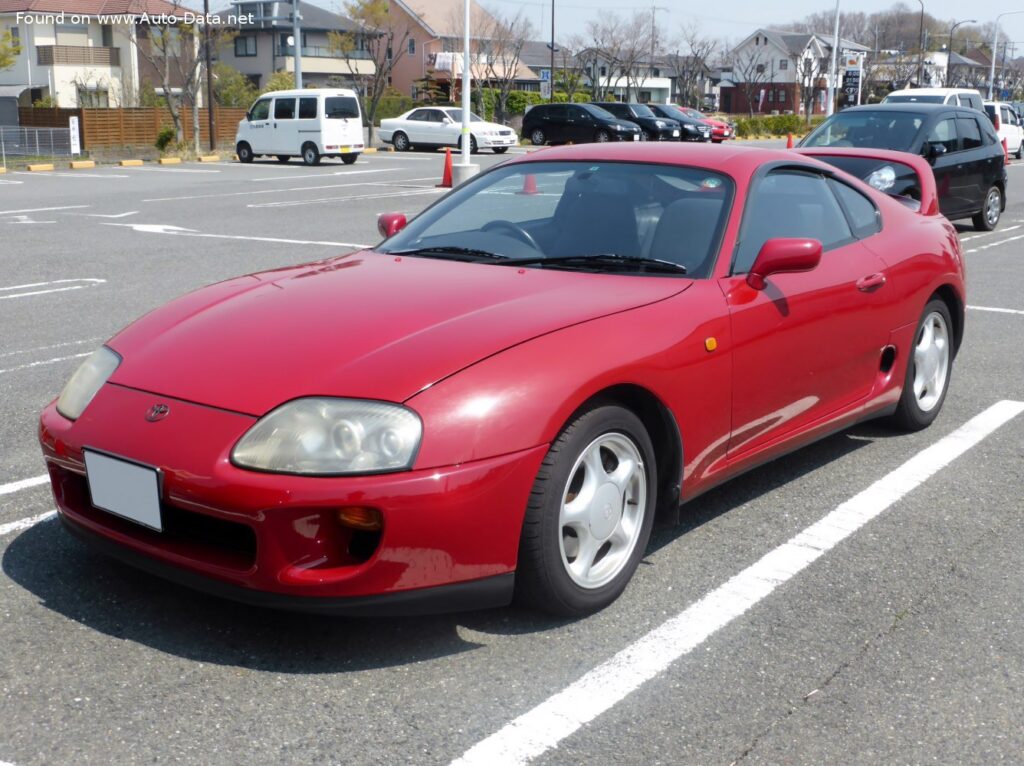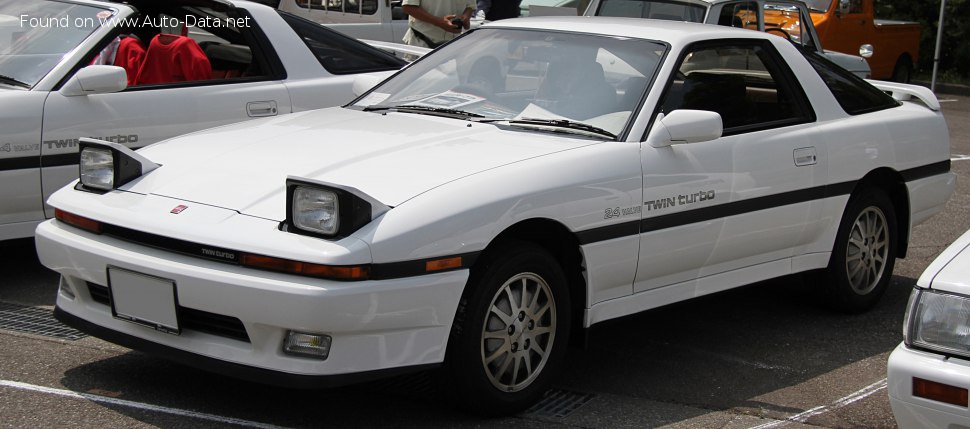
The Toyota Supra III (A70) represents a pivotal generation in the Supra lineage, produced between 1986 and 1988. This iteration marked a significant departure from the earlier Celica Supra models, establishing the Supra as a distinct grand tourer. The A70 Supra was never officially sold in the United States, but it gained prominence in the Japanese domestic market (JDM) and select export markets, offering a sophisticated blend of performance and luxury. It competed with rivals like the Nissan Skyline and Mazda RX-7, embodying the spirit of the late 1980s Japanese sports car boom.
Toyota Supra III (A70): A Grand Touring Evolution
The A70 Supra was designed to be a more refined and powerful successor to the previous generation. Toyota aimed to create a vehicle that could deliver both exhilarating performance on the road and comfortable long-distance cruising. The third-generation Supra distinguished itself with a longer wheelbase and wider track compared to its predecessors, contributing to improved stability and handling. The styling, while distinctly 1980s, was sleek and aerodynamic, reflecting the growing emphasis on efficiency and performance.
Engine & Performance
The heart of the A70 Supra was the 7M-GE 3.0-liter inline-six engine. This naturally aspirated powerplant produced 190 horsepower at 5800 rpm and 245 Nm (180.7 lb.-ft.) of torque at 4800 rpm. While not the most powerful engine in its class, the 7M-GE offered a smooth and responsive driving experience. The engine featured single-point fuel injection and a 9.2:1 compression ratio. The Supra’s power-to-weight ratio of 8.1 kg/Hp and a power-to-tonne ratio of 123.8 Hp/tonne provided respectable acceleration. The engine’s 2954 cm3 displacement (180.26 cu. in.) and four valves per cylinder contributed to its overall performance characteristics. The engine required 4.4 liters (4.65 US qt) of oil and 8 liters (8.45 US qt) of coolant.
Power was delivered to the rear wheels through a four-speed automatic transmission. This configuration prioritized ease of use and comfort, aligning with the Supra’s grand touring intentions. The drivetrain architecture was a traditional front-engine, rear-wheel-drive layout, providing a balanced driving experience. The vehicle’s weight-to-torque ratio of 6.3 kg/Nm and 159.6 Nm/tonne further enhanced its responsiveness.
Design & Features
The A70 Supra was exclusively offered as a three-door coupe with seating for four passengers. Its body style was characterized by a long hood, a sloping roofline, and a relatively short rear deck. The design emphasized aerodynamic efficiency, contributing to improved fuel economy and stability at higher speeds. The vehicle’s dimensions included a length of 4620 mm (181.89 in), a width of 1745 mm (68.7 in), and a height of 1310 mm (51.57 in). The wheelbase measured 2595 mm (102.17 in), providing a stable platform for the chassis.
In terms of features, the A70 Supra offered a relatively well-equipped interior for its time. Standard features included power steering, ventilated disc brakes on all four wheels, and an Anti-lock Braking System (ABS) for enhanced safety. The suspension system utilized a double wishbone configuration at both the front and rear, providing a comfortable ride and responsive handling. The vehicle rode on 225/50 R16 tires mounted on 7J x 16 inch wheel rims. The minimum turning circle was 10.8 meters (35.43 ft).
Technical Specifications
| Brand | Toyota |
| Model | Supra |
| Generation | Supra III (A70) |
| Type | 3.0 24V (190 Hp) Automatic |
| Start of production | 1986 |
| End of production | 1988 |
| Powertrain Architecture | Internal Combustion engine |
| Body type | Coupe |
| Seats | 4 |
| Doors | 3 |
| Fuel Type | Petrol (Gasoline) |
| Weight-to-power ratio | 8.1 kg/Hp |
| Weight-to-torque ratio | 6.3 kg/Nm |
| Power | 190 Hp @ 5800 rpm |
| Power per litre | 64.3 Hp/l |
| Torque | 245 Nm @ 4800 rpm / 180.7 lb.-ft. @ 4800 rpm |
| Engine layout | Front, Longitudinal |
| Engine Model/Code | 7M-GE |
| Engine displacement | 2954 cm3 / 180.26 cu. in. |
| Number of cylinders | 6 |
| Engine configuration | Inline |
| Cylinder Bore | 83 mm / 3.27 in. |
| Piston Stroke | 91 mm / 3.58 in. |
| Compression ratio | 9.2:1 |
| Number of valves per cylinder | 4 |
| Fuel injection system | Single-point injection |
| Engine aspiration | Naturally aspirated engine |
| Engine oil capacity | 4.4 l / 4.65 US qt | 3.87 UK qt |
| Coolant | 8 l / 8.45 US qt | 7.04 UK qt |
| Kerb Weight | 1535 kg / 3384.1 lbs. |
| Max. weight | 1945 kg / 4287.99 lbs. |
| Max load | 410 kg / 903.9 lbs. |
| Fuel tank capacity | 70 l / 18.49 US gal | 15.4 UK gal |
| Length | 4620 mm / 181.89 in. |
| Width | 1745 mm / 68.7 in. |
| Height | 1310 mm / 51.57 in. |
| Wheelbase | 2595 mm / 102.17 in. |
| Front track | 1485 mm / 58.46 in. |
| Rear (Back) track | 1480 mm / 58.27 in. |
| Ride height (ground clearance) | 155 mm / 6.1 in. |
| Minimum turning circle (turning diameter) | 10.8 m / 35.43 ft. |
| Drivetrain Architecture | Rear wheel drive |
| Number of gears and type of gearbox | 4 gears, automatic transmission |
| Front suspension | Double wishbone |
| Rear suspension | Double wishbone |
| Front brakes | Ventilated discs |
| Rear brakes | Ventilated discs |
| Assisting systems | ABS (Anti-lock braking system) |
| Steering type | Steering rack and pinion |
| Power steering | Hydraulic Steering |
| Tires size | 225/50 R16 |
| Wheel rims size | 7J x 16 |
The Toyota Supra III (A70) remains a sought-after vehicle among enthusiasts, particularly in Japan. Its blend of performance, luxury, and distinctive styling has cemented its place in automotive history. While it may not have achieved the same widespread recognition as later Supra generations, the A70 laid the groundwork for the iconic sports car that would follow.