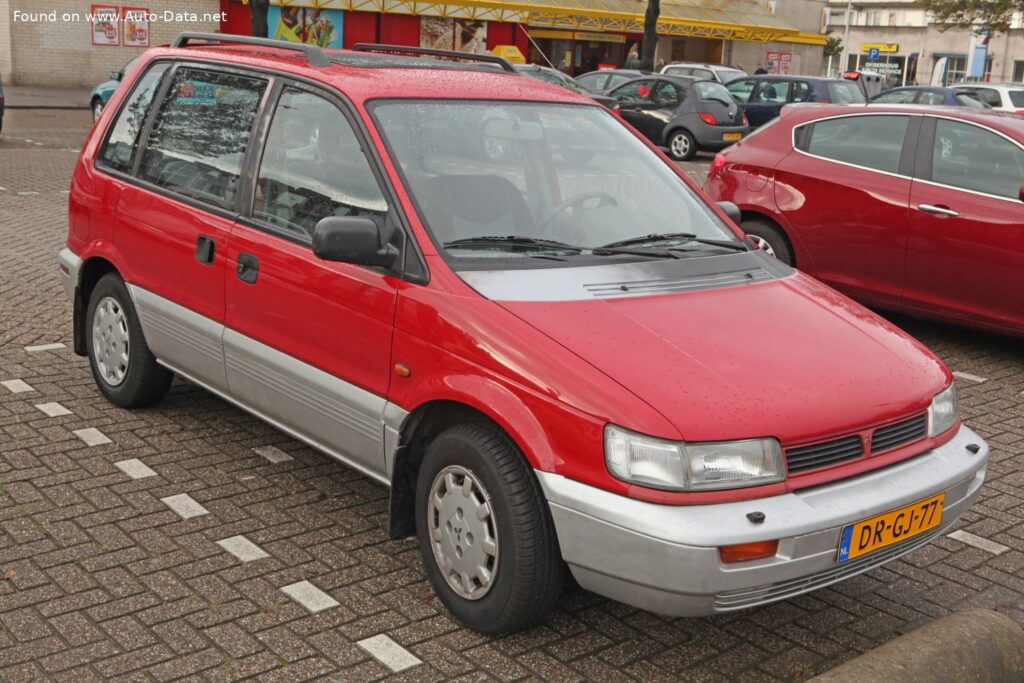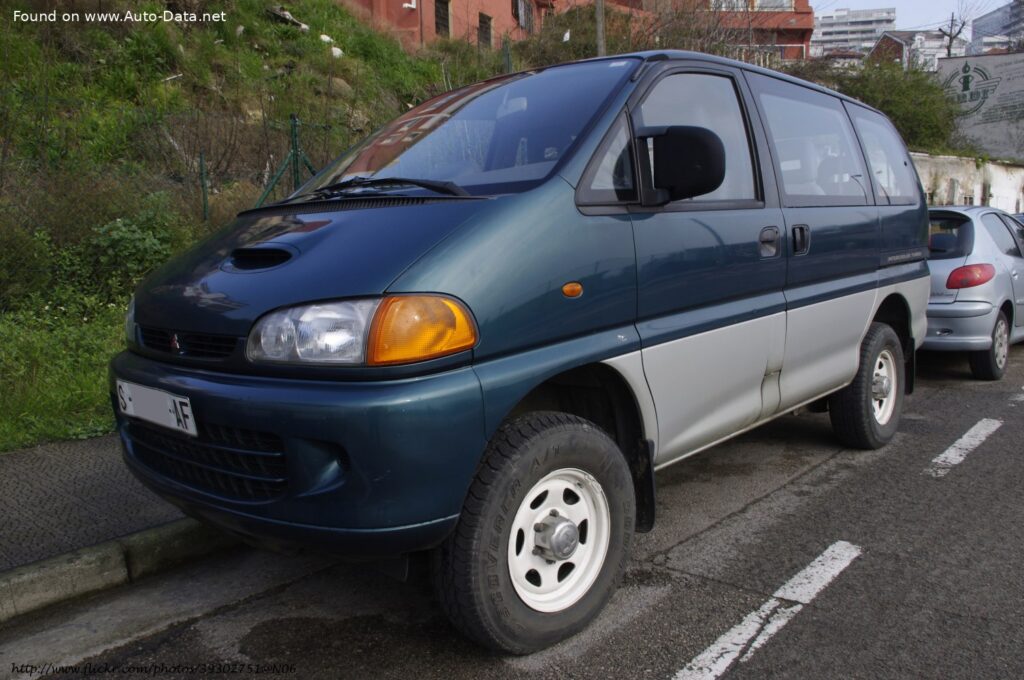
The Mitsubishi Space Gear, known as the Mitsubishi Chariot Grandis in its native Japan, is a seven-seat minivan produced by Mitsubishi Motors between 1997 and 2000. Part of the PA0 generation, the Space Gear was primarily aimed at the Asian and European markets, offering a spacious and practical family vehicle. While not officially sold in the United States, it represents a significant example of Mitsubishi’s minivan offerings during the late 1990s, focusing on maximizing interior space and offering a rear-wheel-drive layout – a relatively uncommon feature in the minivan segment at the time. The 2.0 i 16V GL variant, equipped with a 2.0-liter inline-four engine producing 113 horsepower, was a popular configuration within the Space Gear lineup.
Mitsubishi Space Gear (PA0): An Overview
The Space Gear filled a niche in the European and Asian markets for a larger, more versatile minivan than many of its competitors. Its rear-wheel-drive configuration, coupled with a relatively long wheelbase, provided a comfortable ride and decent handling characteristics. The vehicle’s design prioritized practicality, with a focus on passenger comfort and cargo capacity. The 2.0 i 16V GL trim level offered a balance of features and affordability, making it a popular choice for families seeking a spacious and reliable vehicle.
Engine & Performance
The Mitsubishi Space Gear 2.0 i 16V GL is powered by a 1,997 cc (121.86 cubic inches) inline-four cylinder gasoline engine. This naturally aspirated engine produces a maximum power output of 113 horsepower at 5,250 rpm and 165 Nm (121.7 lb-ft) of torque at 4,600 rpm. The engine features multi-port fuel injection and a compression ratio of 9.5:1. Power delivery is adequate for everyday driving, though the Space Gear is not designed for particularly spirited performance. Acceleration from 0 to 100 km/h (0-62 mph) takes approximately 15.8 seconds, and 0 to 60 mph is achieved in around 15 seconds. The vehicle has a top speed of 160 km/h (99.42 mph). The engine’s power-to-weight ratio is 14.3 kg/Hp, and the torque-to-weight ratio is 9.8 kg/Nm. The engine is longitudinally mounted, driving the rear wheels through a five-speed manual transmission.
Design & Features
The Mitsubishi Space Gear is a five-door minivan with a seating capacity of seven passengers. Its body style is characterized by a boxy, utilitarian design, maximizing interior space. The vehicle’s dimensions are 4,655 mm (183.27 inches) in length, 1,695 mm (66.73 inches) in width, and 1,855 mm (73.03 inches) in height. The wheelbase measures 2,800 mm (110.24 inches). The interior is designed for practicality, with durable materials and a focus on passenger comfort. Features included in the 2.0 i 16V GL trim level typically included power steering, front disc brakes, and rear drum brakes. The trunk offers a minimum capacity of 375 liters (13.24 cubic feet), expanding to 805 liters (28.43 cubic feet) with the rear seats folded down. The Space Gear’s rear-wheel-drive layout contributes to a relatively smooth ride, and the torsion bar front suspension and coil spring rear suspension help to absorb bumps and irregularities in the road surface.
Technical Specifications
| Brand | Mitsubishi |
| Model | Space Gear |
| Generation | Space Gear (PA0) |
| Type | 2.0 i 16V GL (113 Hp) |
| Start of production | 1997 |
| End of production | 2000 |
| Body type | Minivan |
| Seats | 7 |
| Doors | 5 |
| Fuel consumption (urban) | 15.8 l/100 km (14.9 US mpg, 17.9 UK mpg, 6.3 km/l) |
| Fuel consumption (extra urban) | 10.3 l/100 km (22.8 US mpg, 27.4 UK mpg, 9.7 km/l) |
| Fuel Type | Petrol (Gasoline) |
| Acceleration 0 – 100 km/h | 15.8 sec |
| Acceleration 0 – 62 mph | 15.8 sec |
| Acceleration 0 – 60 mph | 15 sec |
| Maximum speed | 160 km/h (99.42 mph) |
| Weight-to-power ratio | 14.3 kg/Hp |
| Weight-to-torque ratio | 9.8 kg/Nm |
| Power | 113 Hp @ 5250 rpm |
| Power per litre | 56.6 Hp/l |
| Torque | 165 Nm @ 4600 rpm (121.7 lb.-ft. @ 4600 rpm) |
| Engine layout | Front, Longitudinal |
| Engine displacement | 1997 cm3 (121.86 cu. in.) |
| Number of cylinders | 4 |
| Engine configuration | Inline |
| Cylinder Bore | 85 mm (3.35 in.) |
| Piston Stroke | 88 mm (3.46 in.) |
| Compression ratio | 9.5:1 |
| Number of valves per cylinder | 4 |
| Fuel injection system | Multi-port manifold injection |
| Engine aspiration | Naturally aspirated |
| Kerb Weight | 1620 kg (3571.49 lbs.) |
| Max. weight | 2440 kg (5379.28 lbs.) |
| Max load | 820 kg (1807.79 lbs.) |
| Trunk (boot) space – minimum | 375 l (13.24 cu. ft.) |
| Trunk (boot) space – maximum | 805 l (28.43 cu. ft.) |
| Fuel tank capacity | 66 l (17.44 US gal | 14.52 UK gal) |
| Length | 4655 mm (183.27 in.) |
| Width | 1695 mm (66.73 in.) |
| Height | 1855 mm (73.03 in.) |
| Wheelbase | 2800 mm (110.24 in.) |
| Front track | 1445 mm (56.89 in.) |
| Rear (Back) track | 1420 mm (55.91 in.) |
| Drivetrain Architecture | Rear wheel drive |
| Number of gears and type of gearbox | 5 gears, manual transmission |
| Front suspension | Torsion |
| Rear suspension | Coil spring |
| Front brakes | Disc |
| Rear brakes | Drum |
| Power steering | Hydraulic Steering |
| Tires size | 195/80 R14 |
The Mitsubishi Space Gear, while not a common sight in North America, represents a practical and spacious minivan option that was popular in other parts of the world. Its rear-wheel-drive layout and focus on interior space set it apart from many of its competitors, making it a valuable vehicle for families needing a versatile and reliable mode of transportation.