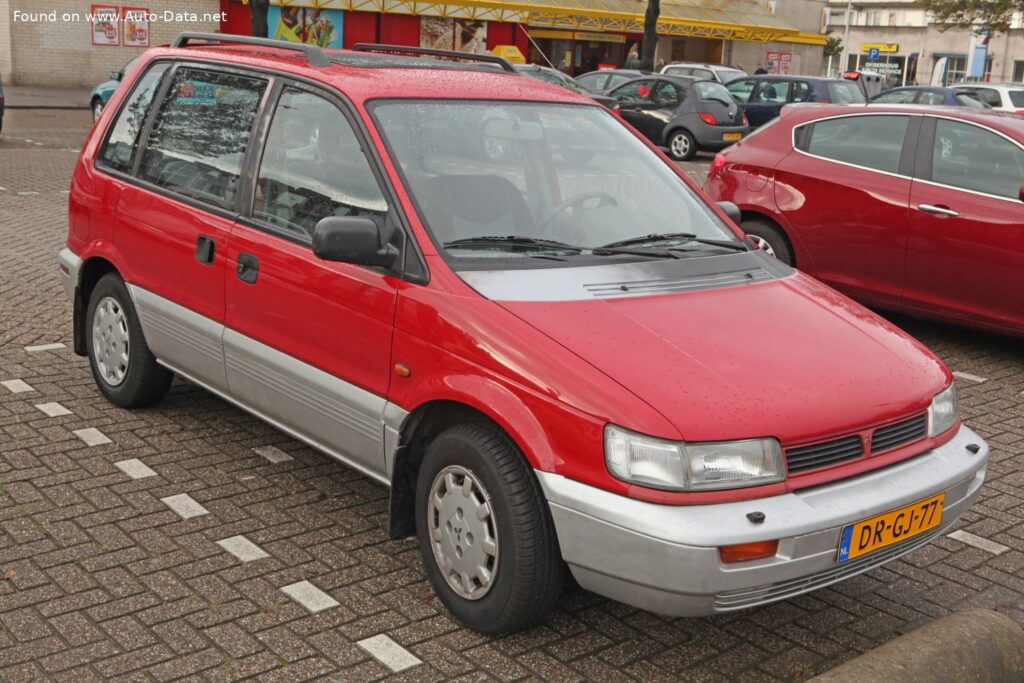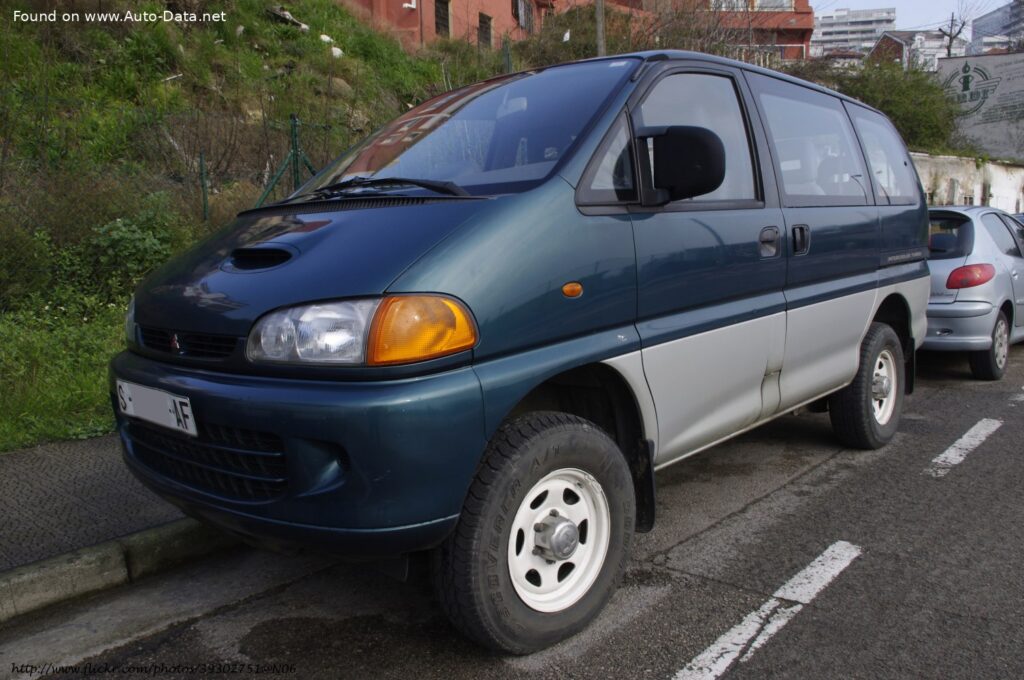
The Mitsubishi Space Gear, known as the Mitsubishi Chariot Grandis in its native Japan, is a seven-seat minivan produced from 1997 to 2007. Representing the second generation of the Space Gear lineage, the PA0 series was primarily aimed at the Asian and European markets, offering a practical and spacious family vehicle. While not officially sold in the United States, the Space Gear provides an interesting case study in global minivan design and engineering of the late 1990s and early 2000s. It competed with vehicles like the Toyota Previa, Honda Odyssey, and Nissan Serena, focusing on versatility and affordability within the MPV (Multi-Purpose Vehicle) segment.
Mitsubishi Space Gear (PA0): An Overview
The Space Gear PA0 was designed to cater to families needing ample space and all-weather capability, particularly in regions with varied terrain. The 4WD system was a key selling point, differentiating it from many front-wheel-drive competitors. The vehicle’s design prioritized interior volume and ease of access, with sliding rear doors becoming a standard feature. The PA0 generation saw improvements in engine refinement and safety features compared to its predecessor, aligning with evolving automotive standards.
Engine & Performance
The Space Gear PA0 was typically equipped with a 2.4-liter inline-four cylinder gasoline engine, designated the 4G63. This engine produced 128 horsepower at 5,500 rpm and 206 Nm (151.94 lb.-ft.) of torque at 2750 rpm. While not a performance-oriented vehicle, the engine provided adequate power for everyday driving and hauling a full load of passengers. The engine featured multi-port fuel injection and a compression ratio of 9.5:1. Power delivery was managed through a five-speed manual transmission, sending power to all four wheels via a part-time 4WD system. The weight-to-power ratio of 14.2 kg/Hp (70.5 Hp/tonne) and weight-to-torque ratio of 8.8 kg/Nm (113.5 Nm/tonne) indicate a reasonably balanced vehicle for its class. Top speed was recorded at 150 km/h (93.21 mph). Fuel economy figures were typical for a vehicle of its size and era, with urban consumption at 16.4 l/100 km (14.3 US mpg) and extra-urban consumption at 10.8 l/100 km (21.8 US mpg).
Design & Features
The Mitsubishi Space Gear PA0 is a five-door minivan with a boxy, functional design. Its dimensions – 4655 mm (183.27 in) in length, 1695 mm (66.73 in) in width, and 1855 mm (73.03 in) in height – maximized interior space. The wheelbase of 2800 mm (110.24 in) contributed to a relatively comfortable ride. The interior was designed for practicality, with flexible seating arrangements allowing for various configurations to accommodate passengers and cargo. The vehicle offered seating for up to seven occupants. Key features included hydraulic power steering and an Anti-lock Braking System (ABS), enhancing safety and driver control. Trunk space was generous, ranging from a minimum of 1815 liters (64.1 cu. ft.) to a maximum of 2580 liters (91.11 cu. ft.) with the rear seats folded. The Space Gear’s design prioritized functionality over aesthetics, reflecting its target market’s needs for a reliable and spacious family vehicle. The suspension utilized torsion bars at the front and coil springs at the rear, providing a balance between ride comfort and handling.
Technical Specifications
| Brand | Mitsubishi |
| Model | Space Gear |
| Generation | Space Gear (PA0) |
| Type | 2.4 i 16V GL 4WD (128 Hp) |
| Start of production | 1997 |
| End of production | 2007 |
| Body type | Minivan |
| Seats | 7 |
| Doors | 5 |
| Fuel consumption (urban) | 16.4 l/100 km (14.3 US mpg) |
| Fuel consumption (extra urban) | 10.8 l/100 km (21.8 US mpg) |
| Fuel Type | Petrol (Gasoline) |
| Maximum speed | 150 km/h (93.21 mph) |
| Weight-to-power ratio | 14.2 kg/Hp |
| Engine layout | Front, Longitudinal |
| Engine displacement | 2350 cm3 (143.41 cu. in.) |
| Number of cylinders | 4 |
| Engine configuration | Inline |
| Cylinder Bore | 86.5 mm (3.41 in.) |
| Piston Stroke | 100 mm (3.94 in.) |
| Compression ratio | 9.5:1 |
| Number of valves per cylinder | 4 |
| Fuel injection system | Multi-port manifold injection |
| Engine aspiration | Naturally aspirated |
| Kerb Weight | 1815 kg (4001.39 lbs.) |
| Max. weight | 2580 kg (5687.93 lbs.) |
| Max load | 765 kg (1686.54 lbs.) |
| Trunk (boot) space – minimum | 1815 l (64.1 cu. ft.) |
| Trunk (boot) space – maximum | 2580 l (91.11 cu. ft.) |
| Fuel tank capacity | 75 l (19.81 US gal) |
| Length | 4655 mm (183.27 in.) |
| Width | 1695 mm (66.73 in.) |
| Height | 1855 mm (73.03 in.) |
| Wheelbase | 2800 mm (110.24 in.) |
| Front track | 1445 mm (56.89 in.) |
| Rear track | 1420 mm (55.91 in.) |
| Drive wheel | All wheel drive (4×4) |
| Number of gears | 5 |
| Gearbox type | Manual transmission |
| Front suspension | Torsion |
| Rear suspension | Coil spring |
| Front brakes | Ventilated discs |
| Rear brakes | Drum |
| Assisting systems | ABS (Anti-lock braking system) |
| Power steering | Hydraulic Steering |
| Tires size | 195/80 R14 |
The Mitsubishi Space Gear PA0, while not a household name in the United States, represents a significant example of a practical and versatile minivan designed for global markets. Its combination of spaciousness, all-wheel-drive capability, and reasonable fuel economy made it a popular choice for families in Asia and Europe during its production run. The vehicle’s enduring appeal lies in its functional design and reliable mechanicals, characteristics that continue to resonate with owners today.