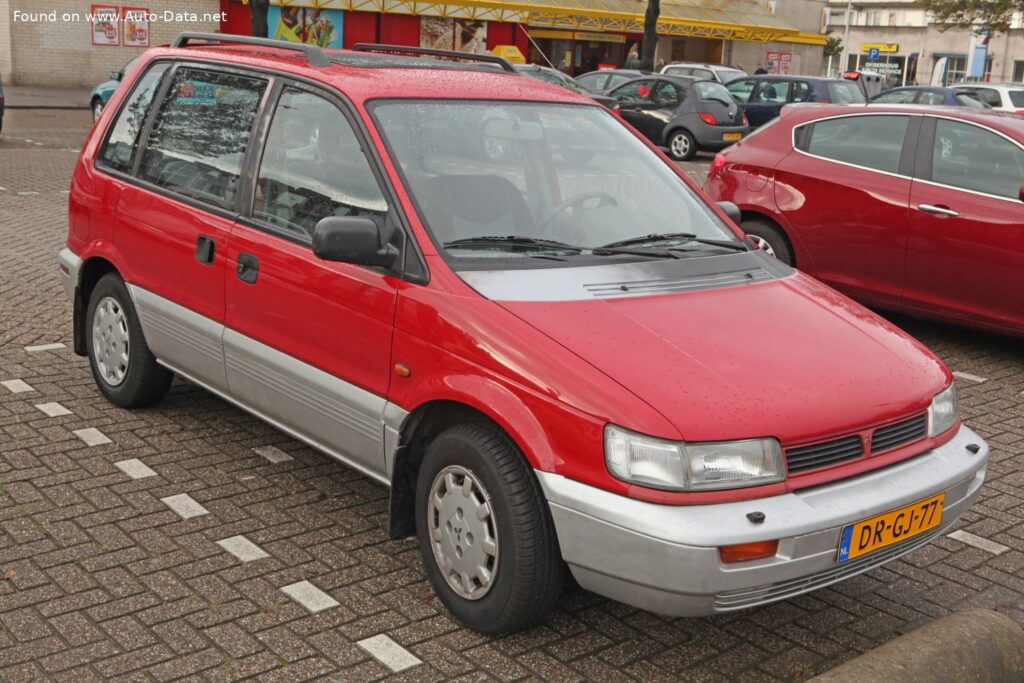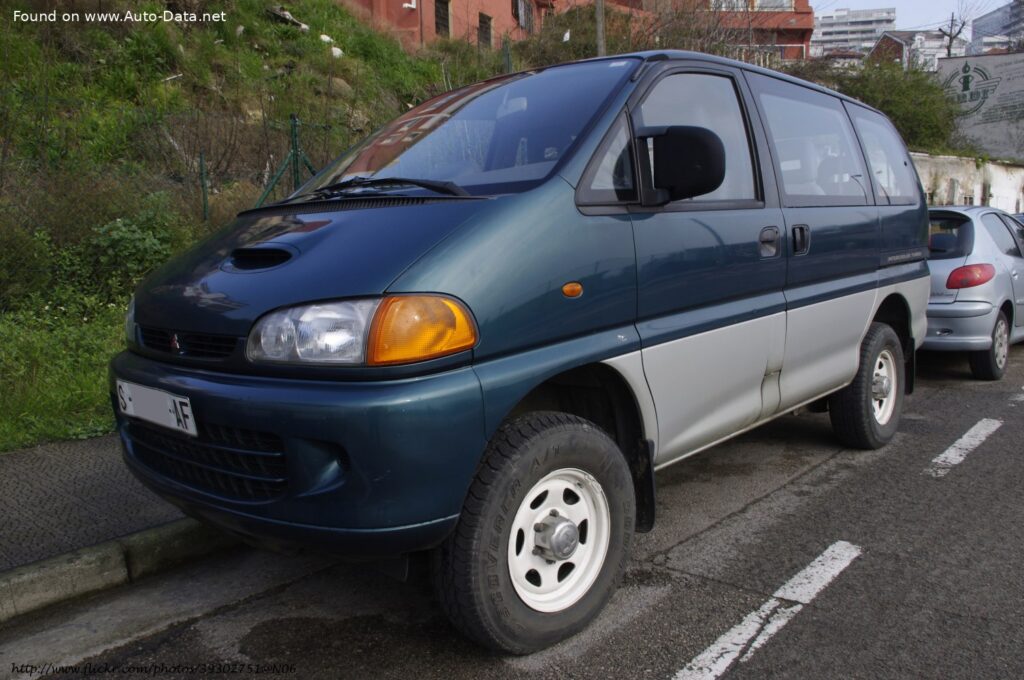
The Mitsubishi Space Gear, known as the Mitsubishi Chariot Grandis in its native Japan, is a seven-seat minivan produced between 1995 and 1996. Representing the second generation of the Space Gear lineage, the PA0 series was primarily aimed at the Asian and European markets, offering a spacious and practical vehicle for families. While not officially sold in the United States, the Space Gear provides an interesting case study in late 20th-century minivan design, particularly its rear-wheel-drive layout – a relatively uncommon feature in this segment. This article details the technical specifications and characteristics of the 2.5 TD variant, equipped with a turbocharged diesel engine producing 99 horsepower.
Mitsubishi Space Gear (PA0) 2.5 TD: An Overview
The Space Gear (PA0) occupied a niche in the minivan market, differentiating itself from front-wheel-drive competitors with its rear-wheel-drive configuration. This layout offered improved handling characteristics and packaging flexibility, allowing for a relatively flat floor and increased interior space. The 2.5 TD model, powered by a 2.5-liter turbocharged diesel engine, was designed to balance fuel efficiency with adequate performance for long-distance travel and family duties. The vehicle’s design prioritized practicality and functionality, making it a popular choice for those needing a versatile people carrier.
Engine & Performance
The heart of the Space Gear 2.5 TD is a 2.5-liter inline-four cylinder diesel engine. This engine, designated as a 4D56T, produces 99 horsepower at 4200 rpm and 240 Newton-meters (177.01 lb.-ft.) of torque at 2000 rpm. The engine utilizes a precombustion chamber injection system and is equipped with a turbocharger to enhance power output. The engine’s longitudinal front-engine placement contributes to the rear-wheel-drive configuration. Performance figures reflect the nature of the vehicle and its engine; acceleration from 0 to 100 km/h (0-62 mph) takes 18.4 seconds, while 0 to 60 mph is achieved in 17.5 seconds. The top speed is rated at 149 km/h (92.58 mph). The power-to-weight ratio is 17 kg/Hp, and the torque-to-weight ratio is 7 kg/Nm. Fuel economy is rated at 14 liters per 100 kilometers (16.8 US mpg) in urban conditions and 9 liters per 100 kilometers (26.1 US mpg) on the open road.
Design & Features
The Mitsubishi Space Gear (PA0) is a five-door minivan with a seating capacity of seven passengers. Its body style is characterized by a boxy, utilitarian design typical of minivans from the mid-1990s. The rear-wheel-drive layout allowed for a relatively low floor, maximizing interior space. Key features included sliding rear doors for easy access, a spacious cabin, and a flexible seating arrangement. The interior was designed with practicality in mind, featuring durable materials and a functional dashboard layout. Safety features for the era included hydraulic power steering and disc brakes on the front wheels, with drum brakes on the rear. Trunk space ranges from a minimum of 375 liters (13.24 cu. ft.) to a maximum of 805 liters (28.43 cu. ft.) with the rear seats folded. The vehicle’s dimensions are 4655 mm (183.27 in.) in length, 1695 mm (66.73 in.) in width, and 1855 mm (73.03 in.) in height, with a wheelbase of 2800 mm (110.24 in.).
Technical Specifications
| Brand | Mitsubishi |
| Model | Space Gear |
| Generation | Space Gear (PA0) |
| Type (Engine) | 2.5 TD (99 Hp) |
| Start of production | 1995 |
| End of production | 1996 |
| Powertrain Architecture | Internal Combustion engine |
| Body type | Minivan |
| Seats | 7 |
| Doors | 5 |
| Fuel consumption (urban) | 14 l/100 km (16.8 US mpg) |
| Fuel consumption (extra urban) | 9 l/100 km (26.1 US mpg) |
| Fuel Type | Diesel |
| Acceleration 0 – 100 km/h | 18.4 sec |
| Acceleration 0 – 62 mph | 18.4 sec |
| Acceleration 0 – 60 mph | 17.5 sec |
| Maximum speed | 149 km/h (92.58 mph) |
| Weight-to-power ratio | 17 kg/Hp |
| Weight-to-torque ratio | 7 kg/Nm |
| Power | 99 Hp @ 4200 rpm |
| Torque | 240 Nm @ 2000 rpm (177.01 lb.-ft. @ 2000 rpm) |
| Engine layout | Front, Longitudinal |
| Engine displacement | 2477 cm3 (151.16 cu. in.) |
| Number of cylinders | 4 |
| Engine configuration | Inline |
| Cylinder Bore | 91.1 mm (3.59 in.) |
| Piston Stroke | 95 mm (3.74 in.) |
| Compression ratio | 21:1 |
| Number of valves per cylinder | 2 |
| Fuel injection system | Precombustion chamber injection |
| Engine aspiration | Turbocharger |
| Valvetrain | OHC |
| Kerb Weight | 1685 kg (3714.79 lbs.) |
| Max. weight | 2520 kg (5555.65 lbs.) |
| Max load | 835 kg (1840.86 lbs.) |
| Trunk (boot) space – minimum | 375 l (13.24 cu. ft.) |
| Trunk (boot) space – maximum | 805 l (28.43 cu. ft.) |
| Fuel tank capacity | 66 l (17.44 US gal | 14.52 UK gal) |
| Length | 4655 mm (183.27 in.) |
| Width | 1695 mm (66.73 in.) |
| Height | 1855 mm (73.03 in.) |
| Wheelbase | 2800 mm (110.24 in.) |
| Front track | 1445 mm (56.89 in.) |
| Rear (Back) track | 1420 mm (55.91 in.) |
| Drivetrain Architecture | Rear wheel drive |
| Number of gears and type of gearbox | 5 gears, manual transmission |
| Front suspension | Torsion |
| Rear suspension | Coil spring |
| Front brakes | Disc |
| Rear brakes | Drum |
| Power steering | Hydraulic Steering |
| Tires size | 195/80 R14 |
The Mitsubishi Space Gear (PA0) 2.5 TD, while not a common sight in North America, represents a unique approach to minivan design. Its rear-wheel-drive layout, combined with a turbocharged diesel engine, offered a blend of practicality, space, and reasonable fuel economy for its time. It remains a notable vehicle for those interested in the evolution of the minivan segment and the diverse automotive engineering solutions employed globally.