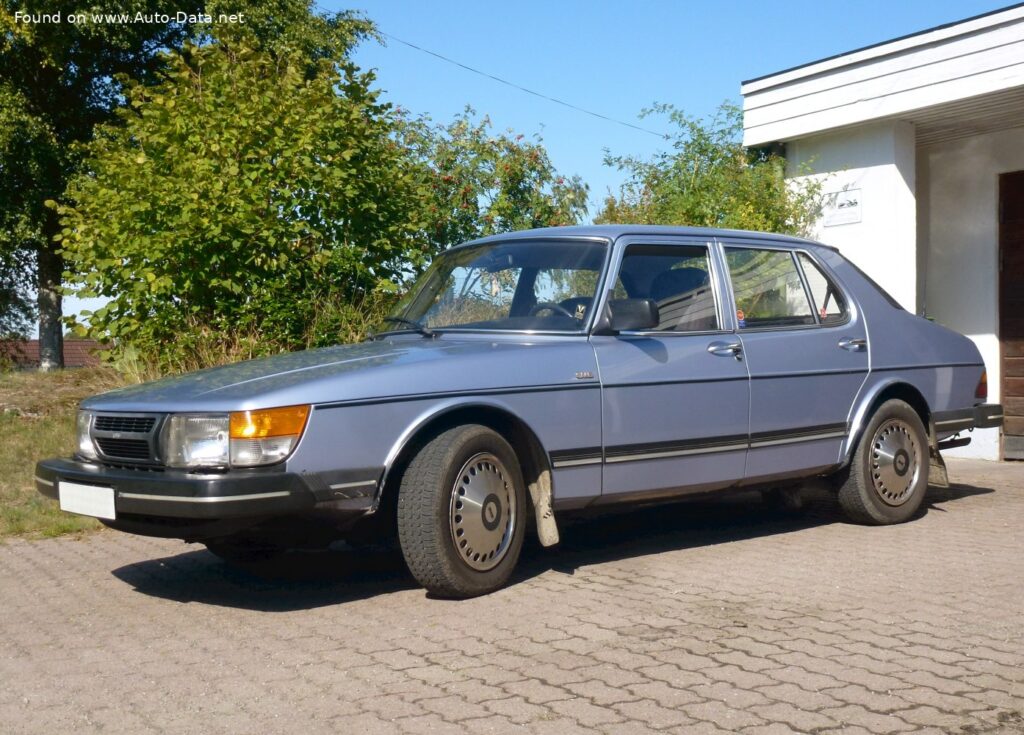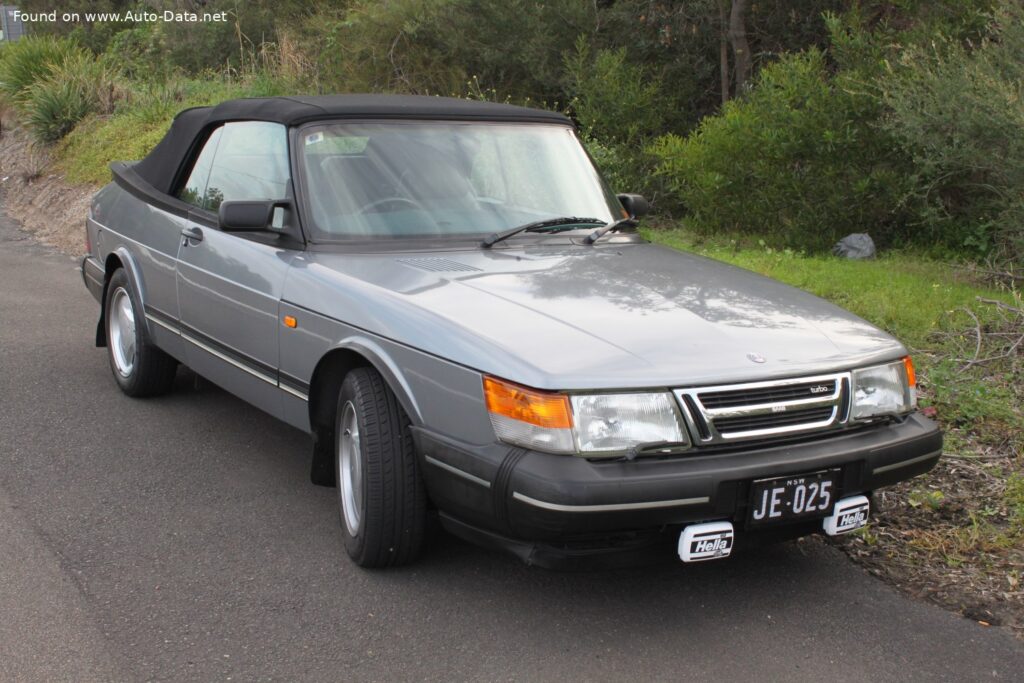
The Saab 900 I Cabriolet 2.1i 16V, produced between 1986 and 1993, represents a significant chapter in Saab’s history, particularly as an early foray into the premium compact convertible market. Building upon the success of the original Saab 900 launched in 1978, the Cabriolet offered open-air motoring with the distinctive Saab character – a blend of Scandinavian practicality, innovative engineering, and a loyal following. While not initially intended for large-scale production, strong demand, especially in Europe, led to its establishment as a core model within the 900 range. The 2.1i 16V variant, equipped with a fuel-injected engine and automatic transmission, provided a comfortable and relatively powerful driving experience for its time.
The Saab 900 I Cabriolet: A Legacy of Innovation
The first-generation Saab 900, and specifically the Cabriolet, carved a niche for itself by prioritizing driver experience and safety. Saab, known for its aeronautical roots, consistently incorporated innovative features into its vehicles. The Cabriolet, while aesthetically distinct with its soft-top roof, retained the core engineering principles of the 900 – a robust chassis, responsive handling, and a focus on occupant protection. The 2.1i 16V model, with its 16-valve cylinder head, represented an upgrade in performance over earlier versions, offering improved power delivery and responsiveness. It was a vehicle designed for those who appreciated a unique driving experience and a departure from mainstream automotive offerings.
Engine & Performance
The heart of the Saab 900 I Cabriolet 2.1i 16V is a 2.1-liter inline-four cylinder engine, designated the B212i. This naturally aspirated engine produces 136 horsepower at 6000 rpm and 175 Nm (129.07 lb.-ft.) of torque at 2900 rpm. The multi-port fuel injection system contributes to efficient combustion and improved throttle response. Power is delivered to the front wheels via a 3-speed automatic transmission. While not a performance car in the modern sense, the 2.1i 16V provides adequate power for comfortable cruising and spirited driving. Acceleration from 0 to 60 mph takes approximately 12.4 seconds, and 0 to 100 km/h is achieved in 13 seconds. The top speed is rated at 180 km/h (111.85 mph). Fuel economy is rated at 11.3 l/100 km (20.8 US mpg) combined, with 12.6 l/100 km (18.7 US mpg) in urban conditions and 8.4 l/100 km (28 US mpg) on the open road.
Design & Features
The Saab 900 I Cabriolet is instantly recognizable by its two-door, four-seat configuration and its soft-top convertible roof. The design, while rooted in the original 900’s angular styling, features a lower roofline and a more streamlined profile. The interior is characterized by its functional layout and comfortable seating. Safety was a key consideration, even in the late 1980s and early 1990s. The Cabriolet included features like ventilated front disc brakes and, importantly, an Anti-lock Braking System (ABS) which was becoming increasingly common during this period. The hydraulic power steering provides ease of maneuverability. The trunk offers a surprisingly generous amount of space, ranging from 650 liters (22.95 cu. ft.) with the rear seats up to 1500 liters (52.97 cu. ft.) with them folded down. The vehicle’s dimensions are 4680 mm (184.25 in.) in length, 1690 mm (66.54 in.) in width, and 1420 mm (55.91 in.) in height, with a wheelbase of 2515 mm (99.02 in.).
Technical Specifications
| Brand | Saab |
| Model | 900 |
| Generation | 900 I Cabriolet |
| Type (Engine) | 2.1i 16V (136 Hp) Automatic |
| Start of production | 1986 |
| End of production | 1993 |
| Powertrain Architecture | Internal Combustion engine |
| Body type | Cabriolet |
| Seats | 4 |
| Doors | 2 |
| Fuel consumption (urban) | 12.6 l/100 km (18.7 US mpg) |
| Fuel consumption (extra urban) | 8.4 l/100 km (28 US mpg) |
| Fuel consumption (combined) | 11.3 l/100 km (20.8 US mpg) |
| Fuel Type | Petrol (Gasoline) |
| Acceleration 0 – 100 km/h | 13 sec |
| Acceleration 0 – 62 mph | 13 sec |
| Acceleration 0 – 60 mph | 12.4 sec |
| Maximum speed | 180 km/h (111.85 mph) |
| Power | 136 Hp @ 6000 rpm |
| Torque | 175 Nm @ 2900 rpm (129.07 lb.-ft. @ 2900 rpm) |
| Engine layout | Front, Transverse |
| Engine Model/Code | B212i |
| Engine displacement | 2119 cm3 (129.31 cu. in.) |
| Number of cylinders | 4 |
| Engine configuration | Inline |
| Cylinder Bore | 93 mm (3.66 in.) |
| Piston Stroke | 78 mm (3.07 in.) |
| Compression ratio | 10:1 |
| Number of valves per cylinder | 4 |
| Fuel injection system | Multi-port manifold injection |
| Engine aspiration | Naturally aspirated |
| Engine oil capacity | 4 l (4.23 US qt | 3.52 UK qt) |
| Coolant capacity | 10 l (10.57 US qt | 8.8 UK qt) |
| Trunk (boot) space (minimum) | 650 l (22.95 cu. ft.) |
| Trunk (boot) space (maximum) | 1500 l (52.97 cu. ft.) |
| Fuel tank capacity | 63 l (16.64 US gal | 13.86 UK gal) |
| Length | 4680 mm (184.25 in.) |
| Width | 1690 mm (66.54 in.) |
| Height | 1420 mm (55.91 in.) |
| Wheelbase | 2515 mm (99.02 in.) |
| Front track | 1430 mm (56.3 in.) |
| Rear track | 1440 mm (56.69 in.) |
| Drivetrain Architecture | Front wheel drive |
| Number of gears and type of gearbox | 3 gears, automatic transmission |
| Front suspension | Wishbone |
| Rear suspension | Coil spring |
| Front brakes | Ventilated discs |
| Rear brakes | Disc |
| Assisting systems | ABS (Anti-lock braking system) |
| Steering type | Steering rack and pinion |
| Power steering | Hydraulic |
| Tires size | 185/65 TR15 |
| Wheel rims size | 15 |
The Saab 900 I Cabriolet 2.1i 16V remains a sought-after classic, appreciated for its unique character, comfortable driving experience, and the enduring appeal of the Saab brand. It represents a pivotal moment in Saab’s history, demonstrating the company’s ability to innovate and cater to a growing demand for open-top motoring.