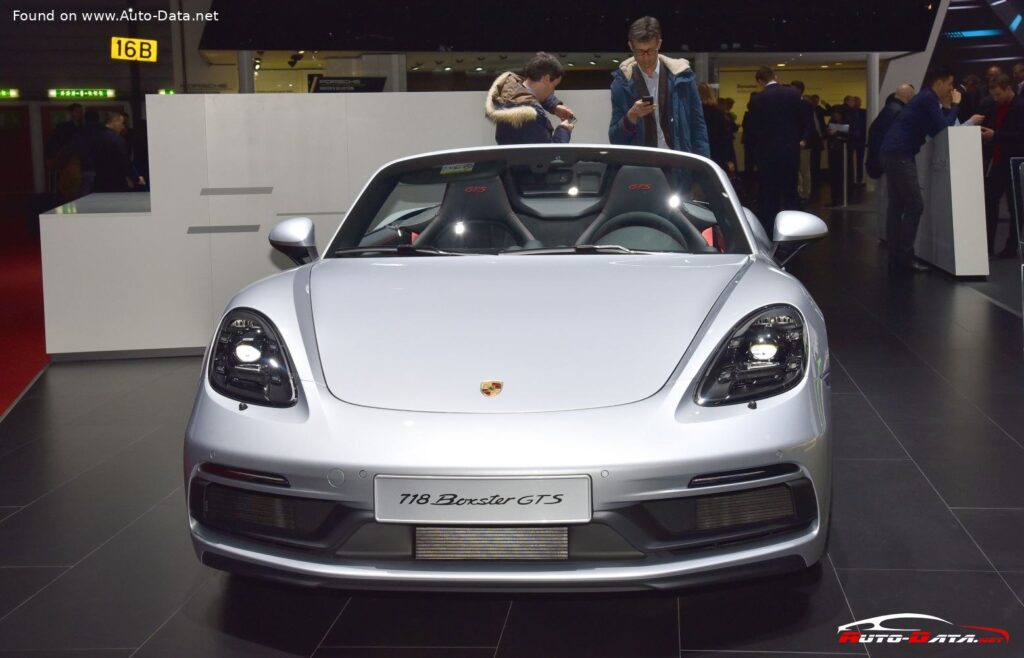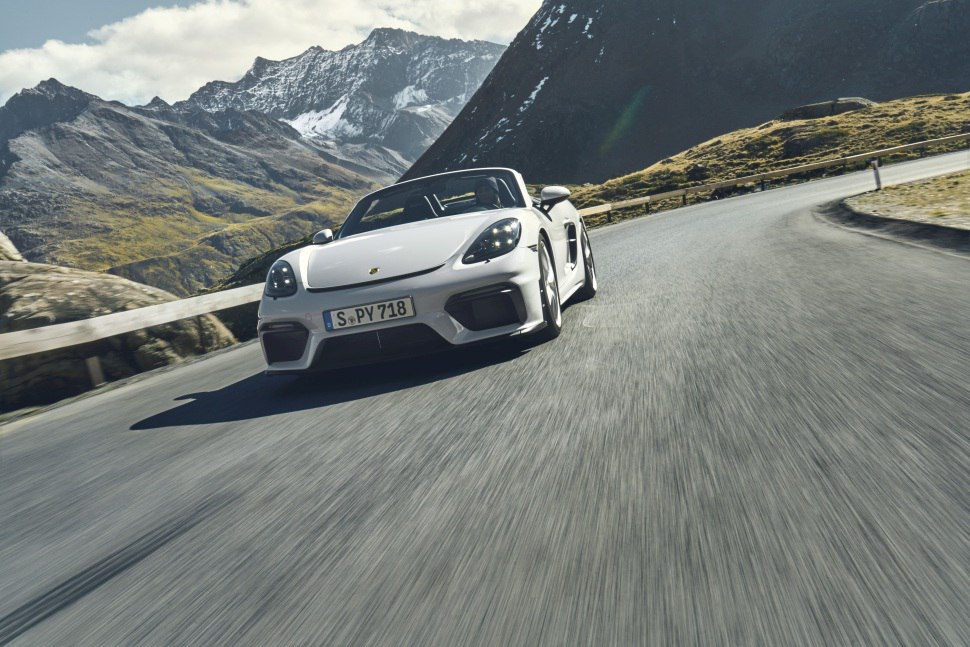
The Porsche 718 Spyder (982) 4.0, introduced in September 2020, represents a return to the high-revving, naturally aspirated engine formula that defined earlier Porsche Spyder models. Positioned within Porsche’s sports car lineup, the 718 Spyder is a two-seat, open-top roadster designed for enthusiasts prioritizing driving engagement and performance. It slots above the standard 718 Cayman and Boxster models, offering a more focused and visceral experience. This generation marked a significant shift, bringing back a six-cylinder engine after a period of utilizing turbocharged four-cylinder units in the 718 range.
Porsche 718 Spyder (982) 4.0: A Return to Roots
The 982 generation 718 Spyder aimed to recapture the spirit of its predecessors, like the 356 Speedster and the 550 Spyder, by prioritizing a direct connection between driver and machine. Unlike its siblings, the Spyder eschews comfort-oriented features in favor of a raw, unfiltered driving experience. The car’s design and engineering are centered around maximizing performance on both the road and the track, making it a compelling option for those seeking a truly engaging sports car.
Engine & Performance
At the heart of the 718 Spyder lies a 3.995-liter (243.79 cubic inches) naturally aspirated flat-six “boxer” engine, designated DKDA. This engine produces 420 horsepower at 7,600 rpm and 420 Nm (309.78 lb-ft) of torque between 5,000 and 6,800 rpm. The engine’s high 8,000 rpm redline encourages drivers to exploit its powerband, delivering a thrilling auditory and tactile experience. Power is sent to the rear wheels via a standard six-speed manual transmission, further enhancing driver involvement. The Spyder achieves a 0-60 mph (0-96 km/h) time of 4.2 seconds, 0-62 mph (0-100 km/h) in 4.4 seconds, and a 0-200 km/h (0-124 mph) time of 13.8 seconds. Its top speed is electronically limited to 187.03 mph (301 km/h). The engine’s naturally aspirated design, combined with a weight-to-power ratio of 3.4 kg/Hp, contributes to its responsive and linear power delivery.
Design & Features
The 718 Spyder is a two-door, two-seat cabriolet distinguished by its low-slung profile and aggressive styling. A key design element is the automatically extending and retracting fabric top, which provides open-air driving enjoyment while maintaining structural rigidity. The Spyder features a distinctive double-bubble roof design, a nod to classic Porsche Spyders, which provides increased headroom for the occupants. Aerodynamic enhancements, including a larger rear spoiler and revised front fascia, contribute to improved downforce and stability at higher speeds. Inside, the Spyder features a minimalist interior focused on the driving experience. Sport seats provide excellent support, and the cabin is trimmed with high-quality materials. While not overtly luxurious, the interior prioritizes functionality and driver engagement. Safety features include ABS (Anti-lock Braking System) and a comprehensive suite of stability control systems. The car’s relatively lightweight construction, with a kerb weight of 1420 kg (3130.56 lbs), further enhances its agility and responsiveness.
Technical Specifications
| Brand | Porsche |
| Model | 718 |
| Generation | 718 Spyder (982) |
| Type (Engine) | 4.0 (420 Hp) |
| Start of production | September, 2020 |
| Powertrain Architecture | Internal Combustion engine |
| Body type | Cabriolet |
| Seats | 2 |
| Doors | 2 |
| Fuel consumption (economy) – urban (NEDC) | 15 l/100 km (15.7 US mpg, 18.8 UK mpg, 6.7 km/l) |
| Fuel consumption (economy) – extra urban (NEDC) | 8.5 l/100 km (27.7 US mpg, 33.2 UK mpg, 11.8 km/l) |
| Fuel consumption (economy) – combined (NEDC) | 10.9 l/100 km (21.6 US mpg, 25.9 UK mpg, 9.2 km/l) |
| CO2 emissions (NEDC) | 249 g/km |
| Fuel Type | Petrol (Gasoline) |
| Acceleration 0 – 100 km/h | 4.4 sec |
| Acceleration 0 – 62 mph | 4.4 sec |
| Acceleration 0 – 60 mph | 4.2 sec |
| Acceleration 0 – 200 km/h | 13.8 sec |
| Maximum speed | 301 km/h (187.03 mph) |
| Emission standard | Euro 6d-ISC-FCM |
| Weight-to-power ratio | 3.4 kg/Hp, 295.8 Hp/tonne |
| Weight-to-torque ratio | 3.4 kg/Nm, 295.8 Nm/tonne |
| Power | 420 Hp @ 7600 rpm |
| Power per litre | 105.1 Hp/l |
| Torque | 420 Nm @ 5000-6800 rpm (309.78 lb.-ft. @ 5000-6800 rpm) |
| Maximum engine speed | 8000 rpm |
| Engine layout | Middle, Longitudinal |
| Engine Model/Code | DKDA |
| Engine displacement | 3995 cm3 (243.79 cu. in.) |
| Number of cylinders | 6 |
| Engine configuration | Boxer |
| Cylinder Bore | 102 mm (4.02 in.) |
| Piston Stroke | 81.5 mm (3.21 in.) |
| Compression ratio | 13:1 |
| Number of valves per cylinder | 4 |
| Fuel injection system | Direct injection |
| Engine aspiration | Naturally aspirated engine |
| Engine oil capacity | 8 l (8.45 US qt | 7.04 UK qt) |
| Kerb Weight | 1420 kg (3130.56 lbs.) |
| Max. weight | 1720 kg (3791.95 lbs.) |
| Max load | 300 kg (661.39 lbs.) |
| Trunk (boot) space – minimum | 150 l (5.3 cu. ft.) |
| Fuel tank capacity | 64 l (16.91 US gal | 14.08 UK gal) |
| Length | 4430 mm (174.41 in.) |
| Width | 1801 mm (70.91 in.) |
| Width including mirrors | 1994 mm (78.5 in.) |
| Height | 1258 mm (49.53 in.) |
| Wheelbase | 2484 mm (97.8 in.) |
| Front track | 1538 mm (60.55 in.) |
| Rear (Back) track | 1534 mm (60.39 in.) |
| Drag coefficient (Cd) | 0.34 |
| Minimum turning circle (turning diameter) | 11.4 m (37.4 ft.) |
| Drive wheel | Rear wheel drive |
| Number of gears and type of gearbox | 6 gears, manual transmission |
| Front suspension | Independent coil spring, Transverse stabilizer |
| Rear suspension | Independent coil spring, Transverse stabilizer |
| Front brakes | Ventilated discs, 380×34 mm |
| Rear brakes | Ventilated discs, 380×30 mm |
| Tires size | Front wheel tires: 245/35 ZR20 95YRear wheel tires: 295/30 ZR20 101Y |
| Wheel rims size | Front wheel rims: 8.5J x 20Rear wheel rims: 11J x 20 |