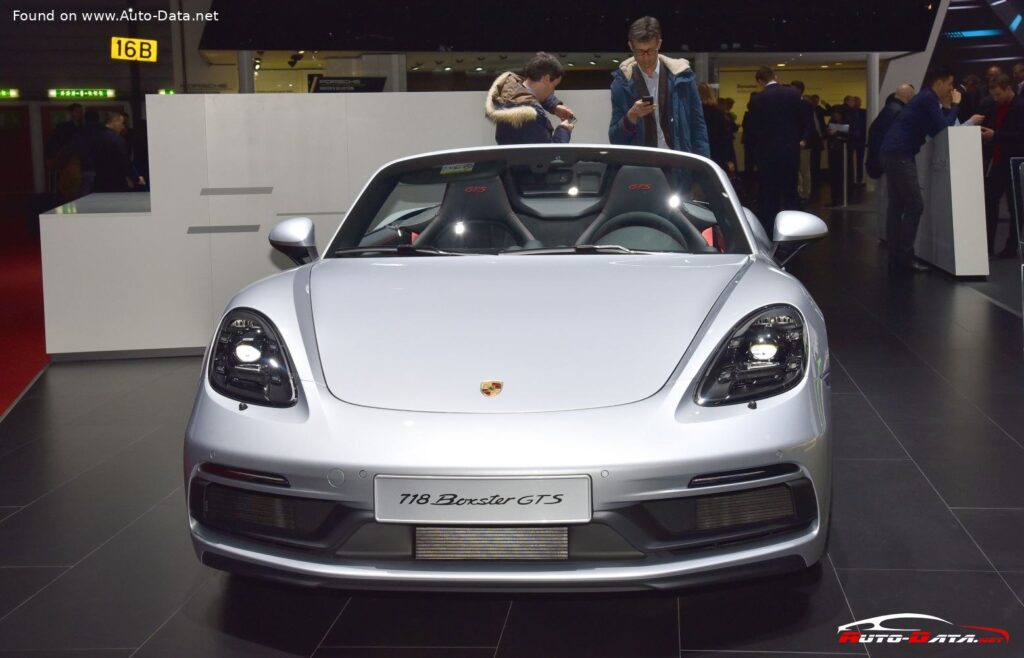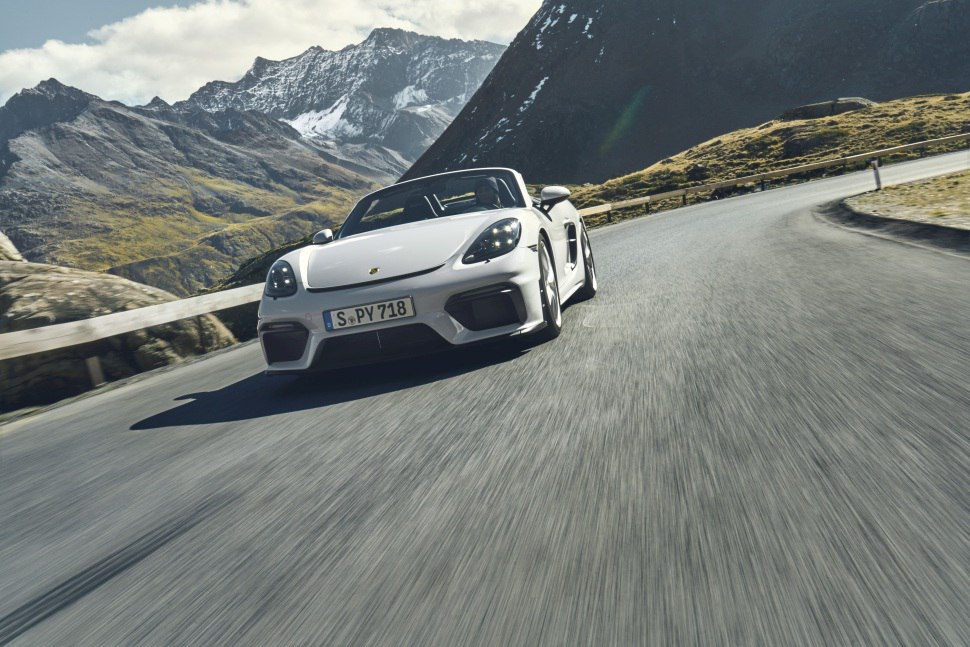
The Porsche 718 Spyder (982) 4.0, introduced in September 2020, represents the highest-performance variant of the 718 Spyder line. Positioned within the premium sports car segment, it delivers a focused driving experience emphasizing agility and a naturally aspirated engine – a rarity in modern sports cars. This generation, the 982, marked a return to a four-cylinder engine for the base 718 models, but the Spyder 4.0 distinguishes itself with a potent six-cylinder boxer engine, harking back to Porsche’s heritage. It’s primarily sold in global markets, including Europe and North America, appealing to enthusiasts seeking a visceral connection to the driving experience.
Porsche 718 Spyder (982) 4.0: A Return to Roots
The 718 Spyder 4.0 is a direct descendant of Porsche’s long line of open-top sports cars, specifically echoing the classic 356 and 550 Spyder models. While the 718 series initially faced criticism for moving away from the naturally aspirated flat-six engines of previous generations (like the 981 Cayman GT4), the Spyder 4.0 addresses this concern by reinstating a larger, more powerful six-cylinder engine. This model is designed for drivers who prioritize performance and handling over everyday practicality, offering a thrilling and engaging driving experience.
Engine & Performance
At the heart of the 718 Spyder 4.0 lies a 3,995 cc (243.79 cu. in.) naturally aspirated boxer-six engine, designated DKDA. This engine produces 420 horsepower at 7,600 rpm and 430 Nm (317.15 lb.-ft.) of torque at 5,500 rpm. The engine’s high 8,000 rpm redline encourages spirited driving and allows for precise control. Power is delivered to the rear wheels via a seven-speed Porsche Doppelkupplung (PDK) dual-clutch automatic transmission. This combination results in impressive acceleration figures: 0 to 60 mph in 3.7 seconds, 0 to 100 km/h in 3.9 seconds, and 0 to 200 km/h in 13.4 seconds. The car achieves a maximum speed of 300 km/h (186.41 mph). The engine’s power-to-weight ratio is a commendable 3.5 kg/Hp, and the torque-to-weight ratio is 3.4 kg/Nm. The Spyder 4.0 also incorporates a start/stop system and a particulate filter to meet modern emission standards (Euro 6d-ISC-FCM).
Design & Features
The 718 Spyder 4.0 is a two-seat, two-door cabriolet. Its design emphasizes aerodynamic efficiency and a low-slung profile. Key design elements include a manually operated fabric soft top, which provides an authentic open-air experience. The convertible top can be opened and closed in approximately 11 seconds, even while driving at moderate speeds. The body is constructed with a combination of aluminum and steel to minimize weight. The Spyder features a distinctive rear spoiler that automatically extends at higher speeds to enhance downforce. Inside, the cabin is focused on the driver, with supportive sport seats and a minimalist dashboard layout. Standard features include Porsche’s Communication Management (PCM) infotainment system, offering navigation, connectivity, and audio controls. While luxury isn’t the primary focus, the Spyder provides a comfortable and well-appointed interior for a performance-oriented vehicle. Safety features include ABS, and a comprehensive suite of driver-assistance systems.
Technical Specifications
| Brand | Porsche |
| Model | 718 |
| Generation | 718 Spyder (982) |
| Type (Engine) | 4.0 (420 Hp) PDK |
| Start of production | September, 2020 |
| Powertrain Architecture | Internal Combustion engine |
| Body type | Cabriolet |
| Seats | 2 |
| Doors | 2 |
| Fuel consumption (economy) – urban (NEDC) | 13.7 l/100 km (17.2 US mpg, 20.6 UK mpg, 7.3 km/l) |
| Fuel consumption (economy) – extra urban (NEDC) | 8.1 l/100 km (29 US mpg, 34.9 UK mpg, 12.3 km/l) |
| Fuel consumption (economy) – combined (NEDC) | 10.2 l/100 km (23.1 US mpg, 27.7 UK mpg, 9.8 km/l) |
| CO2 emissions (NEDC) | 232 g/km |
| Fuel Type | Petrol (Gasoline) |
| Acceleration 0 – 100 km/h | 3.9 sec |
| Acceleration 0 – 62 mph | 3.9 sec |
| Acceleration 0 – 60 mph | 3.7 sec |
| Acceleration 0 – 200 km/h | 13.4 sec |
| Maximum speed | 300 km/h (186.41 mph) |
| Emission standard | Euro 6d-ISC-FCM |
| Weight-to-power ratio | 3.5 kg/Hp, 289.7 Hp/tonne |
| Weight-to-torque ratio | 3.4 kg/Nm, 296.6 Nm/tonne |
| Power | 420 Hp @ 7600 rpm |
| Power per litre | 105.1 Hp/l |
| Torque | 430 Nm @ 5500 rpm (317.15 lb.-ft. @ 5500 rpm) |
| Maximum engine speed | 8000 rpm |
| Engine layout | Middle, Longitudinal |
| Engine Model/Code | DKDA |
| Engine displacement | 3995 cm3 (243.79 cu. in.) |
| Number of cylinders | 6 |
| Engine configuration | Boxer |
| Cylinder Bore | 102 mm (4.02 in.) |
| Piston Stroke | 81.5 mm (3.21 in.) |
| Compression ratio | 13:1 |
| Number of valves per cylinder | 4 |
| Fuel injection system | Direct injection |
| Engine oil capacity | 8 l (8.45 US qt | 7.04 UK qt) |
| Kerb Weight | 1450 kg (3196.7 lbs.) |
| Max. weight | 1750 kg (3858.09 lbs.) |
| Max load | 300 kg (661.39 lbs.) |
| Trunk (boot) space – minimum | 120 l (4.24 cu. ft.) |
| Fuel tank capacity | 64 l (16.91 US gal | 14.08 UK gal) |
| Length | 4430 mm (174.41 in.) |
| Width | 1801 mm (70.91 in.) |
| Width including mirrors | 1994 mm (78.5 in.) |
| Height | 1258 mm (49.53 in.) |
| Wheelbase | 2484 mm (97.8 in.) |
| Front track | 1538 mm (60.55 in.) |
| Rear (Back) track | 1534 mm (60.39 in.) |
| Drag coefficient (Cd) | 0.34 |
| Minimum turning circle (turning diameter) | 11.4 m (37.4 ft.) |
| Drive wheel | Rear wheel drive |
| Number of gears and type of gearbox | 7 gears, automatic transmission PDK |
| Front suspension | Independent coil spring, Transverse stabilizer |
| Rear suspension | Independent coil spring, Transverse stabilizer |
| Front brakes | Ventilated discs, 380×34 mm |
| Rear brakes | Ventilated discs, 380×30 mm |
| Tires size | Front wheel tires: 245/35 ZR20 95Y, Rear wheel tires: 295/30 ZR20 101Y |
| Wheel rims size | Front wheel rims: 8.5J x 20, Rear wheel rims: 11J x 20 |