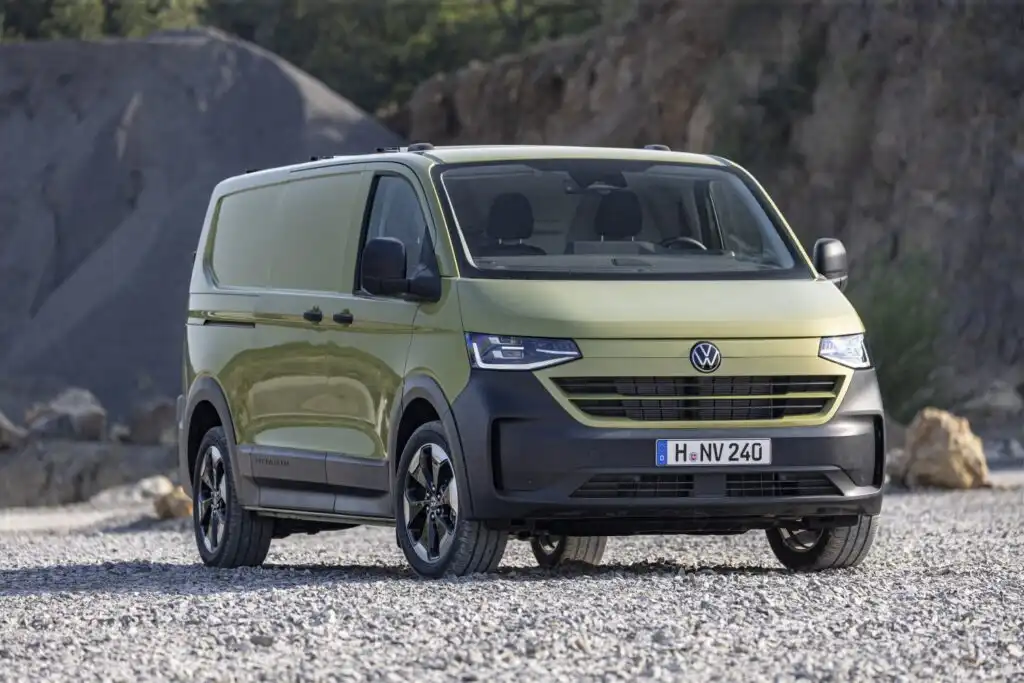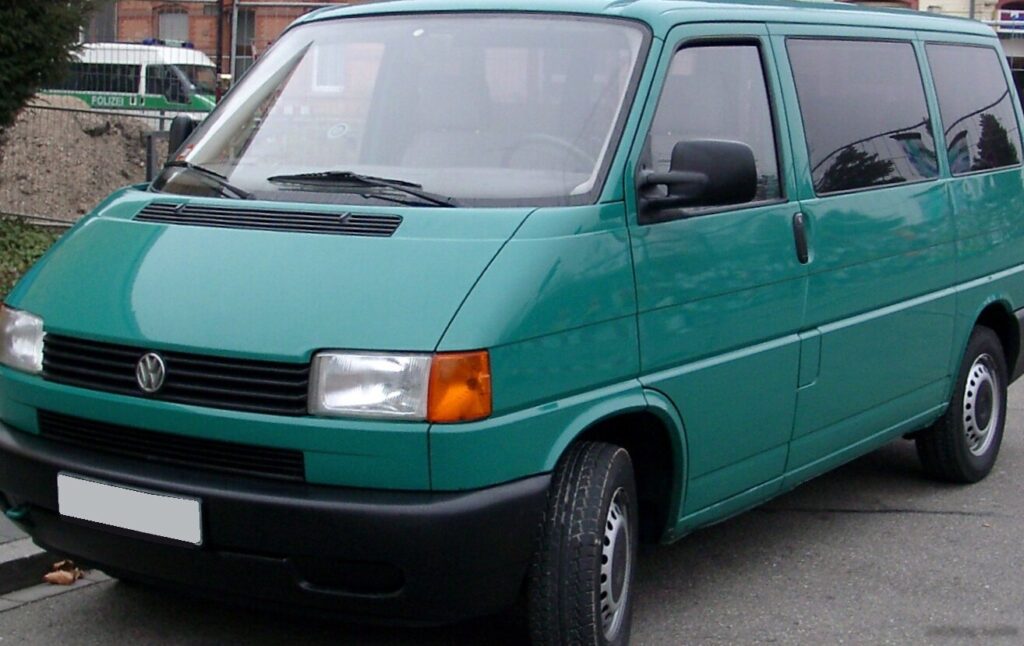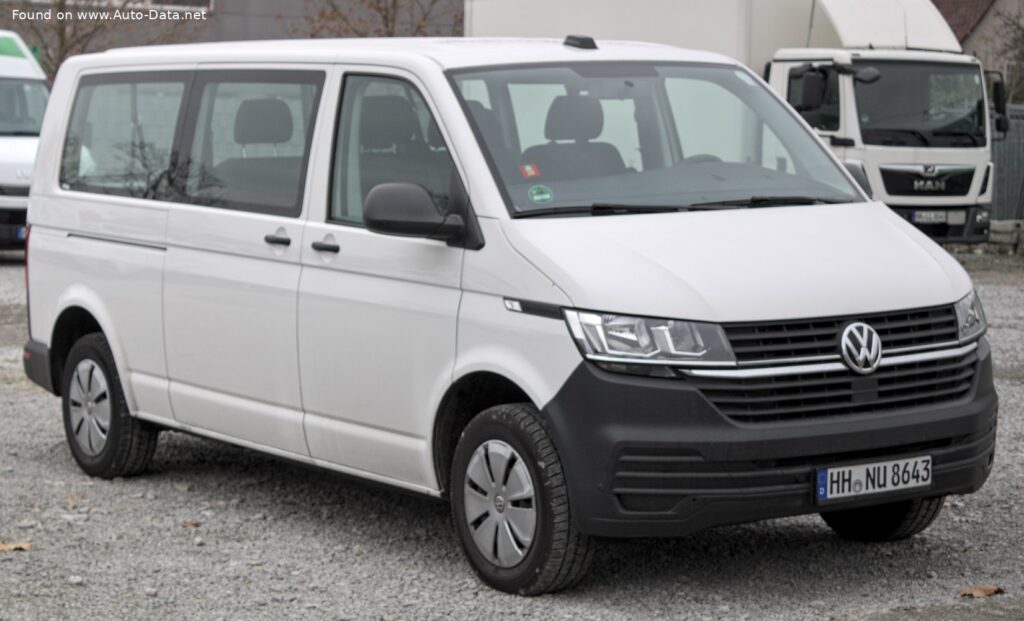
The Volkswagen Transporter, known as the T6.1 following a significant facelift in 2019, represents the latest iteration of a commercial vehicle lineage stretching back to the original Type 2 of the 1950s. This generation, while not officially sold in the United States due to market preferences and regulations favoring larger vans and pickup trucks, holds a prominent position in the European market as a versatile panel van, passenger carrier (Kombi), and platform for camper conversions. The T6.1 specifically addressed criticisms of the T6 model with improvements to technology, refinement, and styling. This article focuses on the 2.0 TDI (150 horsepower) 4MOTION L2H1 variant, produced between 2021 and 2022, detailing its specifications and characteristics.
Volkswagen Transporter T6.1: Overview and Market Position
The T6.1 Transporter is categorized as a light commercial vehicle, specifically a panel van or Kombi (a crew van with passenger seating). It serves a broad range of users, from tradespeople requiring a practical work vehicle to families seeking a spacious and adaptable people carrier. The “L2H1” designation indicates a long wheelbase and a low roof height, offering a balance between cargo capacity and maneuverability. The 4MOTION system denotes Volkswagen’s all-wheel-drive technology, enhancing traction and stability, particularly in challenging weather conditions. While not available in the US market, the Transporter competes with vehicles like the Ford Transit, Mercedes-Benz Vito, and Fiat Ducato in Europe and other global markets.
Engine & Performance
The 2.0 TDI engine powering the T6.1 Kombi is a four-cylinder, inline diesel engine utilizing common rail direct injection and a turbocharger with intercooling. This configuration produces 150 horsepower at 3250-3750 rpm and 340 Newton-meters (250.77 lb.-ft.) of torque between 1500-3000 rpm. The engine’s displacement is 1968 cubic centimeters (120.09 cubic inches), resulting in a power-to-liter ratio of 76.2 hp/l. Power is delivered to all four wheels via a six-speed manual transmission and Volkswagen’s 4MOTION all-wheel-drive system. This system operates with a permanent front-wheel drive bias, engaging the rear wheels as needed via an electronically controlled multi-plate clutch. Acceleration from 0 to 100 km/h (0-62 mph) takes 12.2 seconds, while 0-60 mph is achieved in 11.6 seconds. The vehicle has a maximum speed of 180 km/h (111.85 mph). Fuel economy figures, measured using the NEDC and WLTP standards, range from 6.8 to 7.3 liters per 100 kilometers (34.6 to 32.2 US mpg) combined, with CO2 emissions between 158 and 176 grams per kilometer.
Design & Features
The T6.1 Transporter maintains the iconic boxy silhouette characteristic of the Transporter lineage, but with modernized styling cues. The front end received a significant redesign with a more prominent grille, revised headlights, and a redesigned bumper. The interior was also updated with improved materials, a more contemporary dashboard layout, and enhanced technology. As a Kombi variant, this Transporter offers seating for between four and nine passengers, depending on the configuration. Standard features typically include ABS (Anti-lock Braking System), power steering, and a driver’s airbag. The L2H1 configuration provides a substantial cargo area of 6700 liters (236.61 cubic feet) with the rear seats folded or removed. Safety features, crucial in modern commercial vehicles, include electronic stability control and driver assistance systems like crosswind assist. The vehicle also incorporates a Start & Stop system and a particulate filter to reduce emissions, complying with Euro 6d-ISC-FCM emission standards.
Technical Specifications
| Brand | Volkswagen |
| Model | Transporter |
| Generation | Transporter (T6.1, facelift 2019) Kombi |
| Type (Engine) | 2.0 TDI (150 Hp) 4MOTION L2H1 |
| Start of production | 2021 |
| End of production | 2022 |
| Powertrain Architecture | Internal Combustion engine |
| Body type | Van |
| Seats | 4-9 |
| Doors | 4-5 |
| Fuel consumption (economy) – urban | 8.1-8.4 l/100 km (29 – 28 US mpg, 34.9 – 33.6 UK mpg, 12.3 – 11.9 km/l) |
| Fuel consumption (economy) – extra urban | 6-6.7 l/100 km (39.2 – 35.1 US mpg, 47.1 – 42.2 UK mpg, 16.7 – 14.9 km/l) |
| Fuel consumption (economy) – combined | 6.8-7.3 l/100 km (34.6 – 32.2 US mpg, 41.5 – 38.7 UK mpg, 14.7 – 13.7 km/l) |
| CO2 emissions | 158-176 g/km |
| Fuel Type | Diesel |
| Acceleration 0 – 100 km/h | 12.2 sec |
| Acceleration 0 – 62 mph | 12.2 sec |
| Acceleration 0 – 60 mph | 11.6 sec |
| Maximum speed | 180 km/h (111.85 mph) |
| Emission standard | Euro 6d-ISC-FCM |
| Weight-to-power ratio | 13.7 kg/Hp, 72.8 Hp/tonne |
| Weight-to-torque ratio | 6.1 kg/Nm, 165 Nm/tonne |
| Power | 150 Hp @ 3250-3750 rpm |
| Torque | 340 Nm @ 1500-3000 rpm (250.77 lb.-ft. @ 1500-3000 rpm) |
| Engine layout | Front, Transverse |
| Engine Model/Code | EA288MAR / DNAA |
| Engine displacement | 1968 cm3 (120.09 cu. in.) |
| Number of cylinders | 4 |
| Engine configuration | Inline |
| Cylinder Bore | 81 mm (3.19 in.) |
| Piston Stroke | 95.5 mm (3.76 in.) |
| Compression ratio | 15.5:1 |
| Number of valves per cylinder | 4 |
| Fuel injection system | Diesel Commonrail |
| Engine aspiration | Turbocharger, Intercooler |
| Valvetrain | DOHC |
| Engine oil capacity | 7.4 l (7.82 US qt | 6.51 UK qt) |
| Kerb Weight | 2061-2399 kg (4543.73 – 5288.89 lbs.) |
| Max. weight | 3000-3200 kg (6613.87 – 7054.79 lbs.) |
| Max load | 801-939 kg (1765.9 – 2070.14 lbs.) |
| Trunk (boot) space – maximum | 6700 l (236.61 cu. ft.) |
| Fuel tank capacity | 70 l (18.49 US gal | 15.4 UK gal) |
| AdBlue tank | 22 l (5.81 US gal | 4.84 UK gal) |
| Max. roof load | 100 kg (220.46 lbs.) |
| Permitted trailer load with brakes (12%) | 2300 kg (5070.63 lbs.) |
| Permitted trailer load without brakes | 750 kg (1653.47 lbs.) |
| Permitted towbar download | 100 kg (220.46 lbs.) |
| Length | 5304 mm (208.82 in.) |
| Width | 1904 mm (74.96 in.) |
| Width including mirrors | 2297 mm (90.43 in.) |
| Height | 1990 mm (78.35 in.) |
| Wheelbase | 3400 mm (133.86 in.) |
| Front overhang | 906 mm (35.67 in.) |
| Rear overhang | 998 mm (39.29 in.) |
| Ride height (ground clearance) | 202 mm (7.95 in.) |
| Minimum turning circle (turning diameter) | 13.2 m (43.31 ft.) |
| Drivetrain Architecture | The Internal combustion engine (ICE) drives the front wheels permanently, and the rear wheels are driven through an electrically or mechanically operated clutch if necessary. |
| Drive wheel | All wheel drive (4×4) |
| Number of gears and type of gearbox | 6 gears, manual transmission |