
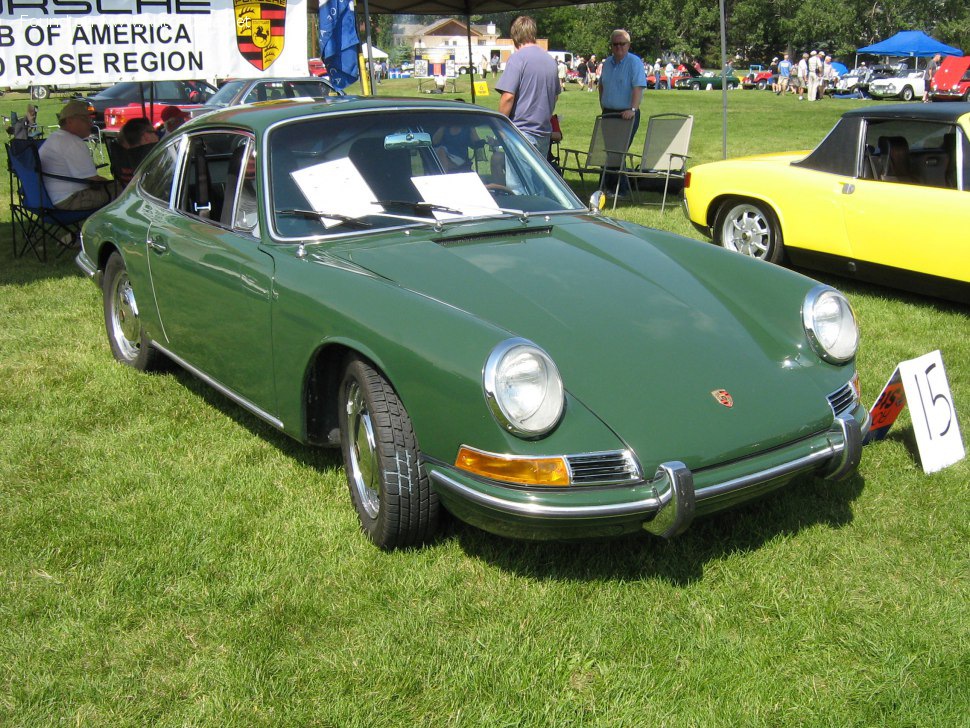
The Porsche 912 is a two-door, 2+2 coupe produced by Porsche AG between 1965 and 1969. Conceived as a more affordable alternative to the iconic 911, the 912 shared much of its mechanical underpinnings and bodywork with the 911, but utilized a less expensive, air-cooled, 1.6-liter flat-four engine derived from the Porsche 356. The 912 filled a crucial market segment for Porsche, offering the prestige and driving experience of the brand to a wider customer base. While never achieving the same level of fame as its 911 sibling, the 912 is now recognized as a desirable classic Porsche, appreciated for its simplicity, reliability, and engaging driving dynamics.
The Porsche 912: A Detailed Overview
The 912 was introduced as Porsche transitioned from the 356 to the 911. The 911, while technologically advanced, was also relatively expensive. Porsche recognized a demand for a more accessible sports car that retained the core Porsche values. The 912 was the answer, effectively continuing the spirit of the 356 while incorporating many of the 911’s design elements. It served as an entry point into the Porsche lineup, and proved surprisingly popular, with over 32,000 units produced during its four-year run.
Engine & Performance
The heart of the Porsche 912 is its 1.6-liter (1582 cm3 or 96.54 cu. in.) air-cooled, naturally aspirated flat-four engine, designated the 616.36. This engine produced 90 horsepower at 5800 rpm and 122 Nm (89.98 lb.-ft.) of torque at 3500 rpm. While not as powerful as the 911’s flat-six, the 912’s engine was known for its durability and smooth operation. Power per liter was a respectable 56.9 Hp/l. The engine featured a compression ratio of 9.3:1 and utilized a carburetor fuel injection system. The engine’s longitudinal rear-mounted layout contributed to the car’s balanced handling characteristics. The 912 could achieve a maximum speed of 185 km/h (114.95 mph). The weight-to-power ratio was 10.9 kg/Hp, and the weight-to-torque ratio was 8.1 kg/Nm. The engine required 4 liters (4.23 US qt | 3.52 UK qt) of engine oil.
Design & Features
The Porsche 912 shared its visually striking bodywork with the early 911 models. It’s a classic coupe design, characterized by its sloping roofline, long hood, and rounded fenders. The 912 is a two-door vehicle with seating for four, although the rear seats are best suited for smaller passengers. The car’s relatively lightweight construction – with a kerb weight of 985 kg (2171.55 lbs.) – contributed to its nimble handling. The 912 featured disc brakes on all four wheels (235mm front, 243mm rear) and a steering rack and pinion system, providing responsive steering and effective stopping power. The interior was relatively spartan, reflecting the car’s more affordable positioning, but still offered a comfortable and functional driving environment. The 912’s fuel tank capacity was 62 liters (16.38 US gal | 13.64 UK gal), providing a combined fuel consumption of 8.5 l/100 km (27.7 US mpg, 33.2 UK mpg, 11.8 km/l).
Technical Specifications
| Brand | Porsche |
| Model | 912 |
| Generation | 912 |
| Type (Engine) | 1.6 (90 Hp) |
| Start of production | April, 1965 |
| End of production | 1969 |
| Powertrain Architecture | Internal Combustion engine |
| Body type | Coupe |
| Seats | 4 |
| Doors | 2 |
| Fuel consumption (economy) – combined | 8.5 l/100 km |
| Fuel consumption (economy) – combined (US mpg) | 27.7 US mpg |
| Fuel consumption (economy) – combined (UK mpg) | 33.2 UK mpg |
| Fuel consumption (economy) – combined (km/l) | 11.8 km/l |
| Fuel Type | Petrol (Gasoline) |
| Maximum speed | 185 km/h |
| Maximum speed (mph) | 114.95 mph |
| Weight-to-power ratio | 10.9 kg/Hp |
| Weight-to-torque ratio | 8.1 kg/Nm |
| Power | 90 Hp @ 5800 rpm |
| Power per litre | 56.9 Hp/l |
| Torque | 122 Nm @ 3500 rpm |
| Torque (lb.-ft.) | 89.98 lb.-ft. @ 3500 rpm |
| Engine layout | Rear, Longitudinal |
| Engine Model/Code | 616.36 |
| Engine displacement | 1582 cm3 |
| Engine displacement (cu. in.) | 96.54 cu. in. |
| Number of cylinders | 4 |
| Engine configuration | Inline |
| Cylinder Bore | 82.5 mm |
| Cylinder Bore (in.) | 3.25 in. |
| Piston Stroke | 74 mm |
| Piston Stroke (in.) | 2.91 in. |
| Compression ratio | 9.3:1 |
| Number of valves per cylinder | 2 |
| Fuel injection system | Carburettor |
| Engine aspiration | Naturally aspirated engine |
| Engine oil capacity | 4 l |
| Engine oil capacity (US qt) | 4.23 US qt |
| Engine oil capacity (UK qt) | 3.52 UK qt |
| Kerb Weight | 985 kg |
| Kerb Weight (lbs.) | 2171.55 lbs. |
| Max. weight | 1265 kg |
| Max. weight (lbs.) | 2788.85 lbs. |
| Max load | 280 kg |
| Max load (lbs.) | 617.29 lbs. |
| Fuel tank capacity | 62 l |
| Fuel tank capacity (US gal) | 16.38 US gal |
| Fuel tank capacity (UK gal) | 13.64 UK gal |
| Length | 4163 mm |
| Length (in.) | 163.9 in. |
| Width | 1610 mm |
| Width (in.) | 63.39 in. |
| Height | 1320 mm |
| Height (in.) | 51.97 in. |
| Wheelbase | 2268 mm |
| Wheelbase (in.) | 89.29 in. |
| Front track | 1367 mm |
| Front track (in.) | 53.82 in. |
| Rear (Back) track | 1335 mm |
| Rear (Back) track (in.) | 52.56 in. |
| Front overhang | 900 mm |
| Front overhang (in.) | 35.43 in. |
| Rear overhang | 995 mm |
| Rear overhang (in.) | 39.17 in. |
| Ride height (ground clearance) | 150 mm |
| Ride height (ground clearance) (in.) | 5.91 in. |
| Minimum turning circle (turning diameter) | 10.4 m |
| Minimum turning circle (turning diameter) (ft.) | 34.12 ft. |
| Drivetrain Architecture | The Internal combustion engine (ICE) drives the rear wheels of the vehicle. |
| Drive wheel | Rear wheel drive |
| Number of gears and type of gearbox | 4 gears, manual transmission |
| Front brakes | Disc, 235 mm |
| Rear brakes | Disc, 243 mm |
| Steering type | Steering rack and pinion |
| Tires size | 185/70 R15 |
| Wheel rims size | 5.5J x 15 |
The Porsche 912, though often overshadowed by the 911, remains a significant vehicle in Porsche’s history. It offered an accessible entry point into the Porsche brand, and its enduring appeal lies in its classic design, engaging driving experience, and relative simplicity. Today, the 912 is a sought-after classic, appreciated by enthusiasts for its unique character and historical significance.
