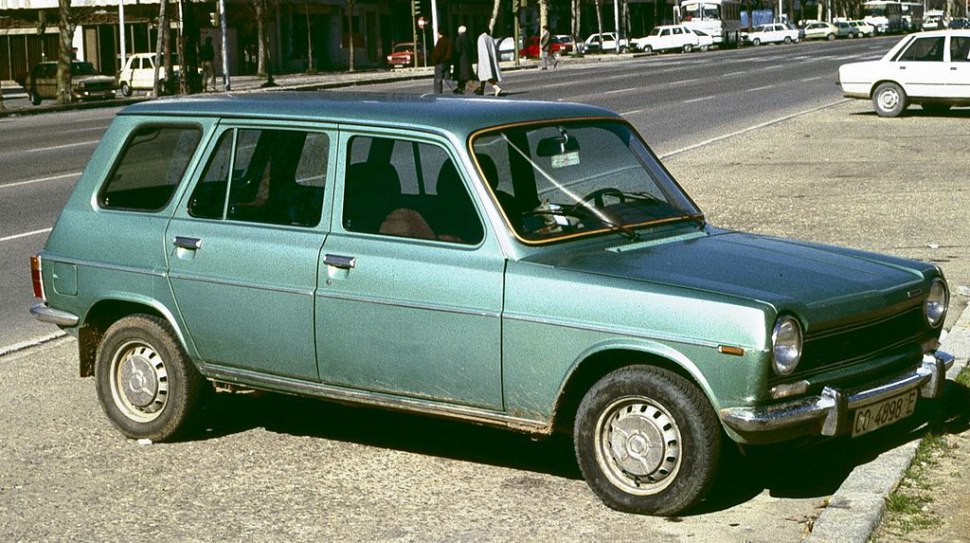
The Talbot Simca 1100 Break/Tourisme 1.1, produced between 1970 and 1972, represents a significant offering in the European compact car market. This station wagon, or estate as it was commonly known, was part of the larger Simca 1100 range, a vehicle notable for its innovative transverse engine layout and independent suspension. The 1100 series aimed to provide practical, affordable transportation for families, and the Break/Tourisme variant specifically catered to those needing increased cargo capacity. While the Talbot name would later become associated with Chrysler Europe, the early 1970s models like this one still bore the Simca badge, reflecting the brand’s established reputation for engineering and value. The 1.1-liter engine variant, producing 60 horsepower, positioned the car as an economical choice within its segment, prioritizing fuel efficiency and everyday usability over outright performance. It was never officially sold in the United States, but its design and engineering influenced compact car development in Europe during a period of significant automotive change.
The Talbot Simca 1100 Break/Tourisme: A Detailed Overview
Origins and Market Position
The Simca 1100 was originally conceived as a replacement for the Simca 1000, a small, rear-engined car. The shift to a front-wheel-drive layout with a transversely mounted engine was a major engineering undertaking for Simca, and it positioned the 1100 as a more modern and competitive vehicle. The Break/Tourisme, the station wagon version, expanded the 1100’s appeal by offering a practical alternative to larger, more expensive estates. In Europe, where space is often at a premium, the compact dimensions of the 1100 Break made it a popular choice for urban and suburban families. It competed with other small European estates like the Renault 12 Estate and the Hillman Estate, offering a blend of affordability, practicality, and relatively modern engineering. The Talbot branding appeared after Chrysler’s acquisition of Simca, but the initial years of the 1100 series, including the Break/Tourisme, were firmly rooted in Simca’s design philosophy.
Engine & Performance
The Talbot Simca 1100 Break/Tourisme 1.1 was powered by a 1,118 cc (68.2 cubic inch) inline-four cylinder, naturally aspirated gasoline engine. This engine, a key element of the 1100’s design, was notable for its transverse mounting, which allowed for a more compact engine bay and improved interior space. The engine produced 60 horsepower (45 kW) at approximately 5,500 rpm. While not a high-performance figure, it was sufficient for comfortable cruising and everyday driving. Torque figures were modest, typical for an engine of this displacement and era, focusing on drivability rather than rapid acceleration. The engine was paired with a four-speed manual transmission, which was the standard configuration. Performance was adequate for the time, with a top speed around 85 mph (137 km/h) and acceleration from 0 to 60 mph taking approximately 16-18 seconds. The emphasis was on fuel economy and reliability, making it a sensible choice for budget-conscious buyers. The engine’s relatively simple design contributed to its durability and ease of maintenance.
Design & Features
The Talbot Simca 1100 Break/Tourisme featured a classic station wagon body style, characterized by its extended roofline and large rear cargo area. The design was functional rather than flamboyant, prioritizing practicality and maximizing interior space. The car’s overall dimensions were relatively compact, making it easy to maneuver in urban environments. The front end featured a simple grille and headlights, while the rear end was defined by its large tailgate and vertically oriented taillights. Inside, the 1100 Break offered a surprisingly spacious cabin for its size. The rear seats could be folded down to create a larger cargo area, further enhancing its practicality. Features were relatively basic by modern standards, but included comfortable seating, a functional dashboard layout, and adequate ventilation. Safety features were limited compared to contemporary vehicles, reflecting the standards of the early 1970s. However, the car did offer basic seatbelts and a robust chassis construction. The suspension system, featuring independent front suspension and a trailing arm rear suspension, provided a comfortable ride and decent handling characteristics. The interior materials were durable and designed to withstand the rigors of family use.
Technical Specifications
| Brand | Talbot Simca |
| Model | 1100 Break/Tourisme 1.1 |
| Generation | Simca 1100 Break/Tourisme |
| Type (Engine) | 1.1 (60 Hp) |
| Start of Production | 1970 |
| End of Production | 1972 |
| Powertrain Architecture | Internal Combustion Engine |
| Body Type | Station Wagon (Estate) |
| Fuel Type | Petrol (Gasoline) |
| Engine Power | 60 Hp |
| Engine Aspiration | Naturally Aspirated |
The Talbot Simca 1100 Break/Tourisme 1.1, while not a groundbreaking vehicle in terms of performance or luxury, was a well-engineered and practical car that served a valuable role in the European automotive landscape. Its innovative transverse engine layout, combined with its spacious interior and affordable price, made it a popular choice for families seeking reliable and economical transportation. The car’s legacy lies in its contribution to the development of compact, front-wheel-drive vehicles, a segment that would become increasingly dominant in the decades that followed. Although it never reached American shores, the Simca 1100 Break/Tourisme remains a significant example of European automotive design and engineering from the early 1970s, representing a period of transition and innovation in the industry.