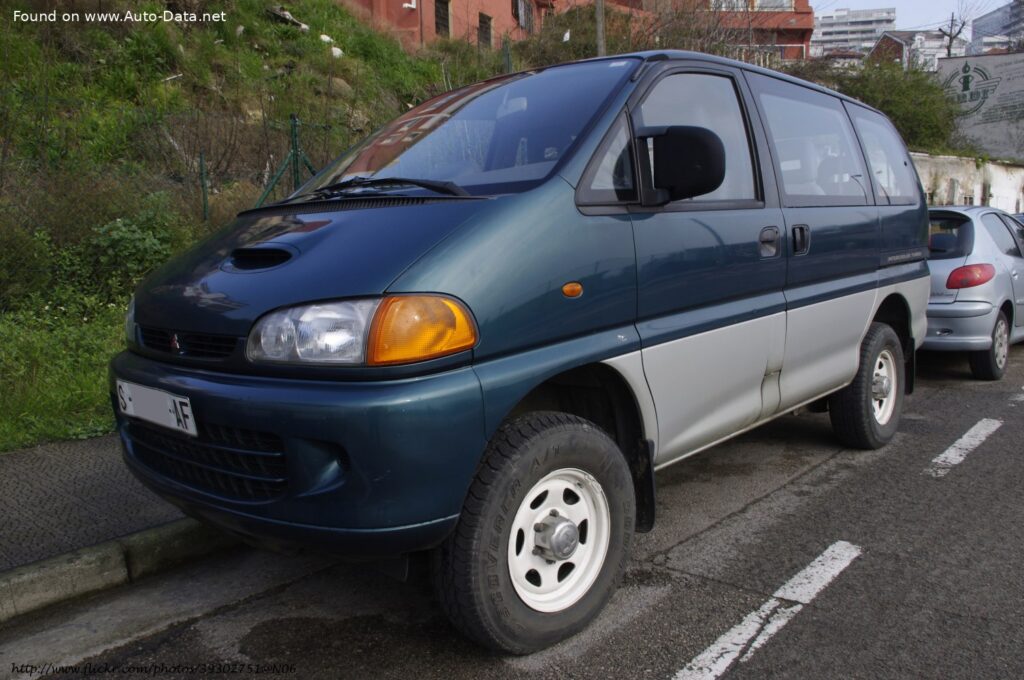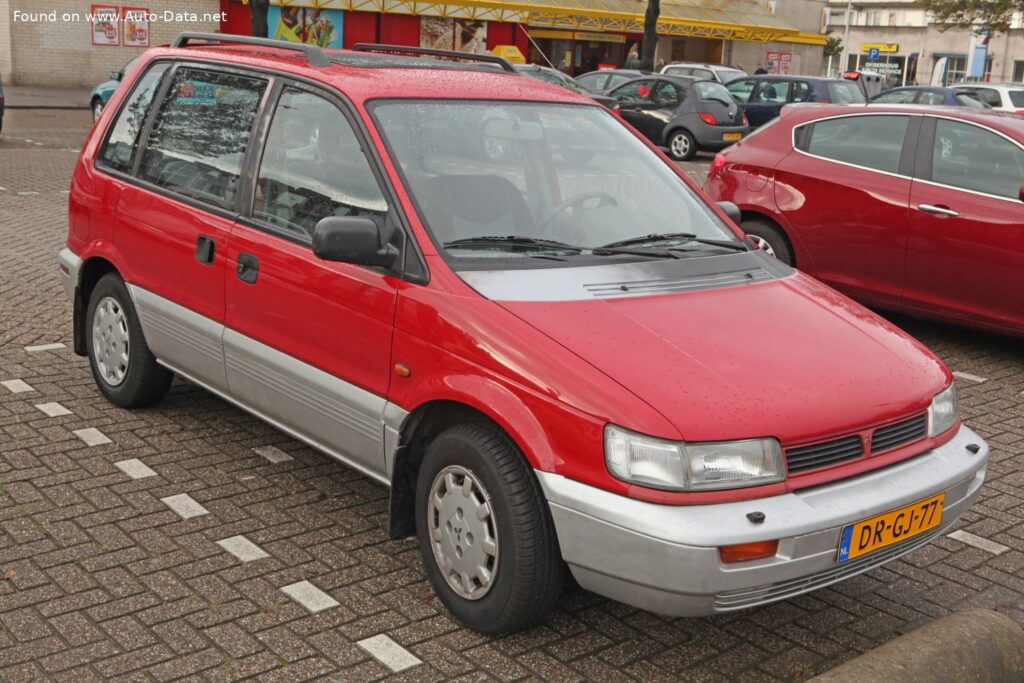
The Mitsubishi Space Runner, known as the Mitsubishi RVR or Mitsubishi Expo in some markets, is a compact minivan produced by Mitsubishi Motors between 1991 and 1999. Representing the first generation (N1_W, N2_W) of the Space Runner, this vehicle was primarily aimed at the European and Asian markets, offering a practical and versatile option for families. While not officially sold in the United States, the Space Runner filled a niche similar to that of smaller North American minivans, prioritizing fuel efficiency and maneuverability. The 1.8-liter (N11W) variant, equipped with a 122 horsepower engine and automatic transmission, was a popular configuration, balancing performance with ease of use.
Mitsubishi Space Runner (N1_W, N2_W): An Overview
The Space Runner was designed to be a multi-purpose vehicle, offering a blend of passenger comfort and cargo capacity. Its relatively small footprint made it well-suited for navigating crowded city streets, while its spacious interior provided ample room for passengers and luggage. The vehicle’s design reflected the styling trends of the early 1990s, with a boxy silhouette and practical interior appointments. The Space Runner’s success in its target markets stemmed from its affordability, reliability, and adaptability to various needs.
Engine & Performance
The 1.8-liter inline-four cylinder engine powering the Space Runner (N11W) delivers 122 horsepower at 6000 rpm and 161 Nm (118.75 lb.-ft.) of torque at 4500 rpm. This naturally aspirated engine utilizes a multi-port fuel injection system and an overhead camshaft (OHC) valvetrain. The engine’s displacement of 1834 cm³ (111.92 cu. in.) and a compression ratio of 10:1 contribute to a reasonable balance between power and fuel economy. Coupled with a 4-speed automatic transmission and front-wheel drive, the Space Runner achieves a 0-100 km/h (0-62 mph) acceleration time of 10.5 seconds and a maximum speed of 180 km/h (111.85 mph). The weight-to-power ratio of 10.1 kg/Hp and weight-to-torque ratio of 7.6 kg/Nm indicate a respectable, though not particularly sporty, performance profile. Fuel consumption is rated at 8.5 liters per 100 kilometers, equating to approximately 27.7 US mpg or 33.2 UK mpg.
Design & Features
The Mitsubishi Space Runner is a four-door minivan with seating for five passengers. Its body type prioritizes practicality and interior space. The vehicle’s dimensions – 4290 mm (168.9 in) in length, 1695 mm (66.73 in) in width, and 1640 mm (64.57 in) in height – position it as a compact offering within the minivan segment. The wheelbase measures 2520 mm (99.21 in), contributing to a stable ride. Key features of the Space Runner include a generous trunk space ranging from 676 liters (23.87 cu. ft.) with the rear seats up to 1498 liters (52.9 cu. ft.) with the seats folded down. Safety features for the era included an Anti-lock Braking System (ABS), which was becoming increasingly common on vehicles of this class. The hydraulic power steering provides ease of maneuverability, and the vehicle rides on 14-inch wheels with 185/70 R14 tires. The interior is designed for functionality, with durable materials and a focus on maximizing space.
Technical Specifications
| Brand | Mitsubishi |
| Model | Space Runner |
| Generation | Space Runner (N1_W, N2_W) |
| Type (Engine) | 1.8 (N11W) (122 Hp) Automatic |
| Start of production | 1991 |
| End of production | 1999 |
| Powertrain Architecture | Internal Combustion engine |
| Body type | Minivan |
| Seats | 5 |
| Doors | 4 |
| Fuel consumption (combined) | 8.5 l/100 km |
| Fuel consumption (US mpg) | 27.7 US mpg |
| Fuel consumption (UK mpg) | 33.2 UK mpg |
| Fuel consumption (km/l) | 11.8 km/l |
| Fuel Type | Petrol (Gasoline) |
| Acceleration 0 – 100 km/h | 10.5 sec |
| Acceleration 0 – 62 mph | 10.5 sec |
| Acceleration 0 – 60 mph | 10 sec |
| Maximum speed | 180 km/h (111.85 mph) |
| Weight-to-power ratio | 10.1 kg/Hp |
| Weight-to-torque ratio | 7.6 kg/Nm |
| Power | 122 Hp @ 6000 rpm |
| Power per litre | 66.5 Hp/l |
| Torque | 161 Nm @ 4500 rpm (118.75 lb.-ft. @ 4500 rpm) |
| Engine layout | Front, Transverse |
| Engine displacement | 1834 cm3 (111.92 cu. in.) |
| Number of cylinders | 4 |
| Engine configuration | Inline |
| Cylinder Bore | 81 mm (3.19 in.) |
| Piston Stroke | 89 mm (3.5 in.) |
| Compression ratio | 10:1 |
| Number of valves per cylinder | 4 |
| Fuel injection system | Multi-port manifold injection |
| Engine aspiration | Naturally aspirated engine |
| Valvetrain | OHC |
| Kerb Weight | 1228 kg (2707.28 lbs.) |
| Max. weight | 1720 kg (3791.95 lbs.) |
| Max load | 492 kg (1084.67 lbs.) |
| Trunk (boot) space – minimum | 676 l (23.87 cu. ft.) |
| Trunk (boot) space – maximum | 1498 l (52.9 cu. ft.) |
| Fuel tank capacity | 55 l (14.53 US gal | 12.1 UK gal) |
| Length | 4290 mm (168.9 in.) |
| Width | 1695 mm (66.73 in.) |
| Height | 1640 mm (64.57 in.) |
| Wheelbase | 2520 mm (99.21 in.) |
| Front track | 1460 mm (57.48 in.) |
| Rear (Back) track | 1460 mm (57.48 in.) |
| Drivetrain Architecture | Front wheel drive |
| Number of gears and type of gearbox | 4 gears, automatic transmission |
| Front suspension | Wishbone |
| Rear suspension | Coil spring |
| Front brakes | Ventilated discs |
| Rear brakes | Drum |
| Assisting systems | ABS (Anti-lock braking system) |
| Steering type | Steering rack and pinion |
| Power steering | Hydraulic Steering |
| Tires size | 185/70 R14 |
| Wheel rims size | 14 |
The Mitsubishi Space Runner, while not a household name in the United States, represents a significant example of compact minivan design from the early 1990s. Its blend of practicality, fuel efficiency, and affordability made it a popular choice in its target markets, and it remains a recognizable vehicle for enthusiasts of Japanese automotive history.