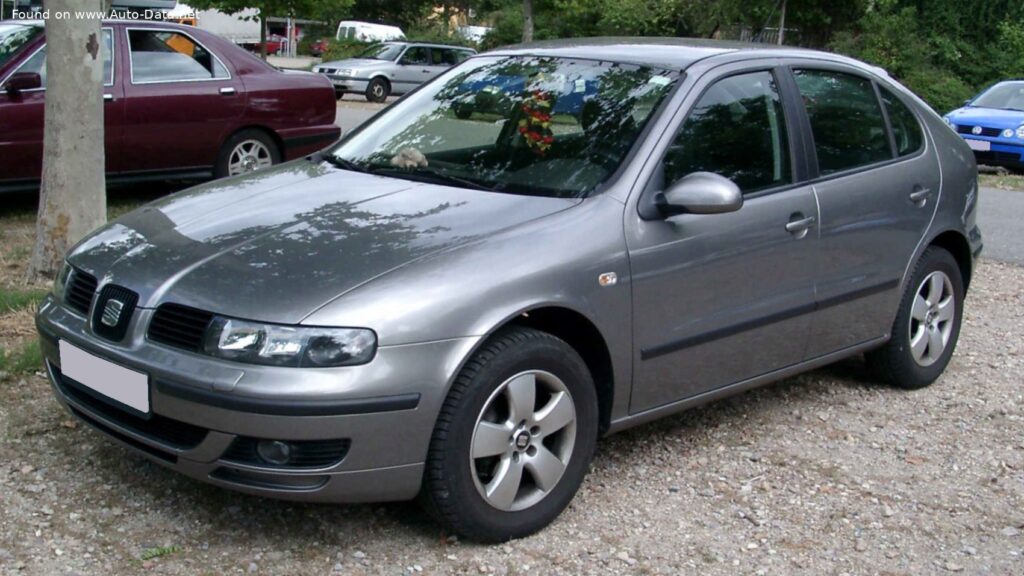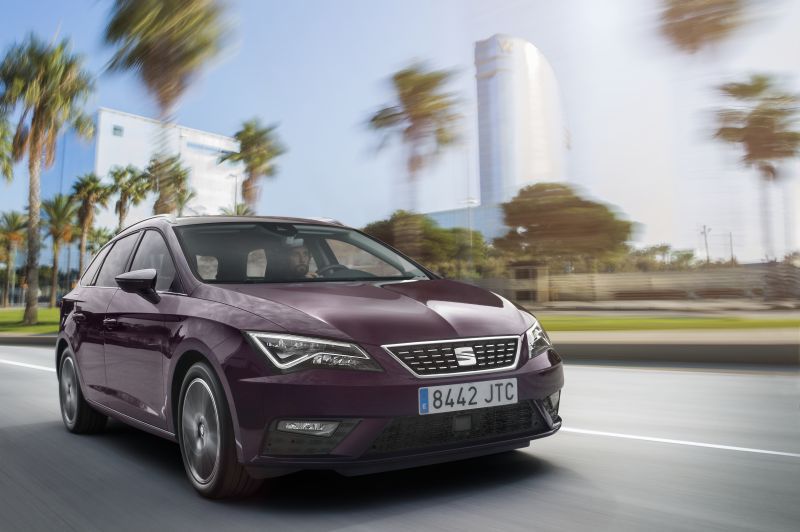
The SEAT Leon III ST Cupra 2.0 TSI (300 Hp) 4Drive DSG is a performance-oriented station wagon (estate) produced by the Spanish automaker SEAT between 2017 and 2018. As part of the Leon III generation, which underwent a facelift in 2016, the Cupra model represents the high-performance variant of the ST (SportTourer) body style. While SEAT vehicles are not officially sold in the United States, the Leon is a popular model in Europe, competing with vehicles like the Volkswagen Golf, Ford Focus, and Skoda Octavia. The Cupra trim level specifically targets enthusiasts seeking a blend of practicality and sporty driving dynamics.
SEAT Leon III ST Cupra: A Performance Estate
The Leon III ST Cupra 2.0 TSI 4Drive DSG occupies a niche market segment – the performance estate. It caters to buyers who require the cargo capacity of a station wagon but desire the acceleration and handling characteristics of a sports car. The “ST” designation signifies the SportTourer body style, offering increased luggage space compared to the hatchback version. The “Cupra” badge denotes the high-performance trim, featuring a more powerful engine, upgraded brakes, and a sport-tuned suspension. The 4Drive system indicates all-wheel drive, enhancing traction and stability, particularly in adverse weather conditions. The “DSG” signifies the dual-clutch gearbox, providing rapid and smooth gear changes.
Engine & Performance
At the heart of the Leon III ST Cupra 2.0 TSI 4Drive DSG lies a 2.0-liter turbocharged inline-four cylinder engine, designated the EA888 / CJXC. This powerplant delivers a robust 300 horsepower at 5,500-6,200 rpm and 380 Nm (280.27 lb.-ft.) of torque between 1,800 and 5,500 rpm. This translates to a power-to-liter ratio of 151.2 hp/l. The engine utilizes direct injection and multi-port manifold injection, optimizing fuel delivery and combustion efficiency. A turbocharger with an intercooler further enhances performance. Power is transmitted to all four wheels via a six-speed dual-clutch transmission (DSG), enabling swift and precise gear changes. This combination allows for a 0-100 km/h (0-62 mph) acceleration time of just 4.9 seconds, and a 0-60 mph time of 4.7 seconds. The vehicle’s top speed is electronically limited to 250 km/h (155.34 mph). The weight-to-power ratio of 4.9 kg/Hp and weight-to-torque ratio of 3.9 kg/Nm contribute to its responsive driving experience.
Design & Features
The SEAT Leon III ST Cupra 2.0 TSI 4Drive DSG boasts a sleek and modern design, characteristic of SEAT’s styling language. The station wagon body style provides a generous 587 liters (20.73 cu. ft.) of trunk space, expandable to 1,470 liters (51.91 cu. ft.) with the rear seats folded down. The vehicle accommodates five passengers comfortably. Key features include a McPherson strut front suspension and a multi-link rear suspension, providing a balance between ride comfort and handling precision. Ventilated disc brakes on all four wheels (340×30 mm front, 310×22 mm rear) ensure strong stopping power. Standard safety features include ABS (Anti-lock Braking System). The vehicle also incorporates an electric power steering system for responsive and precise control. The 4Drive all-wheel-drive system enhances stability and traction, particularly on slippery surfaces. The car includes a Start & Stop system to improve fuel efficiency.
Technical Specifications
| Brand | Seat |
| Model | Leon |
| Generation | Leon III ST (facelift 2016) |
| Type (Engine) | Cupra 2.0 TSI (300 Hp) 4Drive DSG |
| Start of production | 2017 |
| End of production | 2018 |
| Powertrain Architecture | Internal Combustion engine |
| Body type | Station wagon (estate) |
| Seats | 5 |
| Doors | 5 |
| Fuel consumption (economy) – urban (NEDC) | 9.1 l/100 km (25.8 US mpg, 31 UK mpg, 11 km/l) |
| Fuel consumption (economy) – extra urban (NEDC) | 6.1 l/100 km (38.6 US mpg, 46.3 UK mpg, 16.4 km/l) |
| Fuel consumption (economy) – combined (NEDC) | 7.2 l/100 km (32.7 US mpg, 39.2 UK mpg, 13.9 km/l) |
| CO2 emissions (NEDC) | 164 g/km |
| Fuel Type | Petrol (Gasoline) |
| Acceleration 0 – 100 km/h | 4.9 sec |
| Acceleration 0 – 62 mph | 4.9 sec |
| Acceleration 0 – 60 mph | 4.7 sec |
| Maximum speed | 250 km/h (155.34 mph) |
| Emission standard | Euro 6 |
| Weight-to-power ratio | 4.9 kg/Hp |
| Weight-to-torque ratio | 3.9 kg/Nm |
| Power | 300 Hp @ 5500-6200 rpm |
| Torque | 380 Nm @ 1800-5500 rpm (280.27 lb.-ft. @ 1800-5500 rpm) |
| Engine layout | Front, Transverse |
| Engine Model/Code | EA888 / CJXC |
| Engine displacement | 1984 cm3 (121.07 cu. in.) |
| Number of cylinders | 4 |
| Engine configuration | Inline |
| Cylinder Bore | 82.5 mm (3.25 in.) |
| Piston Stroke | 92.8 mm (3.65 in.) |
| Compression ratio | 9.3:1 |
| Number of valves per cylinder | 4 |
| Fuel injection system | Direct injection and Multi-port manifold injection |
| Engine aspiration | Turbocharger, Intercooler |
| Valvetrain | DOHC |
| Engine oil capacity | 5.7 l (6.02 US qt | 5.02 UK qt) |
| Coolant | 10 l (10.57 US qt | 8.8 UK qt) |
| Kerb Weight | 1470 kg (3240.8 lbs.) |
| Max. weight | 2040 kg (4497.43 lbs.) |
| Max load | 570 kg (1256.63 lbs.) |
| Trunk (boot) space – minimum | 587 l (20.73 cu. ft.) |
| Trunk (boot) space – maximum | 1470 l (51.91 cu. ft.) |
| Fuel tank capacity | 50 l (13.21 US gal | 11 UK gal) |
| Max. roof load | 75 kg (165.35 lbs.) |
| Length | 4540 mm (178.74 in.) |
| Width | 1816 mm (71.5 in.) |
| Width including mirrors | 1975 mm (77.76 in.) |
| Height | 1428 mm (56.22 in.) |
| Wheelbase | 2631 mm (103.58 in.) |
| Front track | 1534-1536 mm (60.39 – 60.47 in.) |
| Rear (Back) track | 1508-1510 mm (59.37 – 59.45 in.) |
| Front overhang | 855 mm (33.66 in.) |
| Rear overhang | 1054 mm (41.5 in.) |
| Minimum turning circle (turning diameter) | 10.5 m (34.45 ft.) |
| Drivetrain Architecture | The Internal combustion engine (ICE) drives the front wheels permanently, and the rear wheels are driven through an electrically or mechanically operated clutch if necessary. |
| Drive wheel | All wheel drive (4×4) |
| Number of gears and type of gearbox | 6 gears, automatic transmission DSG |
| Front suspension | Independent, type McPherson with coil spring and anti-roll bar |
| Rear suspension | Independent multi-link spring suspension with stabilizer |
| Front brakes | Ventilated discs, 340×30 mm |
| Rear brakes | Ventilated discs, 310×22 mm |
| Tires size | 225/40 R18; 235/35 R19 |
| Wheel rims size | 7.5J x 18; 8J x 19 |