
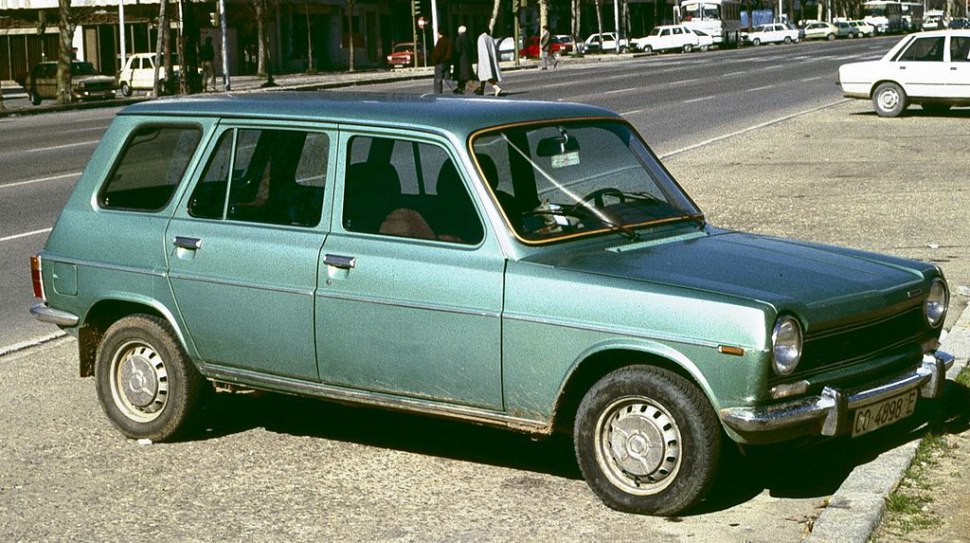
The Talbot Simca 1100 Break/Tourisme 1.3 Spezial, produced between 1974 and 1976, represents a significant iteration of the Simca 1100, a compact family car that gained considerable popularity in Europe. This particular variant, the “Break” (station wagon) or “Tourisme” as it was sometimes marketed, offered increased practicality without sacrificing the 1100’s reputation for nimble handling and relatively modern engineering for its time. The Talbot branding reflects the 1974 merger of Simca with the British manufacturer Rootes Group, which was then under the control of Chrysler Europe. While not officially sold in the United States, the 1100, and specifically the Break/Tourisme, filled a crucial niche in the European market as an affordable, efficient, and versatile vehicle for families and those needing additional cargo space.
The Talbot Simca 1100 Break/Tourisme 1.3 Spezial
The Simca 1100, launched in 1967, was a groundbreaking vehicle for its time, employing a transversely mounted engine and front-wheel drive – a configuration that was still relatively uncommon in the late 1960s. This layout maximized interior space and contributed to the car’s excellent handling characteristics. The 1100 underwent several revisions throughout its production run, and the 1974-1976 Break/Tourisme 1.3 Spezial represents a refined version of the original design, benefiting from improvements in engine technology and trim levels. The adoption of the Talbot badge signified a new chapter for the model, though the core engineering principles remained largely unchanged. The Break/Tourisme body style was particularly popular, offering a practical alternative to traditional sedans without the bulk of larger estate cars.
Origins and Market Position
Prior to the Chrysler takeover, Simca was a French manufacturer known for its innovative designs and competitive pricing. The 1100 was intended to be a modern, family-oriented car that could compete with established rivals like the Renault 12 and Peugeot 204. The Break/Tourisme variant specifically targeted buyers who required additional cargo capacity, such as families, small business owners, or those with active lifestyles. In a European market increasingly focused on fuel efficiency and practicality, the 1100 Break/Tourisme offered a compelling package. The car’s relatively compact size also made it well-suited for navigating narrow European streets and parking in crowded urban areas.
Engine & Performance
The Talbot Simca 1100 Break/Tourisme 1.3 Spezial was powered by a 1.3-liter, naturally aspirated inline-four cylinder gasoline engine. This engine produced 75 horsepower, providing adequate performance for everyday driving. While not a particularly powerful engine by modern standards, it was well-suited to the car’s lightweight construction and front-wheel-drive layout. The engine featured a single overhead camshaft and a two-barrel carburetor, contributing to its smooth operation and reasonable fuel economy. The transversely mounted engine configuration, a hallmark of the 1100 series, allowed for a lower engine placement, improving the car’s center of gravity and enhancing its handling. The engine was mated to a four-speed manual transmission, providing drivers with direct control over the car’s power delivery. Performance figures, while not extensively documented, suggest a top speed of around 90-95 miles per hour and an acceleration time of approximately 13-14 seconds for the 0-60 mph sprint. These figures were competitive for a family car of this size and class in the mid-1970s.
Design & Features
The Talbot Simca 1100 Break/Tourisme was characterized by its practical and functional design. The station wagon body style offered a generous cargo area, accessible through a large rear tailgate. The interior was designed with practicality in mind, featuring durable materials and a relatively spacious cabin for a car of its size. The dashboard layout was straightforward and functional, with clearly labeled controls. Safety features, while limited by the standards of the time, included seat belts and a collapsible steering column. The car’s suspension system, featuring independent front suspension and a torsion beam rear axle, provided a comfortable ride and good handling characteristics. Stylistically, the 1100 Break/Tourisme was a product of its era, with clean lines and a relatively understated appearance. The “Spezial” trim level typically included features such as upgraded upholstery, additional chrome trim, and potentially other cosmetic enhancements. The car’s overall design emphasized functionality and practicality over outright luxury or sporting pretensions. The Break/Tourisme’s extended roofline and larger rear window distinguished it from the standard sedan version, providing increased headroom and visibility for passengers.
Impact and Legacy
The Talbot Simca 1100, including the Break/Tourisme variant, played a significant role in the European automotive landscape of the 1970s. Its innovative engineering, particularly its transversely mounted engine and front-wheel-drive layout, influenced the design of many subsequent vehicles. The car’s practicality, affordability, and relatively modern features made it a popular choice for families and those seeking a versatile and efficient mode of transportation. While the Talbot brand ultimately faded away following Chrysler Europe’s restructuring and subsequent sale to Peugeot, the Simca 1100 remains a fondly remembered and respected vehicle among automotive enthusiasts. Its influence can still be seen in the design of modern compact cars, and it serves as a reminder of Simca’s innovative spirit and commitment to providing affordable and practical transportation.
Technical Specifications
| Brand | Talbot |
| Model | Simca |
| Generation | Simca 1100 Break/tourisme |
| Type (Engine) | 1.3 Spezial (75 Hp) |
| Start of production | 1974 |
| End of production | 1976 |
| Powertrain Architecture | Internal Combustion engine |
| Body type | Station wagon (estate) |
| Fuel Type | Petrol (Gasoline) |
| Power | 75 Hp |
| Engine aspiration | Naturally aspirated engine |

