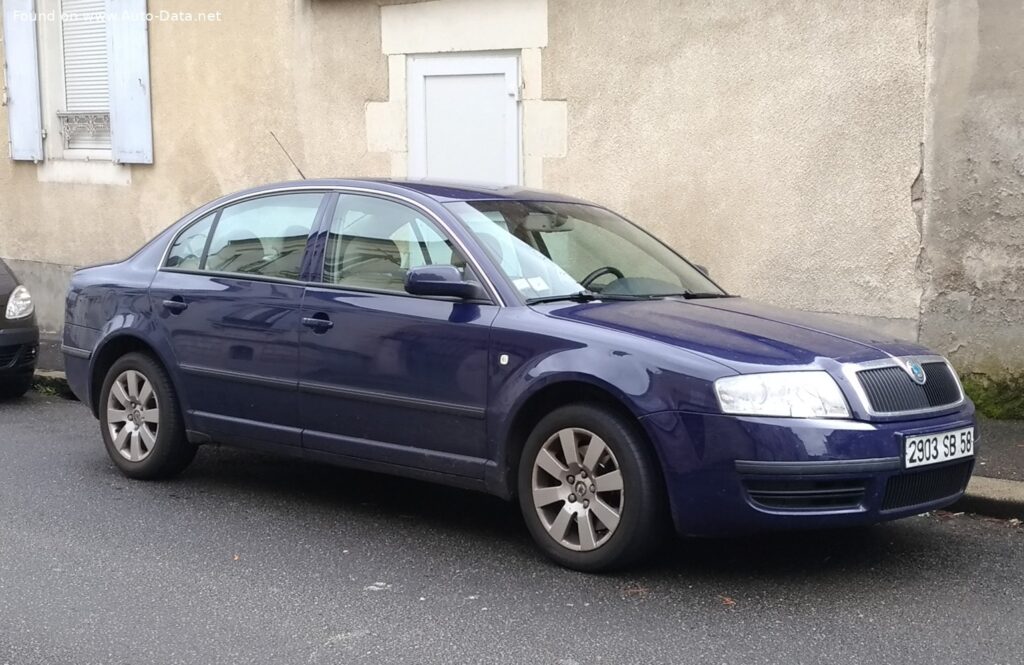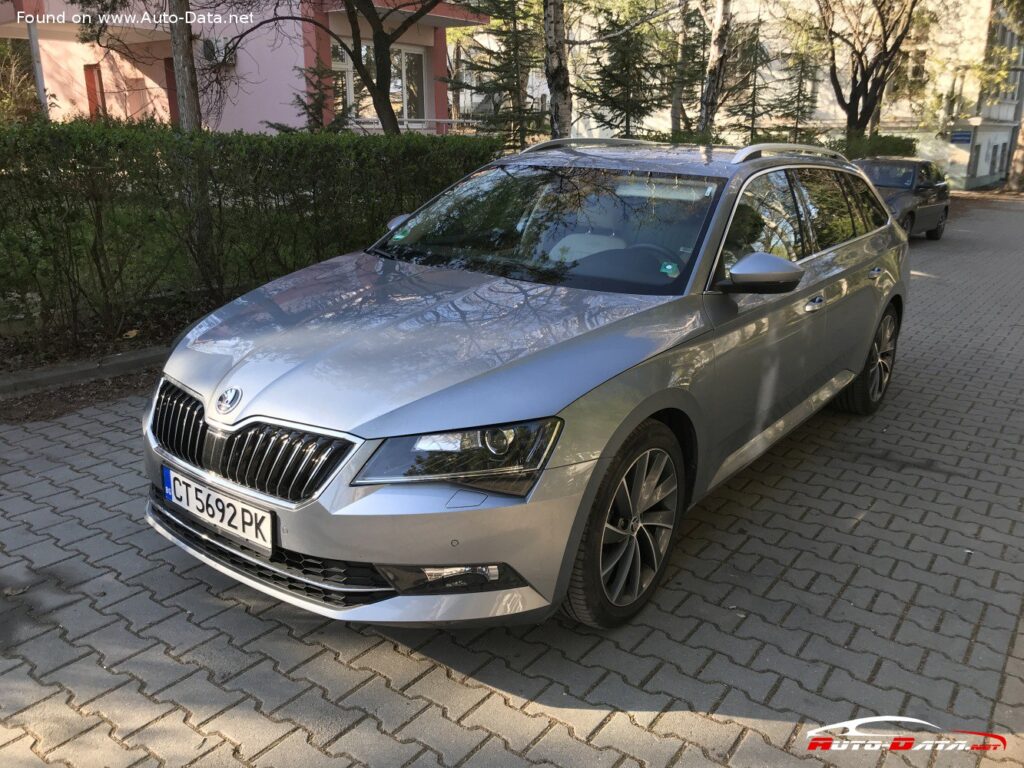
The Skoda Superb III Combi 2.0 TSI (220 Hp) DSG, produced between 2015 and 2018, represents a significant iteration in Skoda’s flagship model line. As a station wagon (estate) offering, it catered primarily to the European market, where practicality and cargo space are highly valued. While not officially sold in the United States, the Superb Combi exemplifies Skoda’s commitment to providing spacious, well-equipped vehicles at a competitive price point. It occupies the mid-size segment, competing with vehicles like the Volkswagen Passat Variant, Ford Mondeo Wagon, and BMW 3 Series Touring.
Skoda Superb III Combi 2.0 TSI: Overview and Market Position
The Superb III, launched in 2015, marked a substantial leap forward in terms of design, technology, and overall refinement compared to its predecessors. The Combi variant, specifically, focused on maximizing interior space and utility without sacrificing driving dynamics. Skoda, a subsidiary of the Volkswagen Group, leveraged the Group’s modular transverse matrix (MQB) platform for the Superb III, resulting in a lighter, more rigid, and more efficient vehicle. The 2.0 TSI variant, equipped with a 220 horsepower turbocharged engine and a dual-clutch gearbox (DSG), was a popular choice for buyers seeking a balance of performance and fuel economy.
Engine & Performance
The heart of the Superb III Combi 2.0 TSI is the EA888 2.0-liter turbocharged four-cylinder gasoline engine, designated CHHB. This engine produces 220 horsepower at 4,500-6,200 rpm and 350 Nm (258.15 lb.-ft.) of torque between 1,500 and 4,400 rpm. The direct injection and multi-port manifold injection system optimizes combustion efficiency, while the turbocharger and intercooler enhance power output. Power is delivered to the front wheels via a six-speed DSG (Direct-Shift Gearbox) automatic transmission, known for its quick and smooth gear changes. This powertrain combination allows for a 0-100 km/h (0-62 mph) acceleration time of 7.1 seconds, and a 0-60 mph time of 6.7 seconds, with a maximum speed of 243 km/h (150.99 mph). Fuel economy is rated at 6.5 l/100 km (36.2 US mpg, 43.5 UK mpg) combined, with CO2 emissions of 147 g/km, meeting Euro 6 emission standards.
Design & Features
The Superb III Combi boasts a sleek and modern station wagon profile. Its long wheelbase and generous dimensions contribute to a spacious interior, particularly in the rear seats and cargo area. The vehicle offers five seats and a substantial 660-liter (23.31 cu. ft.) trunk space, expandable to 1950 liters (68.86 cu. ft.) with the rear seats folded down. Key features include a comfortable ride, refined handling, and a well-appointed interior. Standard equipment often included features like air conditioning, power windows, central locking, and an infotainment system. Higher trim levels offered options such as leather upholstery, navigation, parking sensors, and advanced driver-assistance systems. Safety features, crucial for modern vehicles, included ABS (Anti-lock Braking System), electronic stability control, and multiple airbags. The Superb III Combi prioritized both passenger comfort and cargo-carrying capability, making it a versatile choice for families and individuals alike.
Technical Specifications
| Brand | Skoda |
| Model | Superb |
| Generation | Superb III Combi |
| Type (Engine) | 2.0 TSI (220 Hp) DSG |
| Start of production | March, 2015 |
| End of production | June, 2018 |
| Powertrain Architecture | Internal Combustion engine |
| Body type | Station wagon (estate) |
| Seats | 5 |
| Doors | 5 |
| Fuel consumption (economy) – urban (NEDC) | 8.1 l/100 km (29 US mpg, 34.9 UK mpg, 12.3 km/l) |
| Fuel consumption (economy) – extra urban (NEDC) | 5.5 l/100 km (42.8 US mpg, 51.4 UK mpg, 18.2 km/l) |
| Fuel consumption (economy) – combined (NEDC) | 6.5 l/100 km (36.2 US mpg, 43.5 UK mpg, 15.4 km/l) |
| CO2 emissions (NEDC) | 147 g/km |
| Fuel Type | Petrol (Gasoline) |
| Acceleration 0 – 100 km/h | 7.1 sec |
| Acceleration 0 – 62 mph | 7.1 sec |
| Acceleration 0 – 60 mph | 6.7 sec |
| Maximum speed | 243 km/h (150.99 mph) |
| Emission standard | Euro 6 |
| Weight-to-power ratio | 6.7 kg/Hp, 149.2 Hp/tonne |
| Weight-to-torque ratio | 4.2 kg/Nm, 237.3 Nm/tonne |
| Power | 220 Hp @ 4500-6200 rpm |
| Torque | 350 Nm @ 1500-4400 rpm (258.15 lb.-ft. @ 1500-4400 rpm) |
| Engine layout | Front, Transverse |
| Engine Model/Code | EA888 / CHHB |
| Engine displacement | 1984 cm3 (121.07 cu. in.) |
| Number of cylinders | 4 |
| Engine configuration | Inline |
| Cylinder Bore | 82.5 mm (3.25 in.) |
| Piston Stroke | 92.8 mm (3.65 in.) |
| Compression ratio | 9.6:1 |
| Number of valves per cylinder | 4 |
| Fuel injection system | Direct injection and Multi-port manifold injection |
| Engine aspiration | Turbocharger, Intercooler |
| Valvetrain | DOHC |
| Engine oil capacity | 5.7 l (6.02 US qt | 5.02 UK qt) |
| Coolant | 10 l (10.57 US qt | 8.8 UK qt) |
| Kerb Weight | 1475 kg (3251.82 lbs.) |
| Max. weight | 2130 kg (4695.85 lbs.) |
| Max load | 655 kg (1444.03 lbs.) |
| Trunk (boot) space – minimum | 660 l (23.31 cu. ft.) |
| Trunk (boot) space – maximum | 1950 l (68.86 cu. ft.) |
| Fuel tank capacity | 66 l (17.44 US gal | 14.52 UK gal) |
| Max. roof load | 100 kg (220.46 lbs.) |
| Permitted trailer load with brakes (8%) | 2000 kg (4409.25 lbs.) |
| Permitted trailer load with brakes (12%) | 2000 kg (4409.25 lbs.) |
| Permitted trailer load without brakes | 750 kg (1653.47 lbs.) |
| Permitted towbar download | 90 kg (198.42 lbs.) |
| Length | 4856 mm (191.18 in.) |
| Width | 1864 mm (73.39 in.) |
| Width including mirrors | 2031 mm (79.96 in.) |
| Height | 1477 mm (58.15 in.) |
| Wheelbase | 2841 mm (111.85 in.) |
| Front track | 1586 mm (62.44 in.) |
| Rear (Back) track | 1574 mm (61.97 in.) |
| Ride height (ground clearance) | 149 mm (5.87 in.) |
| Drag coefficient (Cd) | 0.31 |
| Minimum turning circle (turning diameter) | 11.7 m (38.39 ft.) |
| Number of gears and type of gearbox | 6 gears, automatic transmission DSG |
The Skoda Superb III Combi 2.0 TSI DSG offered a compelling package of space, performance, and efficiency, solidifying its position as a popular choice in the European mid-size station wagon segment.