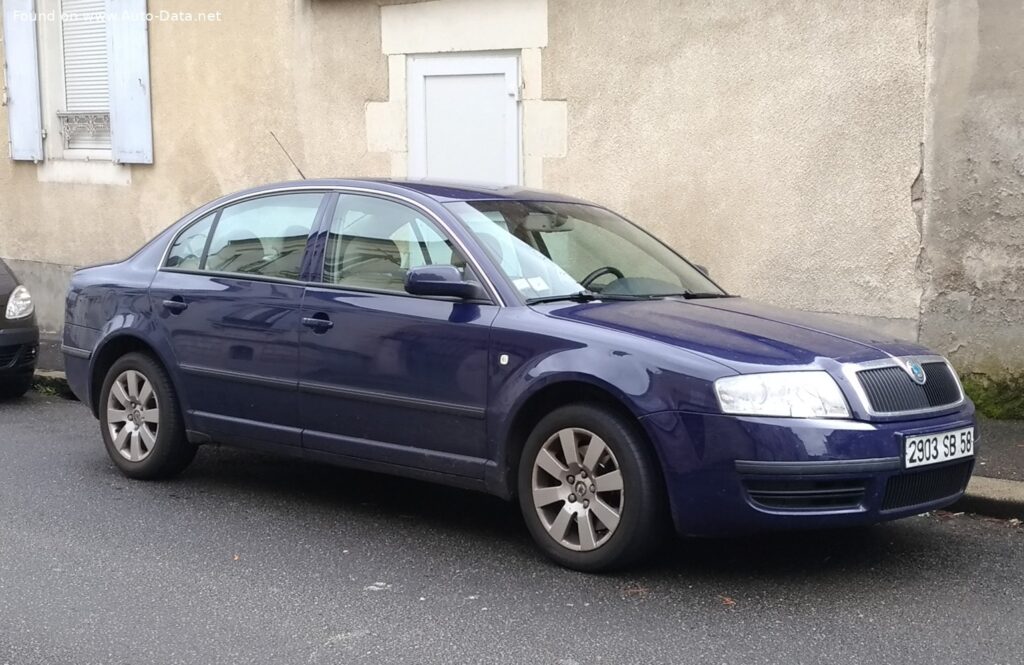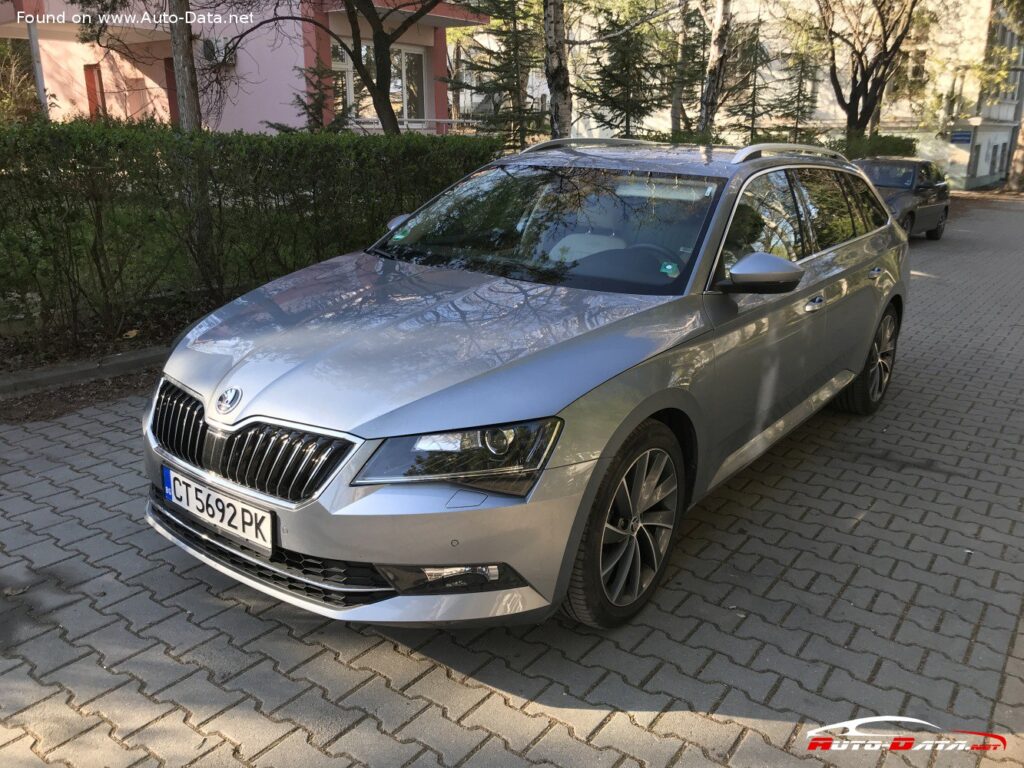
The Skoda Superb III Combi 2.0 TSI 4×4 DSG represents the third generation of Skoda’s flagship model, a large family car known for its spaciousness, practicality, and value. Introduced in 2015 and produced through 2018, the Combi (estate/station wagon) variant specifically caters to buyers needing enhanced cargo capacity without sacrificing the Superb’s renowned comfort and features. While Skoda is a Czech manufacturer, the Superb has been a key model within the Volkswagen Group portfolio, primarily marketed in Europe. It doesn’t have a direct equivalent in the early 2010s US market, but would compete with vehicles like the Subaru Outback or larger sedans offering wagon variants if sold stateside. This particular version, equipped with the 2.0 TSI engine producing 280 horsepower and a four-wheel-drive system, was positioned as a performance-oriented option within the Superb range.
Skoda Superb III Combi 2.0 TSI: Overview and Market Position
The Superb III, and specifically the Combi, aimed to elevate Skoda’s brand image beyond its traditionally budget-friendly reputation. It offered a compelling blend of luxury, technology, and practicality, often undercutting competitors in price. The Combi body style was particularly popular in Europe, where estate cars remain a significant segment of the market. The 2.0 TSI 4×4 DSG model targeted drivers who desired a more engaging driving experience and all-weather capability, making it a versatile choice for families and long-distance travelers. The inclusion of the DSG (Direct-Shift Gearbox) further enhanced the driving experience with quick and smooth gear changes.
Engine & Performance
At the heart of the Superb III Combi 2.0 TSI 4×4 DSG lies a 1.984-liter (121.07 cubic inches) turbocharged inline-four cylinder engine, designated EA888 / CJXA. This powerplant delivers a robust 280 horsepower at 5,600-6,500 rpm and 350 Nm (258.15 lb.-ft.) of torque between 1,700 and 5,600 rpm. The engine utilizes direct injection and multi-port manifold injection, optimizing both performance and fuel efficiency. The turbocharger and intercooler work in tandem to maximize power output. Power is transmitted to all four wheels via a sophisticated six-speed DSG dual-clutch automatic transmission, providing rapid and seamless gear changes. This combination allows for a 0-100 km/h (0-62 mph) acceleration time of 5.8 seconds, and a 0-60 mph time of approximately 5.5 seconds. The electronically limited top speed is 250 km/h (155.34 mph). The engine’s specific output is 141.1 horsepower per liter, demonstrating its efficiency. The weight-to-power ratio of 5.6 kg/Hp and weight-to-torque ratio of 4.5 kg/Nm further highlight the vehicle’s performance capabilities.
Design & Features
The Skoda Superb III Combi is a five-door station wagon (estate) offering seating for five passengers. Its design emphasizes practicality and elegance, with a long wheelbase and generous proportions. The Combi body style significantly expands the cargo capacity compared to the sedan version, offering 660 liters (23.31 cubic feet) of space with the rear seats up, and a substantial 1950 liters (68.86 cubic feet) with the rear seats folded down. The vehicle incorporates a modern aesthetic with clean lines and a distinctive front grille. Key features included a Start & Stop system for improved fuel economy, and a comprehensive suite of safety technologies, including ABS (Anti-lock Braking System). The interior is characterized by high-quality materials and a spacious cabin, reflecting Skoda’s commitment to providing a premium experience. Ride comfort is prioritized through the use of an independent McPherson strut front suspension and an independent multi-link rear suspension, both incorporating coil springs and anti-roll bars.
Technical Specifications
| Brand | Skoda |
| Model | Superb |
| Generation | Superb III Combi |
| Type (Engine) | 2.0 TSI (280 Hp) 4×4 DSG |
| Start of production | 2015 |
| End of production | 2018 |
| Powertrain Architecture | Internal Combustion engine |
| Body type | Station wagon (estate) |
| Seats | 5 |
| Doors | 5 |
| Fuel consumption (economy) – urban (NEDC) | 9 l/100 km (26.1 US mpg, 31.4 UK mpg, 11.1 km/l) |
| Fuel consumption (economy) – extra urban (NEDC) | 6.2 l/100 km (37.9 US mpg, 45.6 UK mpg, 16.1 km/l) |
| Fuel consumption (economy) – combined (NEDC) | 7.2 l/100 km (32.7 US mpg, 39.2 UK mpg, 13.9 km/l) |
| CO2 emissions (NEDC) | 163 g/km |
| Fuel Type | Petrol (Gasoline) |
| Acceleration 0 – 100 km/h | 5.8 sec |
| Acceleration 0 – 62 mph | 5.8 sec |
| Acceleration 0 – 60 mph | 5.5 sec |
| Maximum speed | 250 km/h (155.34 mph) |
| Emission standard | Euro 6 |
| Weight-to-power ratio | 5.6 kg/Hp |
| Weight-to-torque ratio | 4.5 kg/Nm |
| Power | 280 Hp @ 5600-6500 rpm |
| Torque | 350 Nm @ 1700-5600 rpm (258.15 lb.-ft. @ 1700-5600 rpm) |
| Engine layout | Front, Transverse |
| Engine Model/Code | EA888 / CJXA |
| Engine displacement | 1984 cm3 (121.07 cu. in.) |
| Number of cylinders | 4 |
| Engine configuration | Inline |
| Cylinder Bore | 82.5 mm (3.25 in.) |
| Piston Stroke | 92.8 mm (3.65 in.) |
| Compression ratio | 9.3:1 |
| Number of valves per cylinder | 4 |
| Fuel injection system | Direct injection and Multi-port manifold injection |
| Engine aspiration | Turbocharger, Intercooler |
| Valvetrain | DOHC |
| Engine oil capacity | 5.7 l (6.02 US qt | 5.02 UK qt) |
| Coolant | 10 l (10.57 US qt | 8.8 UK qt) |
| Kerb Weight | 1575 kg (3472.28 lbs.) |
| Max. weight | 2290 kg (5048.59 lbs.) |
| Max load | 715 kg (1576.31 lbs.) |
| Trunk (boot) space – minimum | 660 l (23.31 cu. ft.) |
| Trunk (boot) space – maximum | 1950 l (68.86 cu. ft.) |
| Fuel tank capacity | 66 l (17.44 US gal | 14.52 UK gal) |
| Max. roof load | 100 kg (220.46 lbs.) |
| Permitted trailer load with brakes (8%) | 2200 kg (4850.17 lbs.) |
| Permitted trailer load with brakes (12%) | 2200 kg (4850.17 lbs.) |
| Permitted trailer load without brakes | 750 kg (1653.47 lbs.) |
| Permitted towbar download | 90 kg (198.42 lbs.) |
| Length | 4856 mm (191.18 in.) |
| Width | 1864 mm (73.39 in.) |
| Width including mirrors | 2031 mm (79.96 in.) |
| Height | 1477 mm (58.15 in.) |
| Wheelbase | 2841 mm (111.85 in.) |
| Front track | 1586 mm (62.44 in.) |
| Rear (Back) track | 1574 mm (61.97 in.) |
| Ride height (ground clearance) | 148 mm (5.83 in.) |
| Drag coefficient (Cd) | 0.317 |
| Minimum turning circle (turning diameter) | 11.7 m (38.39 ft.) |
| Drivetrain Architecture | The Internal combustion engine (ICE) drives the front wheels permanently, and the rear wheels are driven through an electrically or mechanically operated clutch if necessary. |
| Drive wheel | All wheel drive (4×4) |
| Number of gears and type of gearbox | 6 gears, automatic transmission DSG |