
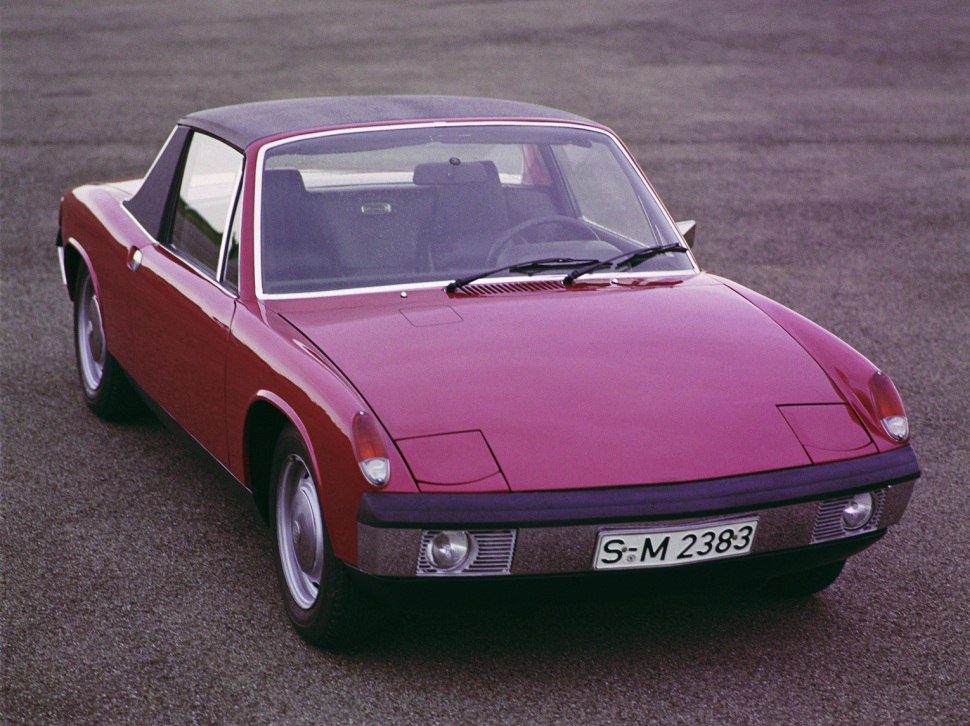
The Porsche 914, particularly the 2.0-liter variant producing 85 horsepower, represents a unique chapter in Porsche’s history. Produced between 1972 and 1976, the 914 was intended as an affordable, entry-level sports car, a departure from Porsche’s traditionally more expensive offerings. It was a collaborative effort between Porsche and Volkswagen, utilizing Volkswagen components alongside Porsche’s engineering expertise. While not initially embraced by Porsche purists, the 914 has since gained a dedicated following for its distinctive mid-engine layout, nimble handling, and relative affordability, becoming a popular choice for restoration and vintage racing.
The Porsche 914 2.0: A Detailed Overview
The 914 was conceived as part of Porsche’s attempt to broaden its market appeal in the early 1970s. Facing increasing competition and a desire to attract a younger demographic, Porsche sought to create a sports car that was both accessible and fun to drive. The result was a two-seat, targa-top sports car powered by a mid-mounted, air-cooled, four-cylinder engine. The 2.0-liter version, introduced in 1972, offered a significant power upgrade over the earlier 1.7-liter models, improving performance and making the 914 a more compelling sports car.
Engine & Performance
The heart of the Porsche 914 2.0 is its 1,971 cc (120.28 cu. in.) naturally aspirated, boxer four-cylinder engine. This engine, derived from the Volkswagen Type 4, was extensively modified by Porsche to improve its performance and reliability. Producing 85 horsepower at 4,900 rpm and 96.62 lb.-ft. of torque at 4,000 rpm, the 2.0-liter engine provided a noticeable improvement in acceleration and top speed compared to the earlier 1.7-liter versions. The engine’s power-to-weight ratio of 11.8 kg/Hp (85 Hp/tonne) contributed to the car’s lively handling. Acceleration from 0 to 60 mph was achieved in approximately 11.4 seconds, and the car had a top speed of 111.85 mph (180 km/h). Fuel consumption was rated at 8.7 l/100 km (27 US mpg, 32.5 UK mpg).
Design & Features
The Porsche 914’s most striking feature is its targa top, a removable roof panel that provides an open-air driving experience. The car’s mid-engine layout, with the engine positioned behind the driver and ahead of the rear axle, contributes to its excellent balance and handling characteristics. The body, designed by Butzi Porsche, is relatively compact and features a distinctive wedge shape. The 914’s interior is minimalist and functional, reflecting its focus on driving enjoyment. While not lavishly equipped by modern standards, the 914 offered features such as disc brakes on all four wheels, a five-speed manual transmission, and comfortable seating for two. The trunk space, ranging from 5.65 to 13.07 cu. ft., was surprisingly generous for a sports car of its size. Safety features were limited by the standards of the era, but the 914’s balanced handling and responsive brakes contributed to its overall safety.
Technical Specifications
| Brand | Porsche |
| Model | 914 |
| Generation | 914 |
| Type (Engine) | 2.0 (85 Hp) |
| Start of production | 1972 |
| End of production | 1976 |
| Powertrain Architecture | Internal Combustion engine |
| Body type | Targa |
| Seats | 2 |
| Doors | 2 |
| Fuel consumption (combined) | 8.7 l/100 km |
| Fuel consumption (US mpg) | 27 US mpg |
| Fuel consumption (UK mpg) | 32.5 UK mpg |
| Fuel consumption (km/l) | 11.5 km/l |
| Fuel Type | Petrol (Gasoline) |
| Acceleration 0 – 100 km/h | 12 sec |
| Acceleration 0 – 62 mph | 12 sec |
| Acceleration 0 – 60 mph | 11.4 sec |
| Maximum speed | 180 km/h (111.85 mph) |
| Weight-to-power ratio | 11.8 kg/Hp |
| Weight-to-torque ratio | 7.6 kg/Nm |
| Power | 85 Hp @ 4900 rpm |
| Power per litre | 43.1 Hp/l |
| Torque | 131 Nm @ 4000 rpm (96.62 lb.-ft. @ 4000 rpm) |
| Engine layout | Middle, Longitudinal |
| Engine displacement | 1971 cm3 (120.28 cu. in.) |
| Number of cylinders | 4 |
| Engine configuration | Boxer |
| Cylinder Bore | 94 mm (3.7 in.) |
| Piston Stroke | 71 mm (2.8 in.) |
| Compression ratio | 7.6:1 |
| Number of valves per cylinder | 2 |
| Engine aspiration | Naturally aspirated |
| Kerb Weight | 1000 kg (2204.62 lbs.) |
| Max. weight | 1220 kg (2689.64 lbs.) |
| Max load | 220 kg (485.02 lbs.) |
| Trunk (boot) space – minimum | 160 l (5.65 cu. ft.) |
| Trunk (boot) space – maximum | 370 l (13.07 cu. ft.) |
| Fuel tank capacity | 62 l (16.38 US gal | 13.64 UK gal) |
| Length | 4114 mm (161.97 in.) |
| Width | 1650 mm (64.96 in.) |
| Height | 1230 mm (48.43 in.) |
| Wheelbase | 2450 mm (96.46 in.) |
| Front track | 1343 mm (52.87 in.) |
| Rear (Back) track | 1383 mm (54.45 in.) |
| Ride height (ground clearance) | 130 mm (5.12 in.) |
| Minimum turning circle | 11 m (36.09 ft.) |
| Drivetrain Architecture | Rear wheel drive |
| Number of gears | 5 gears, manual transmission |
| Front suspension | Wishbone |
| Rear suspension | Torsion |
| Front brakes | Disc, 232 mm |
| Rear brakes | Disc, 240 mm |
| Steering type | Steering rack and pinion |
The Porsche 914 2.0, despite its initial reception, has proven to be a durable and enjoyable sports car. Its mid-engine layout, balanced handling, and distinctive styling have earned it a loyal following among enthusiasts. Today, it represents an accessible entry point into Porsche ownership and a fascinating example of the company’s willingness to experiment and innovate.
