
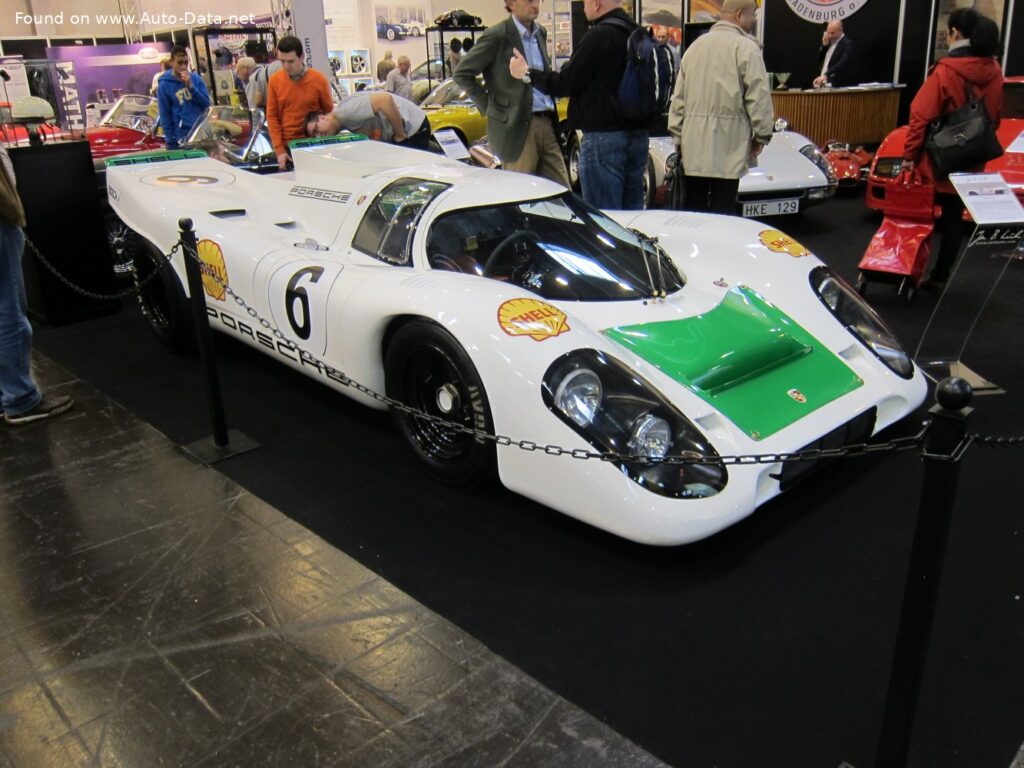
The Porsche 917 4.5 V12, produced between 1969 and 1970, represents a pivotal moment in automotive history. This iconic sports car wasn’t merely a vehicle; it was a statement of engineering prowess and a dominant force in international endurance racing. Designed to compete in the World Sportscar Championship, the 917 quickly became synonymous with Porsche’s racing heritage and cemented its place as one of the most recognizable and successful racing cars ever built. The 917’s impact extended beyond the racetrack, influencing automotive design and pushing the boundaries of what was considered possible in high-performance vehicles.
The Porsche 917 4.5 V12: A Racing Icon
The Porsche 917 was conceived in the late 1960s as Porsche’s attempt to re-enter the top echelon of sports car racing. The regulations at the time allowed for engine sizes up to 5.0 liters, and Porsche aimed to create a car that could challenge the dominant Ferrari and Ford teams. The initial designs faced challenges, leading to a revised approach focused on a lightweight chassis and a powerful, yet reliable, engine. The 4.5-liter V12 version, producing 520 horsepower, proved to be the most successful configuration, achieving numerous victories and ultimately securing Porsche’s place in motorsport history.
Engine & Performance
At the heart of the 917 4.5 V12 lies its remarkable 4.5-liter, naturally aspirated flat-12 engine (Type 912). This engine, displacing 4494 cm³ (274.24 cu. in.), produced a formidable 520 horsepower at 8000 rpm and 451 Nm (332.64 lb.-ft.) of torque at 6800 rpm. The engine’s 180° flat configuration, with two banks of six cylinders, contributed to its relatively compact size and low center of gravity, enhancing handling. The engine featured a multi-port manifold fuel injection system and a dual overhead camshaft (DOHC) valvetrain with two valves per cylinder. This combination resulted in a specific output of 115.7 horsepower per liter, a remarkable figure for the era. Power was delivered to the rear wheels via a 5-speed manual transmission. The car’s weight-to-power ratio of 1.7 kg/Hp and a weight-to-torque ratio of 2 kg/Nm further emphasized its performance capabilities, allowing it to achieve a top speed of 320 km/h (198.84 mph).
Design & Features
The Porsche 917 4.5 V12 was a striking example of functional automotive design. Its coupe body style, with only two doors and two seats, prioritized aerodynamics and weight reduction. The lightweight tubular space frame chassis, constructed from steel, was covered with aluminum body panels. The car’s low-slung profile and flowing lines were not merely aesthetic choices; they were crucial for minimizing drag and maximizing downforce. Suspension consisted of independent coil springs with transverse stabilizers on both the front and rear axles, providing a responsive and controlled ride. Ventilated disc brakes on all four wheels ensured effective stopping power. The 917’s design was a direct response to the demands of endurance racing, where reliability and performance were paramount. While comfort and convenience features were minimal, the focus remained squarely on achieving victory on the track. The wheel rims were sized at 9J x 15 inches in the front and 12J x 15 inches in the rear, accommodating high-performance racing tires.
Technical Specifications
| Brand | Porsche |
| Model | 917 |
| Generation | 917 |
| Type (Engine) | 4.5 V12 (520 Hp) |
| Start of production | 1969 |
| End of production | 1970 |
| Powertrain Architecture | Internal Combustion engine |
| Body type | Coupe |
| Seats | 2 |
| Doors | 2 |
| Fuel Type | Petrol (Gasoline) |
| Maximum speed | 320 km/h (198.84 mph) |
| Weight-to-power ratio | 1.7 kg/Hp |
| Weight-to-torque ratio | 2 kg/Nm |
| Power | 520 Hp @ 8000 rpm |
| Power per litre | 115.7 Hp/l |
| Torque | 451 Nm @ 6800 rpm (332.64 lb.-ft. @ 6800 rpm) |
| Engine layout | Rear, Longitudinal |
| Engine Model/Code | Type 912 |
| Engine displacement | 4494 cm3 (274.24 cu. in.) |
| Number of cylinders | 12 |
| Engine configuration | 180° flat V-engine |
| Cylinder Bore | 85 mm (3.35 in.) |
| Piston Stroke | 66 mm (2.6 in.) |
| Compression ratio | 10.5:1 |
| Number of valves per cylinder | 2 |
| Fuel injection system | Multi-port manifold injection |
| Engine aspiration | Naturally aspirated engine |
| Valvetrain | DOHC |
| Kerb Weight | 896 kg (1975.34 lbs.) |
| Length | 4290 mm (168.9 in.) |
| Width | 1880 mm (74.02 in.) |
| Height | 920 mm (36.22 in.) |
| Wheelbase | 2300 mm (90.55 in.) |
| Front track | 1488 mm (58.58 in.) |
| Rear track | 1457 mm (57.36 in.) |
| Drivetrain Architecture | ICE, Rear wheel drive |
| Drive wheel | Rear wheel drive |
| Number of gears and type of gearbox | 5 gears, manual transmission |
| Front suspension | Independent coil spring, Transverse stabilizer |
| Rear suspension | Independent coil spring, Transverse stabilizer |
| Front brakes | Ventilated discs |
| Rear brakes | Ventilated discs |
| Steering type | Steering rack and pinion |
| Wheel rims size | Front: 9J x 15, Rear: 12J x 15 |
The Porsche 917 4.5 V12’s legacy extends far beyond its racing successes. It served as a technological testbed for Porsche, influencing the development of future road cars and racing machines. The car’s innovative design, powerful engine, and exceptional performance continue to inspire automotive enthusiasts and engineers alike, solidifying its status as a true icon of the automotive world. Its impact on motorsport is undeniable, and the 917 remains a symbol of Porsche’s commitment to engineering excellence and racing innovation.
