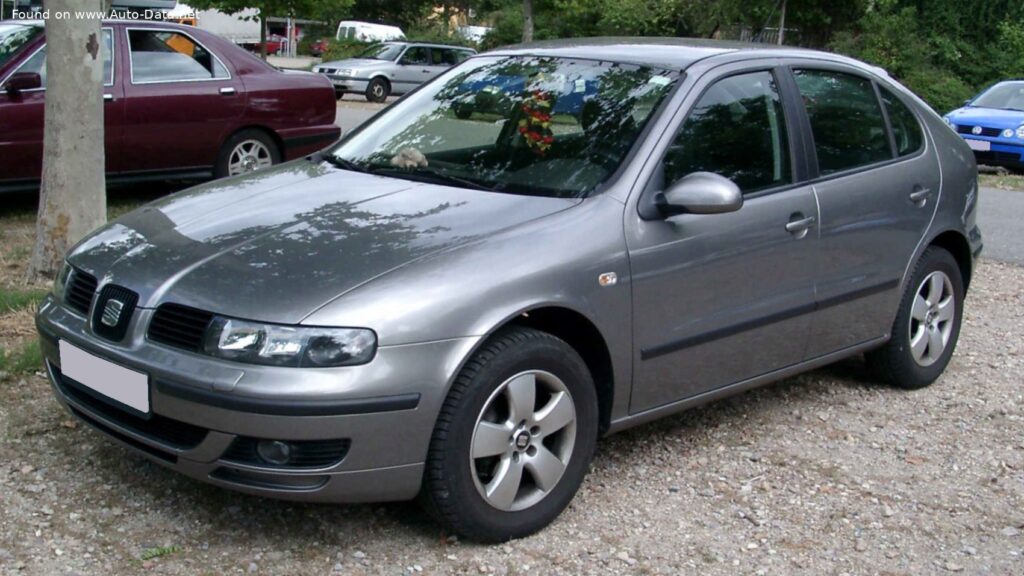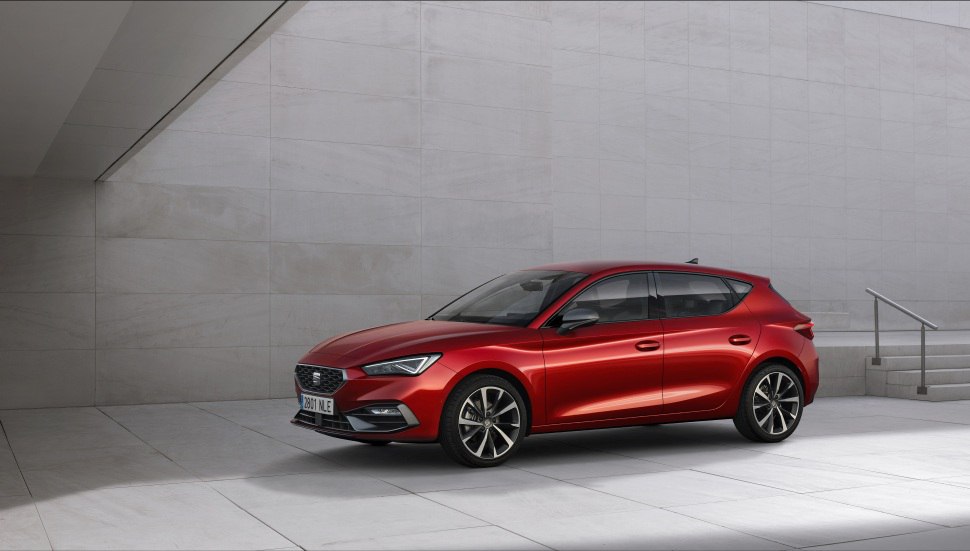
The SEAT Leon IV 1.4 e-Hybrid (204 Hp) DSG, produced from October 2020 to July 2024, represents SEAT’s entry into the increasingly competitive plug-in hybrid electric vehicle (PHEV) market. The Leon, a mainstay of the European compact car segment, has consistently offered a blend of practicality, style, and value. The fourth generation, and specifically this e-Hybrid variant, aims to broaden its appeal by adding electric capability and improved fuel efficiency. While SEAT vehicles are not officially sold in the United States, the Leon is a significant model in Europe, competing with vehicles like the Volkswagen Golf, Opel Astra, and Ford Focus. This model caters to consumers seeking a more environmentally conscious vehicle without fully committing to a battery-electric vehicle.
SEAT Leon IV 1.4 e-Hybrid: A Detailed Overview
The Leon IV 1.4 e-Hybrid is a five-door hatchback designed to accommodate five passengers. It combines a 1.4-liter turbocharged gasoline engine with an electric motor and a lithium-ion battery pack, offering both all-electric driving capability and the extended range provided by the internal combustion engine. The “e-Hybrid” designation signifies its plug-in hybrid nature, allowing for charging from an external power source. The inclusion of a Dual-Clutch Gearbox (DSG) further enhances the driving experience by providing smooth and rapid gear changes.
Engine & Performance
The powertrain of the SEAT Leon IV 1.4 e-Hybrid centers around a 1.4-liter, four-cylinder, turbocharged gasoline engine producing 150 horsepower at 5000-6000 rpm and 250 Nm (184.39 lb.-ft.) of torque between 1550-3500 rpm. This engine is paired with an 116 horsepower electric motor, delivering an additional 330 Nm (243.4 lb.-ft.) of torque. The combined system output is 204 horsepower and 350 Nm (258.15 lb.-ft.) of torque. This allows for a 0-100 km/h (0-62 mph) acceleration time of 7.5 seconds, and a 0-60 mph time of 7.1 seconds. The engine features direct fuel injection and a turbocharger with intercooler, optimizing both power and efficiency. The drivetrain is front-wheel drive, utilizing a six-speed DSG automatic transmission. The engine’s 10:1 compression ratio and DOHC valvetrain contribute to its performance characteristics.
Design & Features
The SEAT Leon IV maintains the hatchback body style, offering a practical and versatile layout. Its design emphasizes a sporty aesthetic with sharp lines and a modern front fascia. Key features of the e-Hybrid model include its plug-in charging port, allowing for convenient recharging of the battery. The interior is designed with a focus on technology and comfort, featuring a digital instrument cluster and a central infotainment touchscreen. Safety features are comprehensive, including ABS, and a suite of driver-assistance systems. The vehicle’s dimensions are 4368 mm (171.97 in.) in length, 1800 mm (70.87 in.) in width, and 1456 mm (57.32 in.) in height. The trunk space ranges from 270 liters (9.53 cu. ft.) with the rear seats up to 1191 liters (42.06 cu. ft.) with the seats folded down, providing ample cargo capacity. The kerb weight of the vehicle is 1539 kg (3392.91 lbs).
Technical Specifications
| General Information | Specifications |
| Brand | SEAT |
| Model | Leon |
| Generation | Leon IV |
| Type (Engine) | 1.4 e-Hybrid (204 Hp) DSG |
| Start of production | October, 2020 |
| End of production | July, 2024 |
| Powertrain Architecture | PHEV (Plug-in Hybrid Electric Vehicle) |
| Body type | Hatchback |
| Seats | 5 |
| Doors | 5 |
| Performance Specs | Specifications |
| Combined fuel consumption (WLTP) | 1.1-1.2 l/100 km (213.8 – 196 US mpg) |
| CO2 emissions (WLTP) | 25-27 g/km |
| Fuel consumption (economy) – combined (NEDC) | 1.4 l/100 km (168 US mpg) |
| CO2 emissions (NEDC) | 32 g/km |
| Fuel Type | Petrol / electricity |
| Acceleration 0 – 100 km/h | 7.5 sec |
| Acceleration 0 – 62 mph | 7.5 sec |
| Acceleration 0 – 60 mph | 7.1 sec |
| Maximum speed | 220 km/h (136.7 mph) |
| Electric & Hybrid Specs | Specifications |
| Gross battery capacity | 12.8 kWh |
| Net (usable) battery capacity | 10.4 kWh |
| Battery technology | Lithium-ion (Li-Ion) |
| Battery weight | 130 kg (286.6 lbs.) |
| Battery location | Below the floor, under the rear seats |
| All-electric range (WLTP) | 58-64 km (36.04 – 39.77 mi) |
| All-electric range (NEDC) | 72 km (44.74 mi) |
| Average Energy consumption (WLTP) | 14.5-15 kWh/100 km |
| Average Energy consumption (NEDC) | 11.9 kWh/100 km |
| Electric motor power | 116 Hp |
| Electric motor Torque | 330 Nm (243.4 lb.-ft.) |
| System power | 204 Hp |
| System torque | 350 Nm (258.15 lb.-ft.) |
| Engine Specs | Specifications |
| Power | 150 Hp @ 5000-6000 rpm |
| Torque | 250 Nm @ 1550-3500 rpm (184.39 lb.-ft. @ 1550-3500 rpm) |
| Engine displacement | 1395 cm3 (85.13 cu. in.) |
| Number of cylinders | 4 |
| Engine configuration | Inline |
The SEAT Leon IV 1.4 e-Hybrid represents a significant step towards electrification for the brand, offering a compelling combination of fuel efficiency, performance, and practicality. Its plug-in hybrid powertrain allows for zero-emission driving on shorter journeys, while the gasoline engine provides the range and flexibility needed for longer trips. Although not available in the US market, it exemplifies the growing trend of PHEVs in Europe and globally, catering to a demand for more sustainable transportation options.