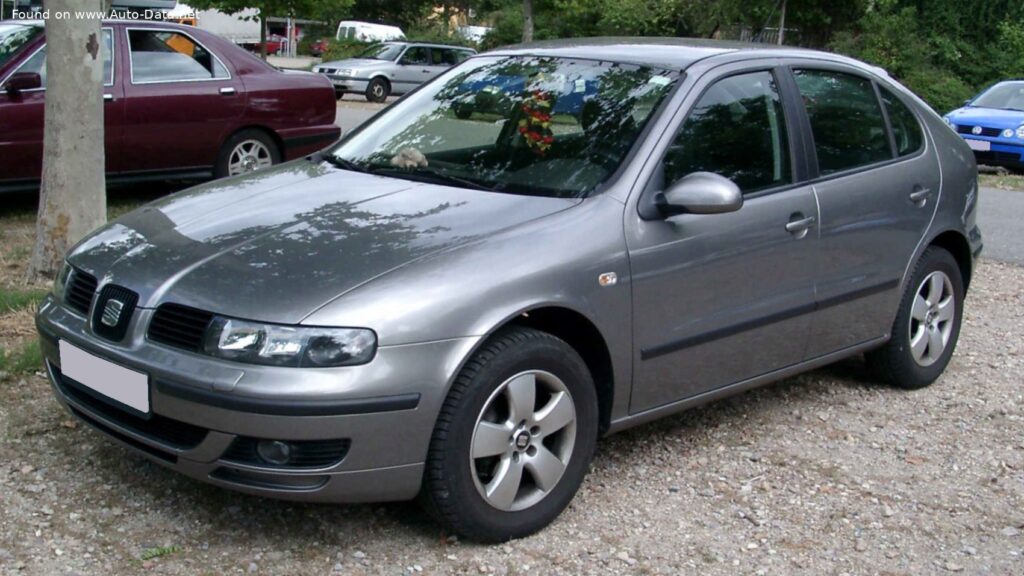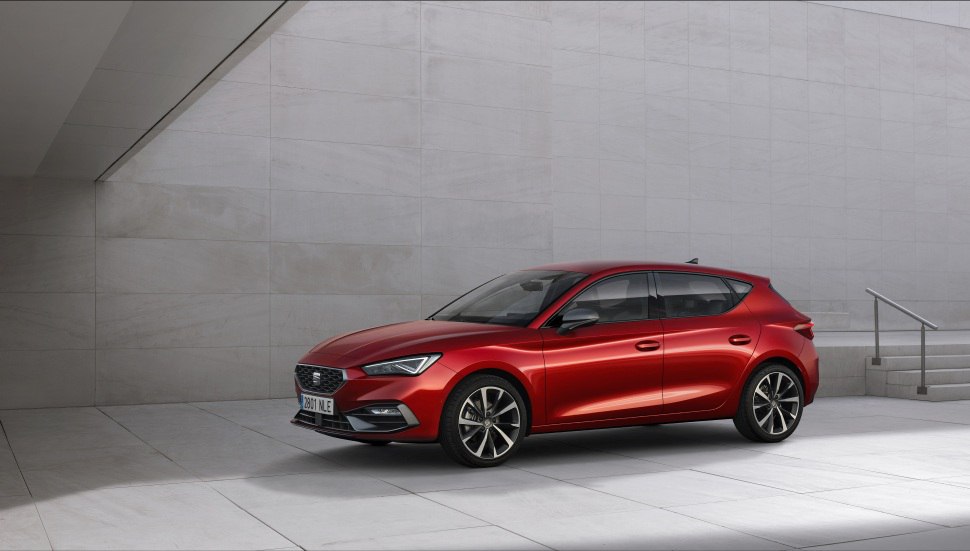
The SEAT Leon IV 1.5 TGI (130 Hp) is a compact hatchback produced by the Spanish automobile manufacturer SEAT from April 2021 to January 2023. Representing the fourth generation of the Leon, this model is particularly notable for its availability with a Compressed Natural Gas (CNG) powertrain, offering an alternative fuel option within the competitive European small family car segment. While SEAT vehicles are not officially sold in the United States, the Leon is a significant model in Europe, often competing with vehicles like the Volkswagen Golf, Opel Astra, and Ford Focus. The 1.5 TGI variant aimed to provide a more environmentally friendly option, leveraging the lower emissions associated with CNG compared to traditional gasoline.
SEAT Leon IV 1.5 TGI: An Overview
The Leon IV represents a substantial evolution in SEAT’s lineup, built upon the Volkswagen Group’s MQB Evo platform. This platform allows for greater flexibility in powertrain options and improved structural rigidity. The 1.5 TGI model specifically caters to markets with established CNG infrastructure, offering drivers a reduced carbon footprint and potential cost savings on fuel. The vehicle is a five-door hatchback, designed to balance practicality, efficiency, and a modern aesthetic. It’s positioned as a versatile vehicle suitable for both urban commuting and longer journeys.
Engine & Performance
The heart of the SEAT Leon IV 1.5 TGI is a 1.5-liter inline four-cylinder turbocharged engine, producing 130 horsepower at 5000-6000 rpm and 200 Nm (147.51 lb.-ft.) of torque between 1400-4000 rpm. This engine is designed to run on both gasoline and Compressed Natural Gas (CNG), offering the flexibility to switch between fuels depending on availability and driving needs. The engine utilizes direct fuel injection and a turbocharger to optimize performance and efficiency. The power-to-weight ratio is 10.1 kg/Hp, and the torque-to-weight ratio is 6.5 kg/Nm. Acceleration from 0 to 100 km/h (0-62 mph) takes 9.8 seconds, while 0-60 mph is achieved in a calculated 9.3 seconds. The vehicle has a maximum speed of 203 km/h (126.14 mph). The engine code is DHF, and it boasts a compression ratio of 12.5:1.
Design & Features
The SEAT Leon IV 1.5 TGI features a modern and sporty hatchback design. The exterior styling incorporates sharp lines, a distinctive front grille, and full LED headlights. Inside, the cabin is characterized by a minimalist design with a focus on technology. A key feature is the digital cockpit, which includes a digital instrument cluster and a central infotainment touchscreen. The vehicle offers seating for five passengers and provides 300 liters (10.59 cu. ft.) of trunk space, expandable to 1220 liters (43.08 cu. ft.) with the rear seats folded down. Safety features include ABS (Anti-lock Braking System) and a comprehensive suite of driver-assistance systems. The vehicle’s dimensions are 4368 mm (171.97 in.) in length, 1800 mm (70.87 in.) in width, and 1442-1456 mm (56.77 – 57.32 in.) in height. The wheelbase measures 2686 mm (105.75 in.).
Technical Specifications
| Brand | Seat |
| Model | Leon |
| Generation | Leon IV |
| Type (Engine) | 1.5 TGI (130 Hp) |
| Start of production | April, 2021 |
| End of production | January, 2023 |
| Powertrain Architecture | Internal Combustion engine |
| Body type | Hatchback |
| Seats | 5 |
| Doors | 5 |
| Combined fuel consumption (WLTP) (CNG) | 3.9-4 kg/100 km |
| CO2 emissions (CNG) (WLTP) | 103-108 g/km |
| Fuel consumption (economy) – urban (CNG) (NEDC, WLTP equivalent) | 5.1 kg/100 km |
| Fuel consumption (economy) – extra urban (CNG) (NEDC, WLTP equivalent) | 2.9 kg/100 km |
| Fuel consumption (economy) – combined (CNG) (NEDC, WLTP equivalent) | 3.7 kg/100 km |
| CO2 emissions (CNG) (NEDC, WLTP equivalent) | 100 g/km |
| Fuel Type | Petrol / CNG |
| Acceleration 0 – 100 km/h | 9.8 sec |
| Acceleration 0 – 62 mph | 9.8 sec |
| Acceleration 0 – 60 mph | 9.3 sec |
| Maximum speed | 203 km/h / 126.14 mph |
| Emission standard | Euro 6 AP |
| Weight-to-power ratio | 10.1 kg/Hp |
| Weight-to-torque ratio | 6.5 kg/Nm |
| Power | 130 Hp @ 5000-6000 rpm |
| Torque | 200 Nm @ 1400-4000 rpm / 147.51 lb.-ft. @ 1400-4000 rpm |
| Engine layout | Front, Transverse |
| Engine Model/Code | DHF |
| Engine displacement | 1498 cm3 / 91.41 cu. in. |
| Number of cylinders | 4 |
| Engine configuration | Inline |
| Cylinder Bore | 74.5 mm / 2.93 in. |
| Piston Stroke | 85.9 mm / 3.38 in. |
| Compression ratio | 12.5:1 |
| Number of valves per cylinder | 4 |
| Fuel injection system | Direct injection |
| Engine aspiration | Turbocharger |
| Engine oil capacity | 4.3 l / 4.54 US qt | 3.78 UK qt |
| Coolant | 8 l / 8.45 US qt | 7.04 UK qt |
| Kerb Weight | 1307 kg / 2881.44 lbs. |
| Max. weight | 1860 kg / 4100.6 lbs. |
| Max load | 553 kg / 1219.16 lbs. |
| Trunk (boot) space – minimum | 300 l / 10.59 cu. ft. |
| Trunk (boot) space – maximum | 1220 l / 43.08 cu. ft. |
| Fuel tank capacity | 9 l / 2.38 US gal | 1.98 UK gal |
| CNG cylinder capacity | 17.3 kg |
| Max. roof load | 75 kg / 165.35 lbs. |
| Length | 4368 mm / 171.97 in. |
| Width | 1800 mm / 70.87 in. |
| Width including mirrors | 1991 mm / 78.39 in. |
| Height | 1442-1456 mm / 56.77 – 57.32 in. |
| Wheelbase | 2686 mm / 105.75 in. |
| Front overhang | 888 mm / 34.96 in. |
| Rear overhang | 795 mm / 31.3 in. |
| Minimum turning circle (turning diameter) | 10.5 m / 34.45 ft. |
| Drivetrain Architecture | The Internal combustion engine (ICE) drives the front wheels of the vehicle. |
| Drive wheel | Front wheel drive |
| Number of gears and type of gearbox | 6 gears, manual transmission |
| Front suspension | Independent type McPherson |
| Rear suspension | Coil spring, Elastic beam |
| Front brakes | Ventilated discs |
| Rear brakes | Disc |
| Assisting systems | ABS (Anti-lock braking system) |
| Steering type | Steering rack and pinion |
| Power steering | Electric Steering |
| Tires size | 205/55 R16; 225/45 R17; 225/40 R18 |
The SEAT Leon IV 1.5 TGI (130 Hp) represents a practical and efficient option for drivers seeking a compact hatchback with an alternative fuel capability. While not available in the US market, it exemplifies SEAT’s commitment to providing environmentally conscious vehicles within the European automotive landscape.