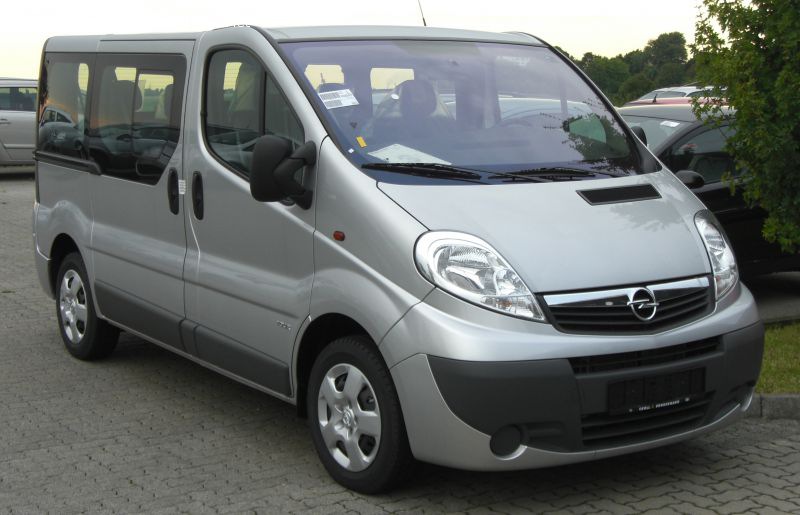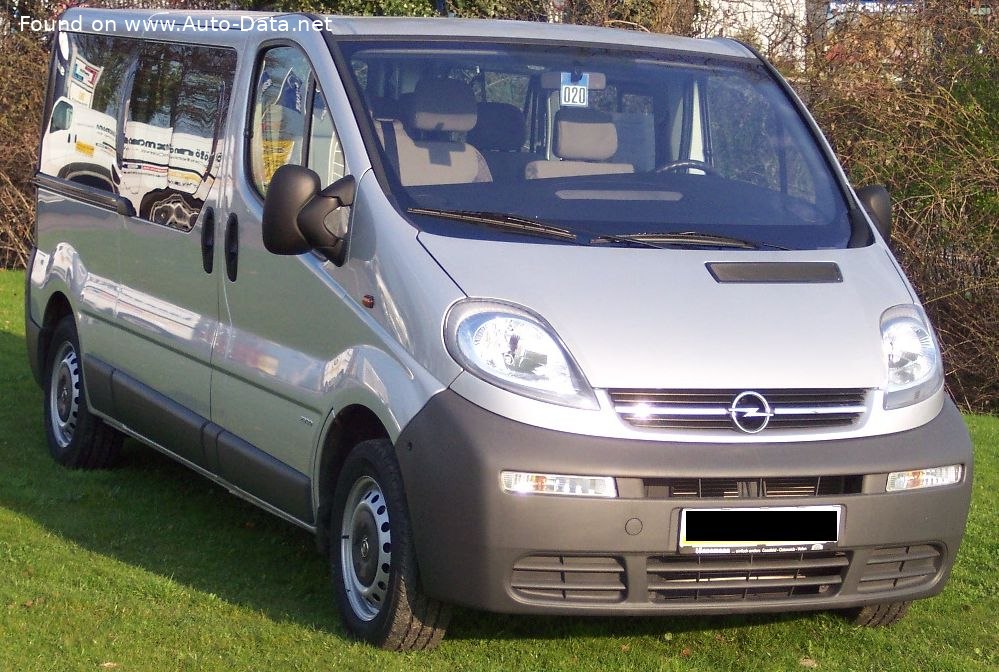
The Opel Vivaro C Combi M 2.0d (150 Hp) is a commercial and passenger vehicle produced by Opel, a German automobile manufacturer that is now part of Stellantis. Introduced in September 2019, the Vivaro C represents the third generation of the Vivaro line. This particular variant, the Combi M, is geared towards passenger transport, offering seating for up to eight occupants and blending the practicality of a van with the comfort of a multi-purpose vehicle (MPV). While not directly sold in the United States, the Vivaro C is a popular choice in European markets, competing with vehicles like the Volkswagen Transporter, Ford Transit, and Renault Trafic. It’s designed to cater to both commercial needs – such as shuttle services and tradespeople requiring passenger and cargo capacity – and family use.
Opel Vivaro C Combi M: Overview
The Vivaro C Combi M distinguishes itself through its modular design and focus on practicality. It’s built on Stellantis’s EMP2 platform, shared with other Peugeot and Citroën vehicles, allowing for a flexible interior layout and a range of configurations. The “Combi M” designation indicates a medium-length wheelbase and a focus on passenger comfort. The 2.0d variant signifies the use of a 2.0-liter diesel engine producing 150 horsepower. This model prioritizes fuel efficiency and torque, making it suitable for both urban driving and longer journeys.
Engine & Performance
The Opel Vivaro C Combi M 2.0d is powered by a 1.997-liter inline-four cylinder diesel engine, designated D20DTH or DW10FDU. This engine delivers a maximum power output of 150 horsepower at 4000 rpm and a torque of 370 Nm (272.9 lb.-ft.) at 2000 rpm. The engine utilizes a diesel commonrail fuel injection system and is equipped with a turbocharger and intercooler to optimize performance and efficiency. The front-mounted, transverse engine layout contributes to a favorable weight distribution. The powertrain is coupled with a six-speed manual transmission, directing power to the front wheels. This configuration results in a weight-to-power ratio of 12 kg/Hp and a weight-to-torque ratio of 4.9 kg/Nm. Fuel economy figures are rated at 5.4-5.8 l/100 km combined (43.6 – 40.6 US mpg, 52.3 – 48.7 UK mpg), with CO2 emissions ranging from 142-152 g/km, meeting Euro 6d-TEMP emission standards.
Design & Features
The Vivaro C Combi M is a four-door minivan with a robust and functional design. Its exterior styling is characterized by clean lines and a practical, aerodynamic profile. The vehicle’s dimensions – 4956 mm in length, 2010 mm in width, and 1890 mm in height – provide ample interior space. The wheelbase measures 3275 mm, contributing to a stable ride. Inside, the Combi M offers a versatile cabin with seating for up to eight passengers. The rear seats can be configured in various arrangements, including individual seats or a bench, and can be folded or removed to maximize cargo space. The maximum trunk (boot) space is an impressive 4200 liters (148.32 cu. ft.) with the rear seats folded. Standard safety features include ABS (Anti-lock Braking System) and ventilated disc brakes on all four wheels. The vehicle also incorporates electric power steering for ease of maneuverability. Additional features include a 70-liter fuel tank, a 22.5-liter AdBlue tank for selective catalytic reduction (SCR) to reduce NOx emissions, and a particulate filter to minimize particulate matter output.
Technical Specifications
| Brand | Opel |
| Model | Vivaro |
| Generation | Vivaro C Combi M |
| Type (Engine) | 2.0d (150 Hp) |
| Start of production | September, 2019 |
| Powertrain Architecture | Internal Combustion engine |
| Body type | Minivan |
| Seats | 8 |
| Doors | 4 |
| Fuel consumption (urban) | 6.1-6.6 l/100 km (38.6 – 35.6 US mpg) |
| Fuel consumption (extra urban) | 5.0-5.4 l/100 km (47 – 43.6 US mpg) |
| Fuel consumption (combined) | 5.4-5.8 l/100 km (43.6 – 40.6 US mpg) |
| CO2 emissions | 142-152 g/km |
| Fuel Type | Diesel |
| Emission standard | Euro 6d-TEMP |
| Weight-to-power ratio | 12 kg/Hp |
| Weight-to-torque ratio | 4.9 kg/Nm |
| Power | 150 Hp @ 4000 rpm |
| Torque | 370 Nm @ 2000 rpm (272.9 lb.-ft. @ 2000 rpm) |
| Engine layout | Front, Transverse |
| Engine Model/Code | D20DTH, DW10FDU |
| Engine displacement | 1997 cm3 (121.86 cu. in.) |
| Number of cylinders | 4 |
| Engine configuration | Inline |
| Cylinder Bore | 85 mm (3.35 in.) |
| Piston Stroke | 88 mm (3.46 in.) |
| Number of valves per cylinder | 4 |
| Fuel injection system | Diesel Commonrail |
| Engine aspiration | Turbocharger, Intercooler |
| Engine oil capacity | 6 l (6.34 US qt | 5.28 UK qt) |
| Kerb Weight | 1801 kg (3970.53 lbs.) |
| Max. weight | 2750 kg (6062.71 lbs.) |
| Max load | 949 kg (2092.19 lbs.) |
| Trunk (boot) space – maximum | 4200 l (148.32 cu. ft.) |
| Fuel tank capacity | 70 l (18.49 US gal | 15.4 UK gal) |
| AdBlue tank | 22.5 l (5.94 US gal | 4.95 UK gal) |
| Max. roof load | 150 kg (330.69 lbs.) |
| Permitted trailer load with brakes (12%) | 2300 kg (5070.63 lbs.) |
| Permitted trailer load without brakes | 750 kg (1653.47 lbs.) |
| Permitted towbar download | 92 kg (202.83 lbs.) |
| Length | 4956 mm (195.12 in.) |
| Width | 2010 mm (79.13 in.) |
| Width including mirrors | 2204 mm (86.77 in.) |
| Height | 1890 mm (74.41 in.) |
| Wheelbase | 3275 mm (128.94 in.) |
| Front track | 1627 mm (64.06 in.) |
| Rear (Back) track | 1600 mm (62.99 in.) |
| Minimum turning circle (turning diameter) | 12.9 m (42.32 ft.) |
| Drivetrain Architecture | Front wheel drive |
| Number of gears and type of gearbox | 6 gears, manual transmission |
| Front brakes | Ventilated discs |
| Rear brakes | Ventilated discs |
| Tires size | 215/65 R16 106T |
| Wheel rims size | 7J x 16 |