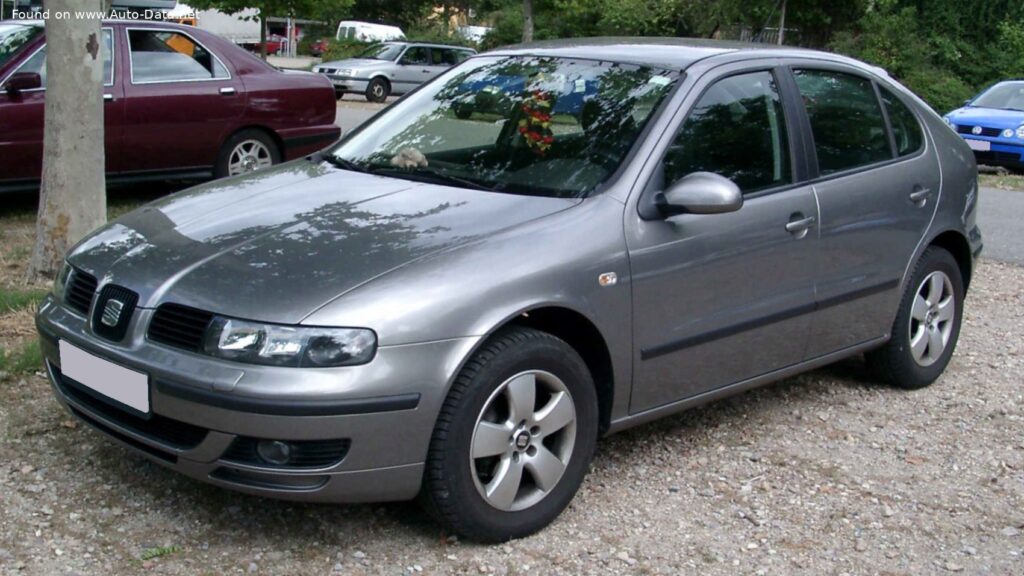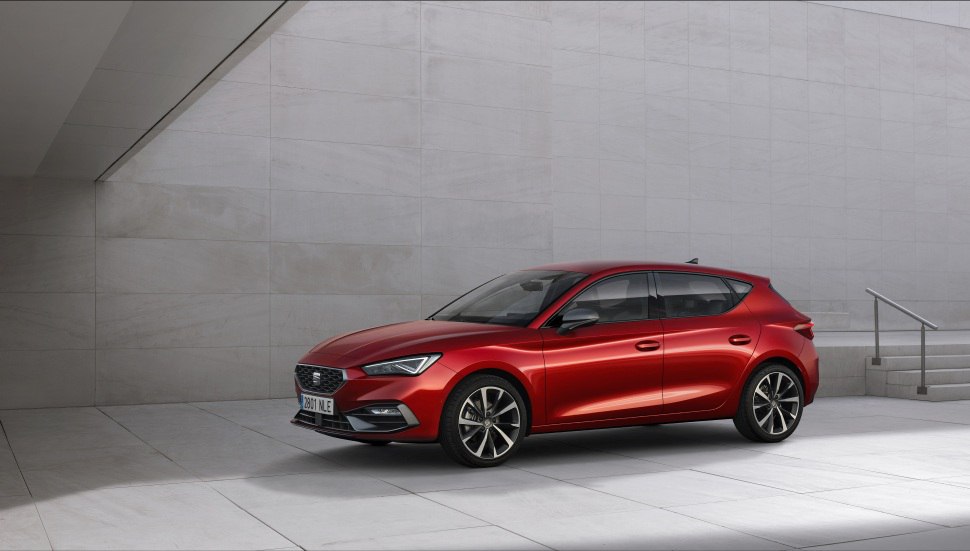
The SEAT Leon IV 1.5 TGI (130 Hp) DSG, produced from January 2021 to January 2023, represents a significant offering in the European compact hatchback market. While SEAT vehicles are not officially sold in the United States, the Leon is a popular model in Europe, known for its blend of practicality, style, and efficiency. This particular variant distinguishes itself through its bi-fuel capability, running on both gasoline and Compressed Natural Gas (CNG), aiming to reduce emissions and running costs. The fourth generation Leon, built on the Volkswagen Group’s MQB Evo platform, brought advancements in technology, safety, and design compared to its predecessors.
SEAT Leon IV 1.5 TGI: A Bi-Fuel Hatchback
The Leon IV 1.5 TGI is positioned as an eco-conscious alternative within the Leon lineup. It caters to drivers seeking lower running costs and a reduced environmental impact, particularly in regions with established CNG infrastructure. The “TGI” designation specifically denotes SEAT’s CNG-powered models. The vehicle’s design and features are largely consistent with other Leon IV models, but the addition of CNG capability necessitates specific modifications to the fuel system and engine management.
Engine & Performance
At the heart of the Leon IV 1.5 TGI lies a 1.5-liter, inline-four cylinder turbocharged gasoline engine, designated the DHF engine code. This engine produces 130 horsepower at 5000-6000 rpm and 200 Nm (147.51 lb.-ft.) of torque between 1400-4000 rpm. The engine features direct fuel injection and a compression ratio of 12.5:1, optimizing combustion efficiency. The engine’s power-to-litre ratio is 86.8 hp/l. The engine is coupled with a 7-speed Dual Clutch Gearbox (DSG) automatic transmission, delivering smooth and efficient gear changes. This combination allows for a 0-60 mph (0-96 km/h) acceleration time of approximately 9.1 seconds, and a 0-62 mph (0-100 km/h) time of 9.6 seconds. The maximum speed is electronically limited to 203 km/h (126.14 mph). A key feature is the ability to seamlessly switch between gasoline and CNG operation, maximizing fuel economy and minimizing emissions. When running on CNG, the combined fuel consumption is rated at 4.1-4.2 kg/100 km (WLTP), with CO2 emissions ranging from 109-113 g/km (WLTP). The vehicle also incorporates a Start & Stop system and a particulate filter to further reduce emissions.
Design & Features
The SEAT Leon IV is a five-door hatchback, offering a practical and versatile body style. It boasts a modern and sporty exterior design, characterized by sharp lines, a distinctive front grille, and full LED headlights. The interior is well-appointed, with a focus on technology and driver comfort. The cabin features a digital instrument cluster, a central touchscreen infotainment system, and a range of connectivity options. Safety is a priority, with features such as ABS (Anti-lock Braking System), multiple airbags, and advanced driver-assistance systems (ADAS) available. The Leon IV offers a comfortable and spacious interior for five passengers. The trunk space is a practical 300 liters (10.59 cu. ft.) with the rear seats up, expanding to 1220 liters (43.08 cu. ft.) when the seats are folded down. The vehicle’s dimensions are: length 4368 mm (171.97 in.), width 1800 mm (70.87 in.), and height 1442-1456 mm (56.77 – 57.32 in.). The wheelbase measures 2686 mm (105.75 in.).
Technical Specifications
| Brand | Seat |
| Model | Leon |
| Generation | Leon IV |
| Type (Engine) | 1.5 TGI (130 Hp) DSG |
| Start of production | January, 2021 |
| End of production | January, 2023 |
| Powertrain Architecture | Internal Combustion engine |
| Body type | Hatchback |
| Seats | 5 |
| Doors | 5 |
| Combined fuel consumption (WLTP) (CNG) | 4.1-4.2 kg/100 km |
| CO2 emissions (CNG) (WLTP) | 109-113 g/km |
| Fuel consumption (economy) – urban (CNG) (NEDC, WLTP equivalent) | 4.5 kg/100 km |
| Fuel consumption (economy) – extra urban (CNG) (NEDC, WLTP equivalent) | 3.1 kg/100 km |
| Fuel consumption (economy) – combined (CNG) (NEDC, WLTP equivalent) | 3.7 kg/100 km |
| CO2 emissions (CNG) (NEDC, WLTP equivalent) | 98 g/km |
| Fuel Type | Petrol / CNG |
| Acceleration 0 – 100 km/h | 9.6 sec |
| Acceleration 0 – 62 mph | 9.6 sec |
| Acceleration 0 – 60 mph | 9.1 sec |
| Maximum speed | 203 km/h / 126.14 mph |
| Emission standard | Euro 6 AP |
| Weight-to-power ratio | 10.3 kg/Hp, 97.3 Hp/tonne |
| Weight-to-torque ratio | 6.7 kg/Nm, 149.7 Nm/tonne |
| Power | 130 Hp @ 5000-6000 rpm |
| Power per litre | 86.8 Hp/l |
| Torque | 200 Nm @ 1400-4000 rpm / 147.51 lb.-ft. @ 1400-4000 rpm |
| Engine layout | Front, Transverse |
| Engine Model/Code | DHF |
| Engine displacement | 1498 cm3 / 91.41 cu. in. |
| Number of cylinders | 4 |
| Engine configuration | Inline |
| Cylinder Bore | 74.5 mm / 2.93 in. |
| Piston Stroke | 85.9 mm / 3.38 in. |
| Compression ratio | 12.5:1 |
| Number of valves per cylinder | 4 |
| Fuel injection system | Direct injection |
| Engine aspiration | Turbocharger |
| Engine oil capacity | 4.3 l / 4.54 US qt | 3.78 UK qt |
| Coolant | 8 l / 8.45 US qt | 7.04 UK qt |
| Kerb Weight | 1336 kg / 2945.38 lbs. |
| Max. weight | 1890 kg / 4166.74 lbs. |
| Max load | 554 kg / 1221.36 lbs. |
| Trunk (boot) space – minimum | 300 l / 10.59 cu. ft. |
| Trunk (boot) space – maximum | 1220 l / 43.08 cu. ft. |
| Fuel tank capacity | 9 l / 2.38 US gal | 1.98 UK gal |
| CNG cylinder capacity | 17.3 kg |
| Max. roof load | 75 kg / 165.35 lbs. |
| Length | 4368 mm / 171.97 in. |
| Width | 1800 mm / 70.87 in. |
| Width including mirrors | 1991 mm / 78.39 in. |
| Height | 1442-1456 mm / 56.77 – 57.32 in. |
| Wheelbase | 2686 mm / 105.75 in. |
| Front overhang | 888 mm / 34.96 in. |
| Rear overhang | 795 mm / 31.3 in. |
| Minimum turning circle (turning diameter) | 10.5 m / 34.45 ft. |
| Drivetrain Architecture | The Internal combustion engine (ICE) drives the front wheels of the vehicle. |
| Drive wheel | Front wheel drive |
| Number of gears and type of gearbox | 7 gears, automatic transmission DSG |
| Front suspension | Independent type McPherson |
| Rear suspension | Coil spring, Elastic beam |
| Front brakes | Ventilated discs |
| Rear brakes | Disc |
| Assisting systems | ABS (Anti-lock braking system) |
| Steering type | Steering rack and pinion |
| Power steering | Electric Steering |
| Tires size | 205/55 R16; 225/45 R17; 225/40 R18 |
The SEAT Leon IV 1.5 TGI (130 Hp) DSG represents a practical and efficient option for European drivers seeking a compact hatchback with reduced emissions and running costs. Its bi-fuel capability and modern features make it a compelling choice in its segment.