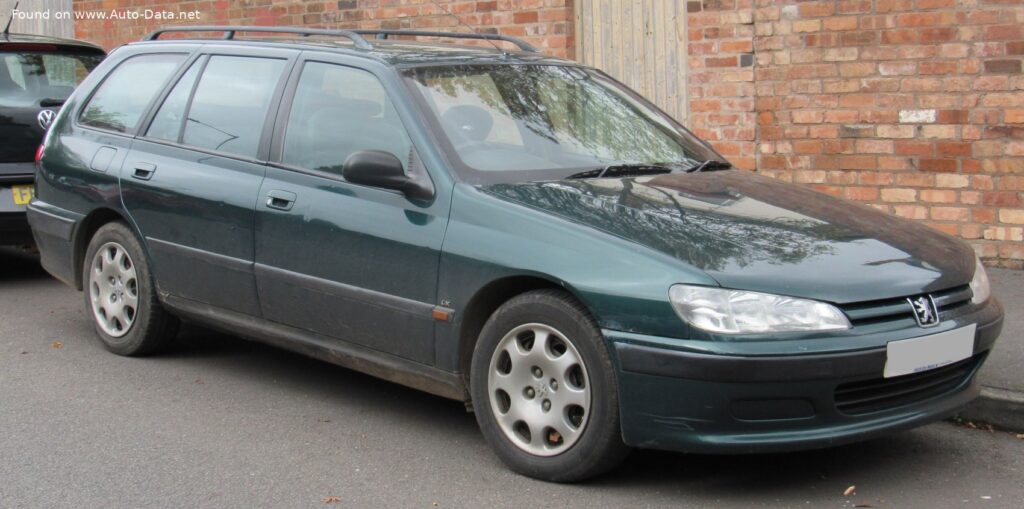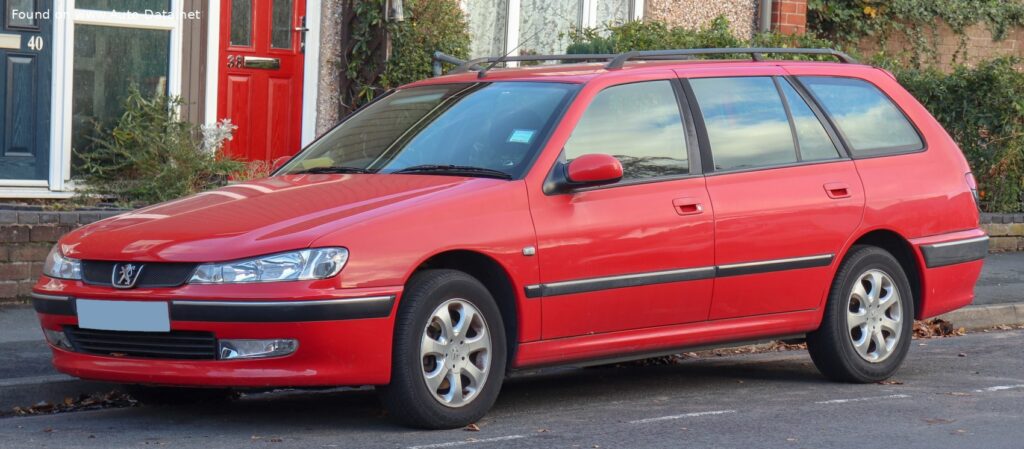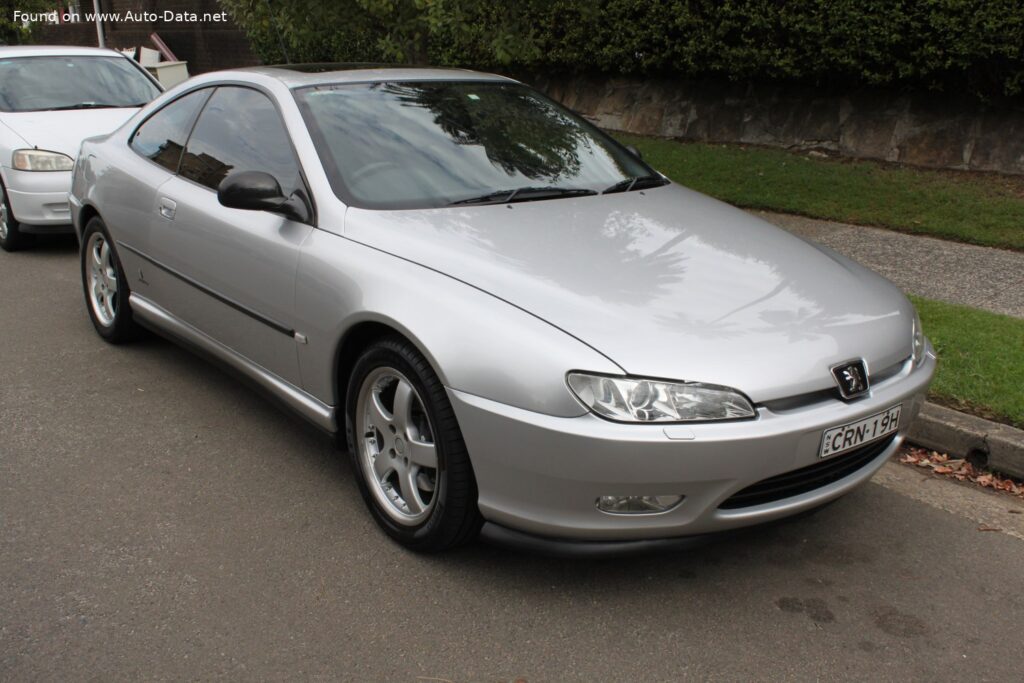
The Peugeot 406 Coupe (Phase I), launched in 1997, represents a significant departure for the French automaker, moving away from purely practical family cars towards a more emotionally driven, stylish grand tourer. Designed by Pininfarina, the 406 Coupe aimed to capture a segment of the market traditionally dominated by German and Italian manufacturers. While not officially sold in the United States, the 406 Coupe was a popular choice in Europe for buyers seeking a blend of performance, comfort, and distinctive design. The Phase I models, produced from 1997 to 1999, established the core aesthetic and mechanical features that would define the 406 Coupe throughout its production run.
Peugeot 406 Coupe: A Design Icon
The 406 Coupe was conceived as a halo vehicle for the 406 range, intended to elevate the brand’s image and demonstrate Peugeot’s design capabilities. Pininfarina’s influence is immediately apparent in the car’s flowing lines, long hood, and steeply raked windshield. The coupe’s profile is characterized by a lack of a traditional B-pillar, creating a seamless transition between the side windows and the rear quarter glass. This design element, while visually striking, required significant structural reinforcement to maintain rigidity. The Phase I models featured a distinctive front end with a prominent Peugeot grille and teardrop-shaped headlights. The interior was similarly focused on providing a comfortable and driver-focused experience, with supportive seats and a well-appointed dashboard.
Engine & Performance
The 3.0 V6 24V engine was the flagship powertrain option for the 406 Coupe, offering a substantial performance upgrade over the four-cylinder variants. This naturally aspirated 2.9-liter V6 produces 190 horsepower at 5500 rpm and 267 Nm (196.93 lb.-ft.) of torque at 4000 rpm. The engine, designated XFZ ES9J4, features multi-port fuel injection and a compression ratio of 10.5:1. Power is delivered to the front wheels via a five-speed manual transmission. This configuration allows for a 0-60 mph (0-96 km/h) acceleration time of approximately 7.5 seconds and a top speed of 235 km/h (146.02 mph). The engine’s power-to-weight ratio of 7.7 kg/Hp and torque-to-weight ratio of 5.5 kg/Nm contribute to a responsive and engaging driving experience. Fuel economy, however, is relatively modest, with combined cycle consumption around 11.3 liters per 100 kilometers (20.8 US mpg).
Design & Features
As a coupe, the 406 prioritizes style and driver engagement over outright practicality. The two-door body style and four-seat configuration are central to its character. The car’s dimensions – 4620 mm (181.89 in) in length, 1780 mm (70.08 in) in width, and 1350 mm (53.15 in) in height – position it within the mid-size coupe segment. The 2700 mm (106.3 in) wheelbase contributes to a stable and comfortable ride. Standard features for the Phase I 406 Coupe included ABS (Anti-lock Braking System), hydraulic power steering, and ventilated front disc brakes. The suspension utilizes a wishbone setup at the front and a multi-link arrangement at the rear, designed to balance ride comfort with handling precision. Trunk space is adequate for a coupe, offering 390 liters (13.77 cu. ft.) of storage. The car rides on 215/55 R16 tires.
Technical Specifications
| Brand | Peugeot |
| Model | 406 |
| Generation | 406 Coupe (Phase I, 1997) |
| Type (Engine) | 3.0 V6 24V (190 Hp) |
| Start of production | 1997 |
| End of production | 1999 |
| Powertrain Architecture | Internal Combustion engine |
| Body type | Coupe |
| Seats | 4 |
| Doors | 2 |
| Fuel consumption (urban) | 15.9 l/100 km (14.8 US mpg) |
| Fuel consumption (extra urban) | 8 l/100 km (29.4 US mpg) |
| Fuel Type | Petrol (Gasoline) |
| Acceleration 0 – 100 km/h | 7.9 sec |
| Acceleration 0 – 62 mph | 7.9 sec |
| Acceleration 0 – 60 mph | 7.5 sec |
| Maximum speed | 235 km/h (146.02 mph) |
| Weight-to-power ratio | 7.7 kg/Hp |
| Weight-to-torque ratio | 5.5 kg/Nm |
| Power | 190 Hp @ 5500 rpm |
| Torque | 267 Nm @ 4000 rpm (196.93 lb.-ft. @ 4000 rpm) |
| Engine layout | Front, Transverse |
| Engine Model/Code | XFZ ES9J4 |
| Engine displacement | 2946 cm3 (179.78 cu. in.) |
| Number of cylinders | 6 |
| Engine configuration | V-engine |
| Cylinder Bore | 87 mm (3.43 in.) |
| Piston Stroke | 82.6 mm (3.25 in.) |
| Compression ratio | 10.5:1 |
| Number of valves per cylinder | 4 |
| Fuel injection system | Multi-port manifold injection |
| Engine oil capacity | 4.75 l (5.02 US qt | 4.18 UK qt) |
| Coolant capacity | 9.6 l (10.14 US qt | 8.45 UK qt) |
| Kerb Weight | 1458 kg (3214.34 lbs.) |
| Max. weight | 1827 kg (4027.85 lbs.) |
| Max load | 369 kg (813.51 lbs.) |
| Trunk (boot) space – minimum | 390 l (13.77 cu. ft.) |
| Fuel tank capacity | 70 l (18.49 US gal | 15.4 UK gal) |
| Length | 4620 mm (181.89 in.) |
| Width | 1780 mm (70.08 in.) |
| Height | 1350 mm (53.15 in.) |
| Wheelbase | 2700 mm (106.3 in.) |
| Front track | 1510 mm (59.45 in.) |
| Rear track | 1525 mm (60.04 in.) |
| Drivetrain Architecture | Front wheel drive |
| Number of gears | 5 |
| Gearbox type | Manual transmission |
| Front suspension | Wishbone |
| Rear suspension | Several levers and rods |
| Front brakes | Ventilated discs |
| Rear brakes | Disc |
| Steering type | Steering rack and pinion |
| Power steering | Hydraulic |
| Tires size | 215/55 R16 |
The Peugeot 406 Coupe, particularly the Phase I models, remains a sought-after vehicle among enthusiasts. Its combination of elegant design, capable performance, and relative rarity has ensured its status as a modern classic. While it never officially graced American roads, its influence on automotive design and its appeal to drivers seeking a stylish and engaging coupe are undeniable.