
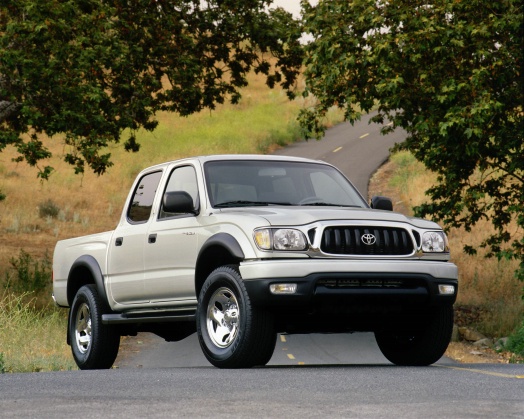
The Toyota Tacoma I Double Cab (facelift 2000) 2.7 represents a significant iteration of Toyota’s popular compact pickup truck, designed to cater to the growing North American demand for versatile and reliable vehicles. Introduced as part of the first-generation Tacoma (1995-2004), the 2000 facelift brought updated styling and refinements to an already successful formula. This model, specifically equipped with the 2.7-liter inline-four engine producing 182 horsepower, occupied a crucial segment – offering a balance between affordability, capability, and passenger space with its unique Double Cab configuration. While not initially conceived for the US market as a primary offering (the Tacoma was developed to replace the Hilux in many global markets), it quickly gained traction due to its robust build quality and suitability for both work and recreational purposes.
Toyota Tacoma I Double Cab (facelift 2000) 2.7: An Overview
The Tacoma Double Cab distinguished itself from standard cab pickups by offering a second row of seats, effectively increasing its passenger capacity to five. This made it a more practical choice for families or those needing to transport more than one passenger regularly. The 2000 facelift included subtle exterior changes, such as revised headlights and grille, along with interior enhancements focused on comfort and ergonomics. The 2.7-liter engine option provided a more economical alternative to the available V6, appealing to buyers prioritizing fuel efficiency and lower purchase price. The Tacoma’s reputation for longevity and high resale value cemented its position as a leading contender in the compact pickup truck market.
Engine & Performance
Powering the 2000 Toyota Tacoma I Double Cab 2.7 is the 3RZ-FE 2.7-liter inline-four cylinder gasoline engine. This naturally aspirated engine delivers 182 horsepower at 4800 rpm and 240 Newton-meters (177.01 lb.-ft.) of torque at 4000 rpm. While not the most powerful engine in its class, the 3RZ-FE is renowned for its durability and reliability. The engine features a double overhead camshaft (DOHC) valvetrain with four valves per cylinder, and utilizes a multi-port fuel injection system for efficient fuel delivery. The engine’s longitudinal front-engine layout contributes to a balanced weight distribution. The Tacoma’s weight-to-power ratio of 6.9 kg/Hp (146 Hp/tonne) and weight-to-torque ratio of 5.2 kg/Nm (192.5 Nm/tonne) reflect its practical, rather than performance-oriented, character. Power is delivered to the rear wheels via a five-speed manual transmission, providing drivers with direct control over gear selection. The engine displacement of 2694 cm3 (164.4 cu. in.) and a compression ratio of 9.5:1 contribute to its balanced performance and fuel economy.
Design & Features
The 2000 Toyota Tacoma I Double Cab is a four-door pickup truck with a body-on-frame construction, typical of trucks designed for rugged use. Its dimensions – 5138 mm (202.28 in.) in length, 1781 mm (70.12 in.) in width, and 1715 mm (67.52 in.) in height – provide a relatively compact footprint while still offering ample interior space. The Double Cab configuration significantly expands the passenger area, making it a viable option for families. The truck’s ride height (ground clearance) of 215 mm (8.46 in.) allows for moderate off-road capability. Features for the 2000 model year, while not as extensive as modern trucks, included ventilated front disc brakes and drum brakes in the rear. Tire sizes ranged from 205/75 R15 to 235/55 R16, depending on the trim level and wheel size (15 or 16 inches). The Tacoma’s design prioritized functionality and durability, with a focus on providing a reliable and capable work vehicle. Safety features of the era were relatively basic, consisting primarily of seatbelts and a robust chassis designed to absorb impacts. The emphasis was on building a truck that could withstand the rigors of daily use and occasional off-road adventures.
Technical Specifications
| Brand | Toyota |
| Model | Tacoma |
| Generation | Tacoma I Double Cab (facelift 2000) |
| Type (Engine) | 2.7 (182 Hp) |
| Start of production | 2000 year |
| End of production | 2004 year |
| Powertrain Architecture | Internal Combustion engine |
| Body type | Pick-up |
| Seats | 5 |
| Doors | 4 |
| Fuel Type | Petrol (Gasoline) |
| Weight-to-power ratio | 6.9 kg/Hp, 146 Hp/tonne |
| Weight-to-torque ratio | 5.2 kg/Nm, 192.5 Nm/tonne |
| Power | 182 Hp @ 4800 rpm |
| Power per litre | 67.6 Hp/l |
| Torque | 240 Nm @ 4000 rpm, 177.01 lb.-ft. @ 4000 rpm |
| Engine layout | Front, Longitudinal |
| Engine Model/Code | 3RZ-FE |
| Engine displacement | 2694 cm3, 164.4 cu. in. |
| Number of cylinders | 4 |
| Engine configuration | Inline |
| Cylinder Bore | 95 mm, 3.74 in. |
| Piston Stroke | 95 mm, 3.74 in. |
| Compression ratio | 9.5:1 |
| Number of valves per cylinder | 4 |
| Fuel injection system | Multi-port manifold injection |
| Engine aspiration | Naturally aspirated engine |
| Valvetrain | DOHC |
| Engine oil capacity | 5.4 l, 5.71 US qt | 4.75 UK qt |
| Coolant | 8.2 l, 8.66 US qt | 7.21 UK qt |
| Kerb Weight | 1247 kg, 2749.16 lbs |
| Max. weight | 1928 kg, 4250.51 lbs |
| Max load | 681 kg, 1501.35 lbs |
| Fuel tank capacity | 70 l, 18.49 US gal | 15.4 UK gal |
| Length | 5138 mm, 202.28 in |
| Width | 1781 mm, 70.12 in |
| Height | 1715 mm, 67.52 in |
| Wheelbase | 3096 mm, 121.89 in |
| Front track | 1461 mm, 57.52 in |
| Rear (Back) track | 1455 mm, 57.28 in |
| Ride height (ground clearance) | 215 mm, 8.46 in |
| Drivetrain Architecture | The Internal combustion engine (ICE) drives the rear wheels of the vehicle. |
| Drive wheel | Rear wheel drive |
| Number of gears and type of gearbox | 5 gears, manual transmission |
| Front brakes | Ventilated discs |
| Rear brakes | Drum |
| Tires size | 205/75 R15; 235/55 R16 |
| Wheel rims size | 15; 16 |
The Toyota Tacoma I Double Cab (facelift 2000) 2.7 remains a popular choice among truck enthusiasts and those seeking a reliable and versatile vehicle. Its combination of practicality, durability, and affordability has ensured its enduring appeal in the used vehicle market.

