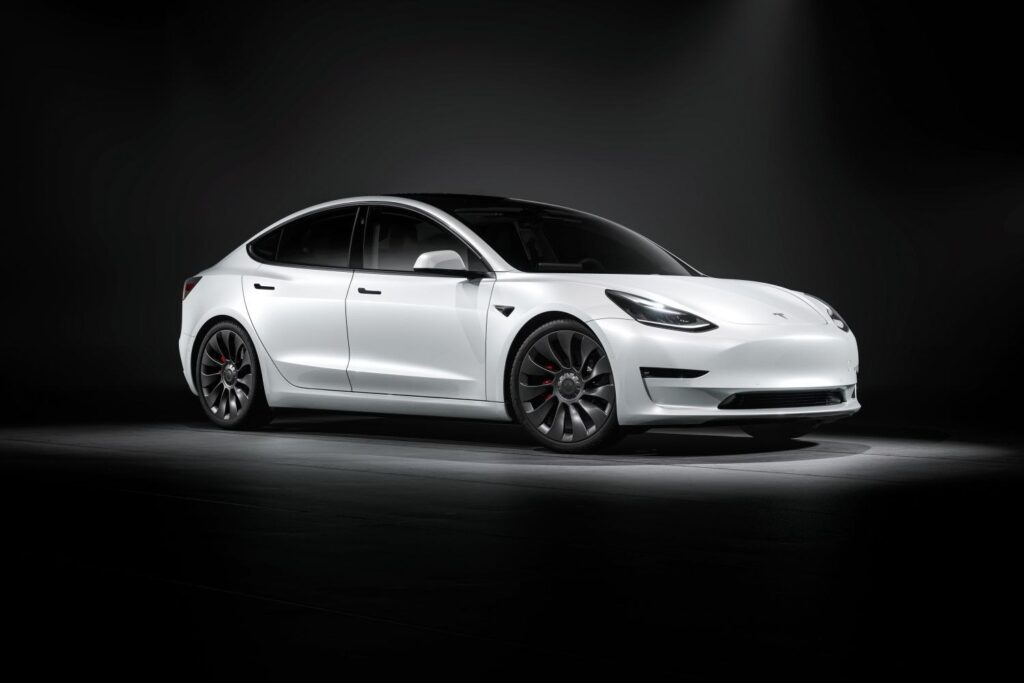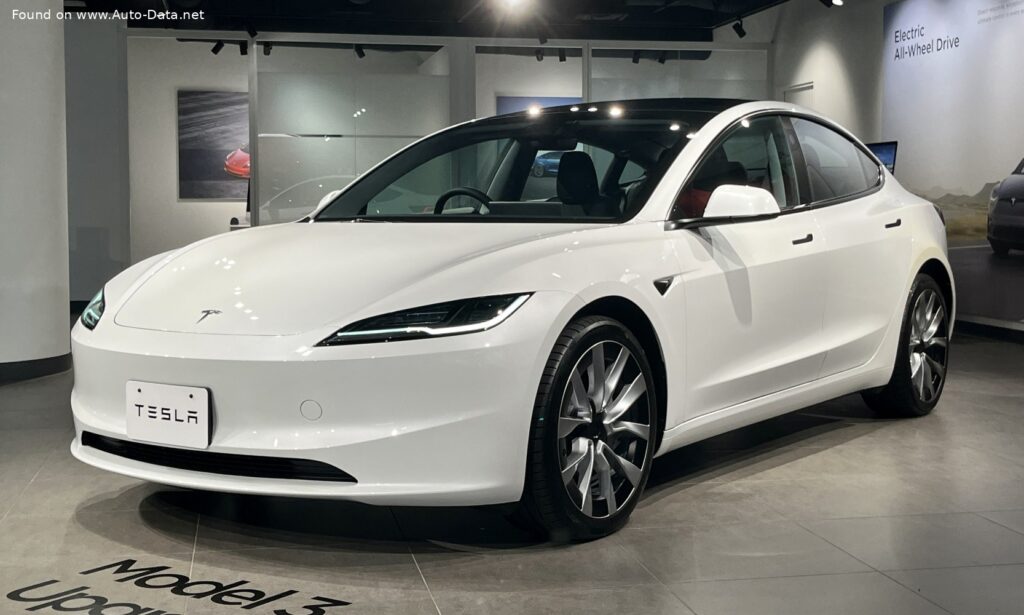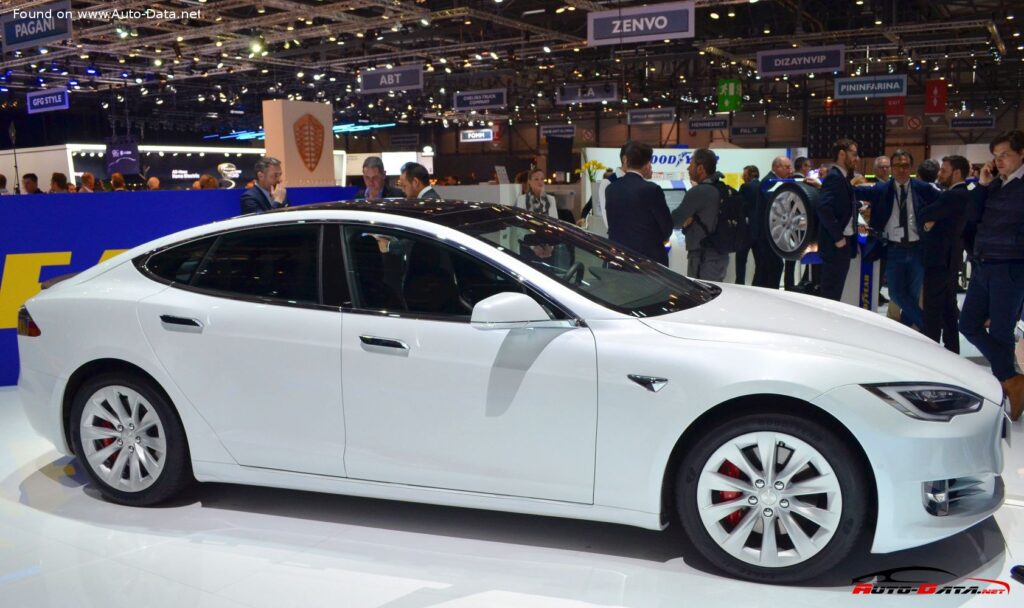
The Tesla Model S, launched in 2012, represented a pivotal moment in the automotive industry, demonstrating the viability of high-performance, long-range electric vehicles. The 2016 facelift, and specifically the Long Range 100 kWh variant produced from 2019-2021, refined the original design and significantly improved battery capacity and performance. Positioned in the premium large car segment, the Model S aimed to challenge established luxury brands while offering a unique, technologically advanced driving experience. This iteration of the Model S solidified Tesla’s position as a leader in the electric vehicle market, particularly in North America and Europe.
Tesla Model S (Facelift 2016) Long Range: An Overview
The Long Range version of the 2016 facelifted Model S distinguished itself with a larger 100 kWh battery pack, providing increased range and performance compared to earlier models. This version was a key component of Tesla’s strategy to broaden the appeal of electric vehicles beyond early adopters. The Model S continued Tesla’s direct-to-consumer sales model, bypassing the traditional dealership network. The facelift brought subtle but important aesthetic changes, focusing on a cleaner front fascia and improved aerodynamics. The core innovation remained the all-electric powertrain, offering instant torque and a quiet, refined driving experience.
Engine & Performance
The Tesla Model S Long Range 100 kWh utilizes a dual-motor, all-wheel drive (AWD) powertrain. Unlike traditional internal combustion engine vehicles, it doesn’t have an “engine” in the conventional sense. Instead, it employs two independent electric motors – one driving the front wheels and the other powering the rear wheels. The front motor produces 279 horsepower and 420 Nm (309.78 lb.-ft.) of torque, while the rear motor delivers 286 horsepower and 335 Nm (247.08 lb.-ft.) of torque. Combined, these motors generate a system output of 541 horsepower and 755 Nm (556.86 lb.-ft.) of torque. This substantial power allows for rapid acceleration, achieving 0-60 mph in approximately 3.6 seconds and 0-100 km/h in 3.8 seconds. The top speed is electronically limited to 155.34 mph (250 km/h). The powertrain’s efficiency is reflected in its energy consumption figures: 21 kWh/100 km (33.8 kWh/100 mi) on the WLTP cycle, translating to 100 MPGe and a range of up to 402.03 miles (647 km) on the WLTP standard, and 369.72 miles (595 km) on the standard cycle.
Design & Features
The Tesla Model S is a five-door liftback, offering a blend of sedan practicality and hatchback versatility. Its sleek, aerodynamic profile contributes to its efficiency and performance. The interior is minimalist and dominated by a large, centrally-mounted touchscreen that controls most vehicle functions. This touchscreen interface was a defining feature of early Tesla models and set a new standard for automotive infotainment systems. The Model S offers seating for five passengers and provides ample cargo space, with 26.31 cubic feet of trunk space (minimum) expanding to 58.09 cubic feet with the rear seats folded down. Safety features were a key focus, including standard features like ABS, traction control, and a suite of advanced driver-assistance systems (ADAS) such as Autopilot, which offered features like adaptive cruise control and lane keeping assist. The air suspension system provided a comfortable ride and allowed for adjustable ride height. The vehicle’s low center of gravity, due to the battery pack being located under the floor, contributed to its stable handling characteristics.
Technical Specifications
| Brand | Tesla |
| Model | Model S |
| Generation | Model S (facelift 2016) |
| Type | Long Range 100 kWh (541 Hp) Dual Motor AWD |
| Start of production | February, 2019 |
| End of production | January, 2021 |
| Powertrain Architecture | BEV (Electric Vehicle) |
| Body type | Liftback |
| Seats | 5 |
| Doors | 5 |
| Fuel Type | Electricity |
| Acceleration 0 – 100 km/h | 3.8 sec |
| Acceleration 0 – 62 mph | 3.8 sec |
| Acceleration 0 – 60 mph | 3.6 sec |
| Maximum speed | 155.34 mph (250 km/h) |
| Weight-to-power ratio | 4.1 kg/Hp, 245.8 Hp/tonne |
| Weight-to-torque ratio | 2.9 kg/Nm, 343 Nm/tonne |
| Gross battery capacity | 100 kWh |
| Battery voltage | 350 V |
| Battery technology | Lithium-ion (Li-Ion) |
| Battery location | Below the floor |
| All-electric range (WLTP) | 402.03 mi (647 km) |
| All-electric range | 369.72 mi (595 km) |
| Average Energy consumption (WLTP) | 21 kWh/100 km, 33.8 kWh/100 mi, 100 MPGe, 4.8 km/kWh, 3 mi/kWh |
| Average Energy consumption | 18.6 kWh/100 km, 29.93 kWh/100 mi, 113 MPGe, 5.4 km/kWh, 3.3 mi/kWh |
| Electric motor 1 power | 279 Hp |
| Electric motor 1 Torque | 420 Nm (309.78 lb.-ft.) |
| Electric motor 1 location | Front axle, Transverse |
| Electric motor 2 power | 286 Hp |
| Electric motor 2 Torque | 335 Nm (247.08 lb.-ft.) |
| Electric motor 2 location | Rear axle, Transverse |
| System power | 541 Hp |
| System torque | 755 Nm (556.86 lb.-ft.) |
| Kerb Weight | 4852.37 lbs (2201 kg) |
| Max. weight | 5939.25 lbs (2694 kg) |
| Max load | 1086.88 lbs (493 kg) |
| Trunk (boot) space – minimum | 26.31 cu. ft. (745 l) |
| Trunk (boot) space – maximum | 58.09 cu. ft. (1645 l) |
| Max. roof load | 165.35 lbs (75 kg) |
| Length | 195.67 in. (4970 mm) |
| Width | 77.32 in. (1964 mm) |
| Width including mirrors | 86.18 in. (2189 mm) |
| Height | 56.89 in. (1445 mm) |
| Wheelbase | 116.54 in. (2960 mm) |
| Front track | 65.43 in. (1662 mm) |
| Rear (Back) track | 66.93 in. (1700 mm) |
| Front overhang | 36.57 in. (929 mm) |
| Rear overhang | 42.56 in. (1081 mm) |
| Ride height (ground clearance) | 4.61 – 6.3 in. (117-160 mm) |
| Drag coefficient (Cd) | 0.23 |
| Minimum turning circle (turning diameter) | 38.71 ft (11.8 m) |
| Drivetrain Architecture | One electric motor drives the front wheels, one electric motor drives the rear wheels. |
| Drive wheel | All wheel drive (4×4) |
| Number of gears and type of gearbox | 1 gears, automatic transmission |
| Front suspension | Double wishbone, Transverse stabilizer, Air suspension |
| Rear suspension | Independent multi-link suspension, Air suspension, Transverse stabilizer |
| Front brakes | Ventilated discs, 355×32 mm |
| Rear brakes | Ventilated discs, 365×28 mm |
| Steering type | Steering rack and pinion |
| Power steering | Electric Steering |
| Tires size | Front wheel tires: 245/45 R19; 245/35 R21Rear wheel tires: 245/45 R19; 265/35 R21 |
| Wheel rims size | Front wheel rims: 8J x 19; 8.5J x 19; 8.5J x 21; 9J x 21Rear wheel rims: 8J x 19; 8.5J x 19; 8.5J x 21; 9J x 21 |
The 2019-2021 Tesla Model S Long Range 100 kWh represented a significant step forward in electric vehicle technology, offering a compelling combination of performance, range, and practicality. It played a crucial role in accelerating the adoption of electric vehicles and establishing Tesla as a dominant force in the automotive industry.