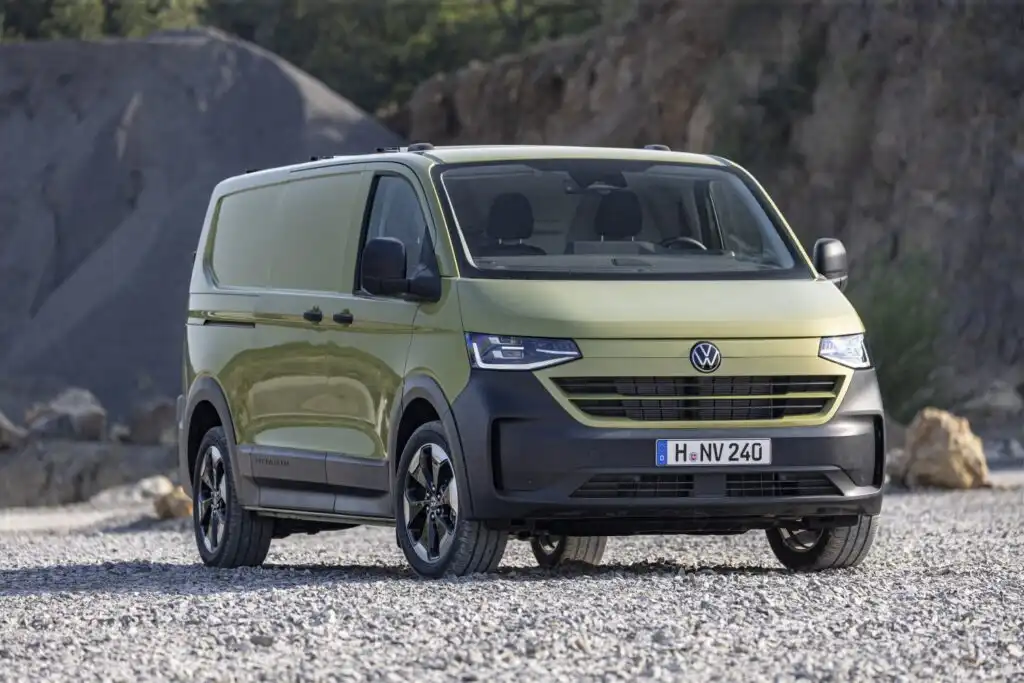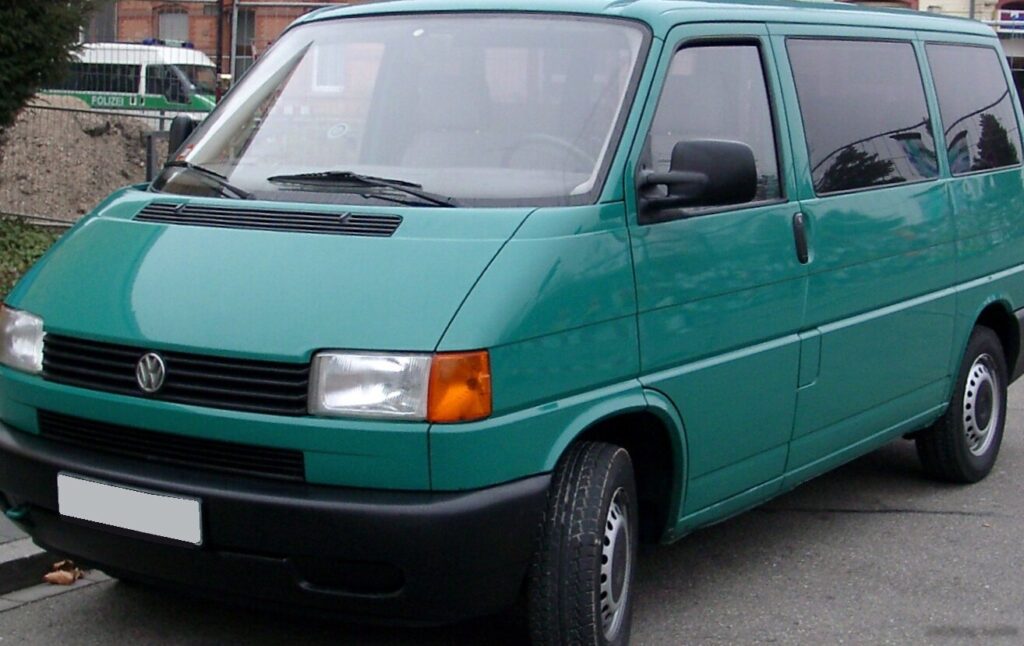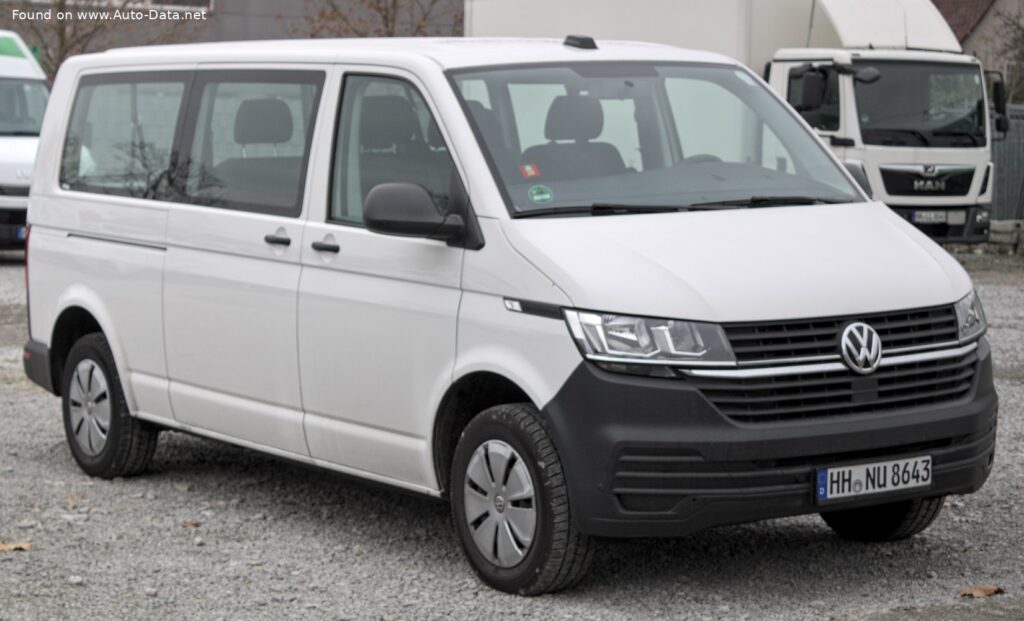
The Volkswagen Transporter, known as the Bulli in some markets, is a mainstay of the commercial vehicle segment in Europe and beyond. The T6.1 generation, a significant facelift of the T6, arrived in 2019, bringing with it updated styling, enhanced technology, and improved efficiency. This article focuses on the Volkswagen Transporter (T6.1) Kombi 2.0 TDI (150 Hp) L2H3 variant, a popular configuration offering a balance of practicality, performance, and economy. The “Kombi” designation signifies a passenger-carrying version, bridging the gap between a pure cargo van and a full-fledged people carrier. The L2H3 indicates a long wheelbase and high roof, maximizing interior space and versatility.
Volkswagen Transporter T6.1: Overview and Market Position
The T6.1 represents a crucial update to the sixth generation of the Transporter, which began production in 2015. While not a completely new model, the T6.1 incorporated substantial revisions to the exterior, interior, and mechanical components. In Europe, the Transporter competes directly with models like the Mercedes-Benz Vito, Ford Transit Custom, and Peugeot Expert. Unlike these competitors, the Transporter has historically had limited official sales presence in the United States, primarily appearing through grey market imports. Its appeal lies in its robust build quality, adaptable interior, and reputation for reliability. The Kombi variant, specifically, caters to businesses and families needing a flexible vehicle for both work and leisure.
Engine & Performance
The 2.0 TDI engine powering the Transporter T6.1 Kombi is a member of Volkswagen’s EA288 engine family, a widely used and respected diesel powerplant. This particular iteration produces 150 horsepower at 3250-3750 rpm and 340 Nm (250.77 lb.-ft.) of torque between 1500-3000 rpm. The engine features a turbocharger with intercooling and a diesel common rail fuel injection system, contributing to its responsive performance and relatively good fuel economy. Paired with a 6-speed manual transmission, the Kombi achieves a 0-60 mph (0-96 km/h) time of approximately 11.3 seconds and a top speed of 113.71 mph (183 km/h). Fuel consumption figures, measured under the NEDC and WLTP standards, range from 6.7 to 7.4 l/100 km (31.8 to 35.1 US mpg), depending on driving conditions. The engine meets Euro 6d TEMP-EVAP-ISC emission standards, incorporating a particulate filter and Start & Stop system to minimize environmental impact.
Design & Features
The T6.1 Kombi L2H3 is a van body style with 4-5 doors and seating for 4-9 passengers. The long wheelbase (3400 mm / 133.86 in.) and high roof (2477 mm / 97.52 in.) provide a generous 9300 liters (328.43 cu. ft.) of maximum cargo space when seats are folded or removed. The exterior design of the T6.1 received a refresh with a more prominent grille, redesigned headlights, and updated bumpers. Inside, the cabin benefits from improved materials and a more modern dashboard layout. Key features include a standard touchscreen infotainment system, available navigation, and driver assistance systems such as ABS (Anti-lock braking system). The vehicle’s dimensions – 5304 mm (208.82 in.) in length and 1904 mm (74.96 in.) in width – make it relatively manageable in urban environments while still offering substantial interior volume. The vehicle’s ride height of 202 mm (7.95 in.) provides adequate ground clearance for varied terrain.
Technical Specifications
| Brand | Volkswagen |
| Model | Transporter |
| Generation | Transporter (T6.1, facelift 2019) Kombi |
| Type (Engine) | 2.0 TDI (150 Hp) L2H3 |
| Start of production | 2019 |
| End of production | 2020 |
| Powertrain Architecture | Internal Combustion engine |
| Body type | Van |
| Seats | 4-9 |
| Doors | 4-5 |
| Fuel consumption (urban) | 7.8-8.3 l/100 km (30.2 – 28.3 US mpg) |
| Fuel consumption (extra urban) | 6.1-6.8 l/100 km (38.6 – 34.6 US mpg) |
| Fuel consumption (combined) | 6.7-7.4 l/100 km (35.1 – 31.8 US mpg) |
| CO2 emissions | 177-194 g/km |
| Fuel Type | Diesel |
| Acceleration 0 – 100 km/h | 11.9 sec |
| Acceleration 0 – 62 mph | 11.9 sec |
| Acceleration 0 – 60 mph | 11.3 sec |
| Maximum speed | 183 km/h (113.71 mph) |
| Emission standard | Euro 6d TEMP-EVAP-ISC |
| Weight-to-power ratio | 13 kg/Hp |
| Weight-to-torque ratio | 5.7 kg/Nm |
| Power | 150 Hp @ 3250-3750 rpm |
| Torque | 340 Nm @ 1500-3000 rpm (250.77 lb.-ft.) |
| Engine layout | Front, Transverse |
| Engine Model/Code | EA288 / CXFA, CXHA |
| Engine displacement | 1968 cm3 (120.09 cu. in.) |
| Number of cylinders | 4 |
| Engine configuration | Inline |
| Cylinder Bore | 81 mm (3.19 in.) |
| Piston Stroke | 95.5 mm (3.76 in.) |
| Compression ratio | 15.5:1 |
| Number of valves per cylinder | 4 |
| Fuel injection system | Diesel Commonrail |
| Engine aspiration | Turbocharger, Intercooler |
| Valvetrain | DOHC |
| Engine oil capacity | 7.4 l (7.82 US qt | 6.51 UK qt) |
| Kerb Weight | 1951-2274 kg (4301.22 – 5013.31 lbs.) |
| Max. weight | 2800-3200 kg (6172.94 – 7054.79 lbs.) |
| Max load | 849-926 kg (1871.72 – 2041.48 lbs.) |
| Trunk (boot) space – maximum | 9300 l (328.43 cu. ft.) |
| Fuel tank capacity | 70 l (18.49 US gal | 15.4 UK gal) |
| AdBlue tank | 13 l (3.43 US gal | 2.86 UK gal) |
| Permitted trailer load with brakes (12%) | 2500 kg (5511.56 lbs.) |
| Permitted trailer load without brakes | 750 kg (1653.47 lbs.) |
| Permitted towbar download | 100 kg (220.46 lbs.) |
| Length | 5304 mm (208.82 in.) |
| Width | 1904 mm (74.96 in.) |
| Width including mirrors | 2297 mm (90.43 in.) |
| Height | 2477 mm (97.52 in.) |
| Wheelbase | 3400 mm (133.86 in.) |
| Front overhang | 906 mm (35.67 in.) |
| Rear overhang | 998 mm (39.29 in.) |
| Ride height (ground clearance) | 202 mm (7.95 in.) |
| Minimum turning circle | 13.2 m (43.31 ft.) |
| Drivetrain Architecture | Front wheel drive |
| Number of gears | 6 |
| Gearbox type | Manual transmission |
The Volkswagen Transporter T6.1 Kombi 2.0 TDI (150 Hp) L2H3 remains a compelling option for those seeking a versatile and practical vehicle. Its blend of efficiency, space, and reliability ensures its continued popularity in the commercial and family vehicle markets.