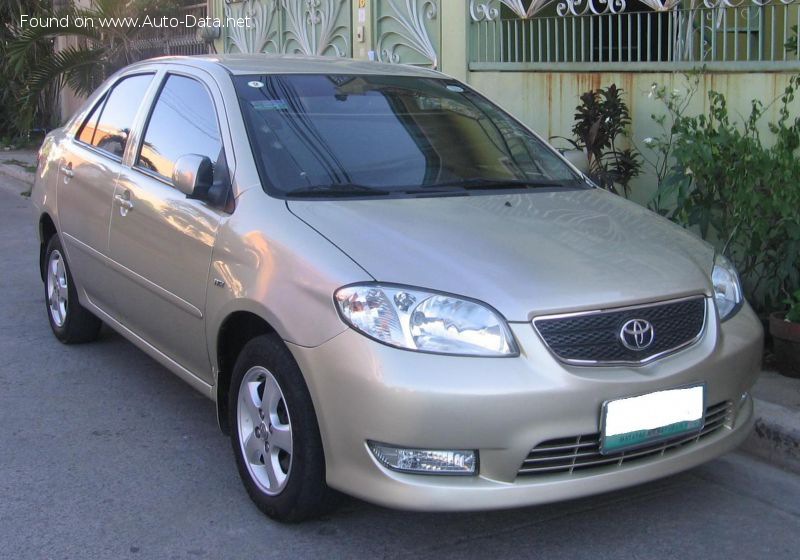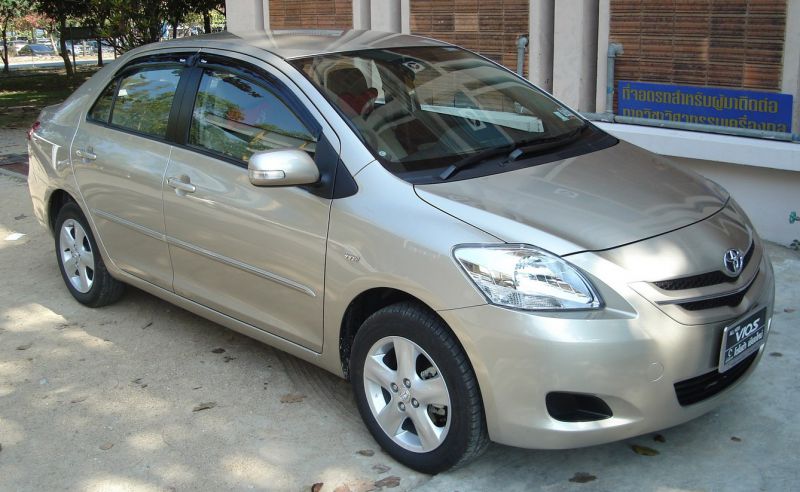
The Toyota Vios II 1.0, produced between 2007 and 2013, represents the second generation of Toyota’s subcompact sedan aimed primarily at the Asian market. While not officially sold in the United States, the Vios holds significant importance in regions like Thailand, the Philippines, and Indonesia, where it became a popular choice for its affordability, fuel efficiency, and reliability. The Vios II was designed to cater to the growing demand for practical and economical transportation in these emerging markets, offering a step up in refinement and features compared to its predecessor.
Toyota Vios II 1.0: An Overview
The Vios II, built on the Toyota B platform, served as a crucial model in Toyota’s global strategy, providing a cost-effective and dependable vehicle for a broad customer base. It competed with other subcompact sedans like the Honda City and Nissan Tiida in its target markets. The 1.0-liter engine variant, detailed here, was particularly popular due to its favorable tax bracket in several countries, making it an even more accessible option for first-time car buyers and families.
Engine & Performance
The heart of the Toyota Vios II 1.0 is a 996 cc inline-3 cylinder, naturally aspirated gasoline engine. This engine produces 71 horsepower at 6000 rpm and 94 Nm (69.33 lb.-ft.) of torque at 3600 rpm. While not a performance powerhouse, the engine is designed for efficiency and everyday usability. The power-to-weight ratio of 71.7 hp per tonne allows for adequate acceleration, and the weight-to-torque ratio of 10.5 kg/Nm provides sufficient pulling power for typical driving conditions. The engine utilizes a multi-port fuel injection system to optimize fuel delivery and combustion. The front-engine, front-wheel-drive configuration contributes to its predictable handling and relatively low fuel consumption. A 5-speed manual transmission is standard, providing drivers with direct control over gear selection. The engine’s simplicity and robust design contribute to its renowned reliability, a hallmark of Toyota engineering.
Design & Features
The Toyota Vios II 1.0 is a traditional four-door sedan with a relatively conservative design. Its dimensions – 4300 mm (169.29 in) in length, 1690 mm (66.54 in) in width, and 1460 mm (57.48 in) in height – place it squarely in the subcompact sedan category. The vehicle offers seating for five passengers and boasts a trunk capacity of 475 liters (16.77 cu. ft.), providing ample space for luggage and everyday items. The interior, while basic, is functional and designed for durability. Features typically included air conditioning, power steering, and a basic audio system. Safety features, while not as comprehensive as those found in modern vehicles, generally included seatbelts for all occupants. The McPherson strut front suspension and semi-independent coil spring rear suspension provide a comfortable, if not particularly sporty, ride. The 165/70 R14 tires mounted on 14-inch wheels contribute to a balance between ride comfort and fuel efficiency. The Vios II prioritized practicality and affordability over luxurious appointments, making it a sensible choice for budget-conscious buyers.
Technical Specifications
| Brand | Toyota |
| Model | Vios |
| Generation | Vios II |
| Type (Engine) | 1.0 (71 Hp) |
| Start of production | 2007 year |
| End of production | 2013 year |
| Powertrain Architecture | Internal Combustion engine |
| Body type | Sedan |
| Seats | 5 |
| Doors | 4 |
| Fuel Type | Petrol (Gasoline) |
| Weight-to-power ratio | 13.9 kg/Hp, 71.7 Hp/tonne |
| Weight-to-torque ratio | 10.5 kg/Nm, 94.9 Nm/tonne |
| Power | 71 Hp @ 6000 rpm |
| Power per litre | 71.3 Hp/l |
| Torque | 94 Nm @ 3600 rpm |
| Torque (lb.-ft.) | 69.33 lb.-ft. @ 3600 rpm |
| Engine layout | Front, Transverse |
| Engine displacement | 996 cm3 |
| Engine displacement (cu. in.) | 60.78 cu. in. |
| Number of cylinders | 3 |
| Engine configuration | Inline |
| Number of valves per cylinder | 4 |
| Fuel injection system | Multi-port manifold injection |
| Engine aspiration | Naturally aspirated engine |
| Kerb Weight | 990 kg |
| Kerb Weight (lbs.) | 2182.58 lbs. |
| Max. weight | 1265 kg |
| Max. weight (lbs.) | 2788.85 lbs. |
| Max load | 275 kg |
| Max load (lbs.) | 606.27 lbs. |
| Trunk (boot) space – minimum | 475 l |
| Trunk (boot) space – minimum (cu. ft.) | 16.77 cu. ft. |
| Fuel tank capacity | 42 l |
| Fuel tank capacity (US gal) | 11.1 US gal |
| Fuel tank capacity (UK gal) | 9.24 UK gal |
| Length | 4300 mm |
| Length (in.) | 169.29 in. |
| Width | 1690 mm |
| Width (in.) | 66.54 in. |
| Height | 1460 mm |
| Height (in.) | 57.48 in. |
| Wheelbase | 2550 mm |
| Wheelbase (in.) | 100.39 in. |
| Front track | 1480 mm |
| Front track (in.) | 58.27 in. |
| Rear (Back) track | 1470 mm |
| Rear (Back) track (in.) | 57.87 in. |
| Ride height (ground clearance) | 150 mm |
| Ride height (ground clearance) (in.) | 5.91 in. |
| Drivetrain Architecture | The Internal combustion engine (ICE) drives the front wheels of the vehicle. |
| Drive wheel | Front wheel drive |
| Number of gears and type of gearbox | 5 gears, manual transmission |
| Front suspension | Independent type McPherson |
| Rear suspension | Semi-independent, coil spring |
| Front brakes | Ventilated discs |
| Rear brakes | Drum |
| Tires size | 165/70 R14 |
| Wheel rims size | 14 |
In conclusion, the Toyota Vios II 1.0, while not a vehicle commonly found on American roads, played a significant role in providing affordable and reliable transportation in numerous Asian markets. Its simple yet effective design, coupled with Toyota’s reputation for durability, made it a popular choice for a wide range of consumers.