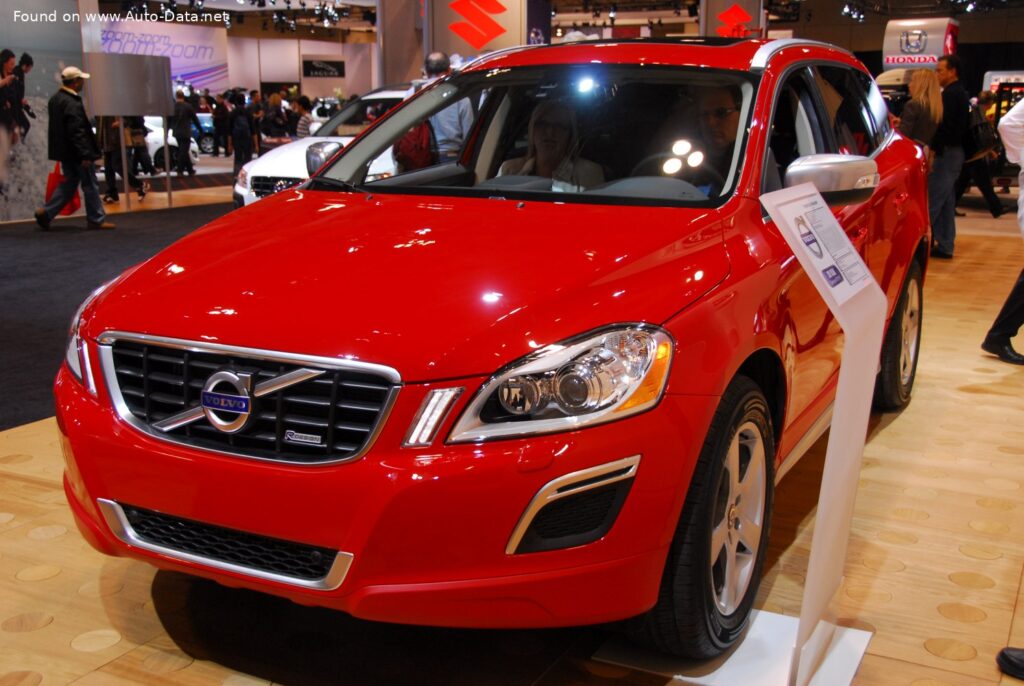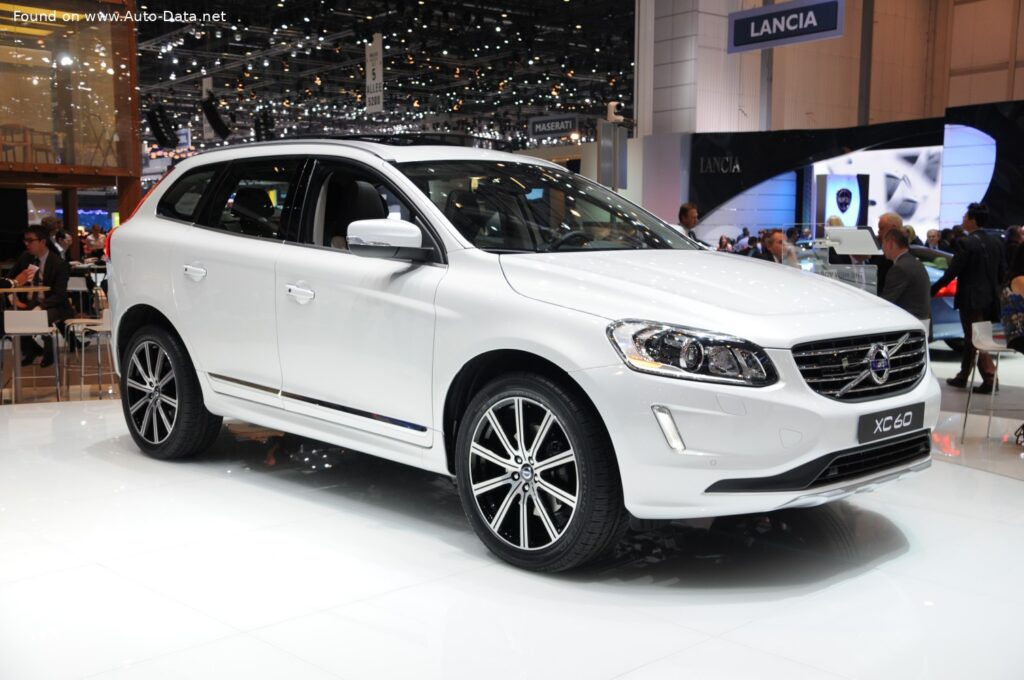
The Volvo XC60 I, specifically the 2.0 T6 (306 Hp) Automatic variant produced from 2014 to 2017, represents a significant offering in the luxury compact SUV segment. This facelifted version of the first-generation XC60 built upon the model’s initial success, refining its aesthetics and enhancing its technological features. Positioned as a competitor to vehicles like the Audi Q5, BMW X3, and Mercedes-Benz GLK, the XC60 aimed to deliver a blend of Scandinavian design, safety, and performance. The XC60 was a crucial model for Volvo, contributing significantly to the brand’s global sales and establishing its reputation for sophisticated SUVs.
Volvo XC60 I (2013 Facelift) 2.0 T6: An Overview
The XC60 I, launched in 2008, quickly became Volvo’s best-selling model. The 2013 facelift brought updated styling, including a revised front fascia, new headlights, and interior enhancements. The 2.0 T6 powertrain, introduced during this period, combined a four-cylinder engine with both turbocharging and supercharging, offering a compelling balance of power and efficiency. This engine was a key component of Volvo’s Drive-E engine family, designed to deliver reduced emissions and improved fuel economy without sacrificing performance. The XC60’s five-seat configuration and practical cargo space further cemented its appeal as a family-oriented SUV.
Engine & Performance
The heart of the XC60 I 2.0 T6 is Volvo’s 2.0-liter inline four-cylinder engine, designated the B4204T9. This engine is notable for its sophisticated forced induction system, employing both a turbocharger and a supercharger. The supercharger provides immediate boost at lower engine speeds, eliminating turbo lag and delivering responsive acceleration. As engine speed increases, the turbocharger takes over, providing sustained power. This combination results in a maximum power output of 306 horsepower at 5700 rpm and 400 Newton-meters (295.02 lb.-ft.) of torque available between 2100 and 4500 rpm. Power per liter is an impressive 155.4 Hp/l. The engine is transversely mounted and paired with an eight-speed automatic transmission, which efficiently delivers power to the front wheels. This powertrain configuration allows for a 0-60 mph acceleration time of approximately 6.6 seconds and a top speed of 210 km/h (130.49 mph). The engine’s direct injection system and intercooler further contribute to its efficiency and performance.
Design & Features
The Volvo XC60 I (2013 facelift) embodies Volvo’s signature Scandinavian design aesthetic, characterized by clean lines, a minimalist interior, and a focus on functionality. The exterior features a bold grille, sculpted headlights, and a sloping roofline that contributes to its crossover profile. The vehicle’s dimensions – 4644 mm (182.83 in) in length, 1891 mm (74.45 in) in width, and 1713 mm (67.44 in) in height – provide a spacious interior without compromising maneuverability. Inside, the XC60 offers a comfortable and well-appointed cabin with seating for five passengers. Key features include a user-friendly infotainment system, supportive seats, and a range of safety technologies. Volvo prioritized safety, equipping the XC60 with standard features like ABS, and a comprehensive airbag system. The XC60 also offers a generous amount of cargo space, with a minimum of 490 liters (17.3 cu. ft.) expanding to 1450 liters (51.21 cu. ft.) with the rear seats folded down. The vehicle’s approach, departure, and ramp-over angles (20.0°, 26.9°, and 22.1° respectively) provide reasonable off-road capability, although the XC60 is primarily designed for on-road use.
Technical Specifications
| Brand | Volvo |
| Model | XC60 |
| Generation | XC60 I (2013 facelift) |
| Type (Engine) | 2.0 T6 (306 Hp) Automatic |
| Start of production | 2014 |
| End of production | 2017 |
| Powertrain Architecture | Internal Combustion engine |
| Body type | SUV, Crossover |
| Seats | 5 |
| Doors | 5 |
| Fuel consumption (combined) | 7.3 l/100 km |
| Fuel consumption (US mpg) | 32.2 US mpg |
| Fuel consumption (UK mpg) | 38.7 UK mpg |
| Fuel consumption (km/l) | 13.7 km/l |
| CO2 emissions | 169 g/km |
| Fuel Type | Petrol (Gasoline) |
| Acceleration 0 – 100 km/h | 6.9 sec |
| Acceleration 0 – 62 mph | 6.9 sec |
| Acceleration 0 – 60 mph | 6.6 sec |
| Maximum speed | 210 km/h (130.49 mph) |
| Power | 306 Hp @ 5700 rpm |
| Torque | 400 Nm @ 2100-4500 rpm (295.02 lb.-ft. @ 2100-4500 rpm) |
| Maximum engine speed | 6000 rpm |
| Engine layout | Front, Transverse |
| Engine Model/Code | B4204T9 |
| Engine displacement | 1969 cm3 (120.16 cu. in.) |
| Number of cylinders | 4 |
| Engine configuration | Inline |
| Cylinder Bore | 82 mm (3.23 in.) |
| Piston Stroke | 93.2 mm (3.67 in.) |
| Compression ratio | 10.3:1 |
| Number of valves per cylinder | 4 |
| Fuel injection system | Direct injection |
| Engine aspiration | Turbocharging and Supercharger, Intercooler |
| Valvetrain | DOHC |
| Engine oil capacity | 5.4 l (5.71 US qt | 4.75 UK qt) |
| Kerb Weight | 1816-1935 kg (4003.59 – 4265.94 lbs.) |
| Max. weight | 2390-2505 kg (5269.05 – 5522.58 lbs.) |
| Max load | 570-574 kg (1256.63 – 1265.45 lbs.) |
| Trunk (boot) space – minimum | 490 l (17.3 cu. ft.) |
| Trunk (boot) space – maximum | 1450 l (51.21 cu. ft.) |
| Fuel tank capacity | 70 l (18.49 US gal | 15.4 UK gal) |
| Max. roof load | 100 kg (220.46 lbs.) |
| Permitted trailer load with brakes (8%) | 1600 kg (3527.4 lbs.) |
| Permitted trailer load without brakes | 750 kg (1653.47 lbs.) |
| Length | 4644 mm (182.83 in.) |
| Width | 1891 mm (74.45 in.) |
| Width including mirrors | 2120 mm (83.46 in.) |
| Height | 1713 mm (67.44 in.) |
| Wheelbase | 2774 mm (109.21 in.) |
| Front track | 1632 mm (64.25 in.) |
| Rear (Back) track | 1586 mm (62.44 in.) |
| Ride height (ground clearance) | 230 mm (9.06 in.) |
| Drag coefficient (Cd) | 0.35 |
| Minimum turning circle (turning diameter) | 12.1-12.6 m (39.7 – 41.34 ft.) |
| Drivetrain Architecture | Front wheel drive |
| Number of gears and type of gearbox | 8 gears, automatic transmission |
| Front suspension | Independent, type McPherson with coil spring and anti-roll bar |
| Rear suspension | Independent coil spring |
| Front brakes | Ventilated discs |
| Rear brakes | Disc |