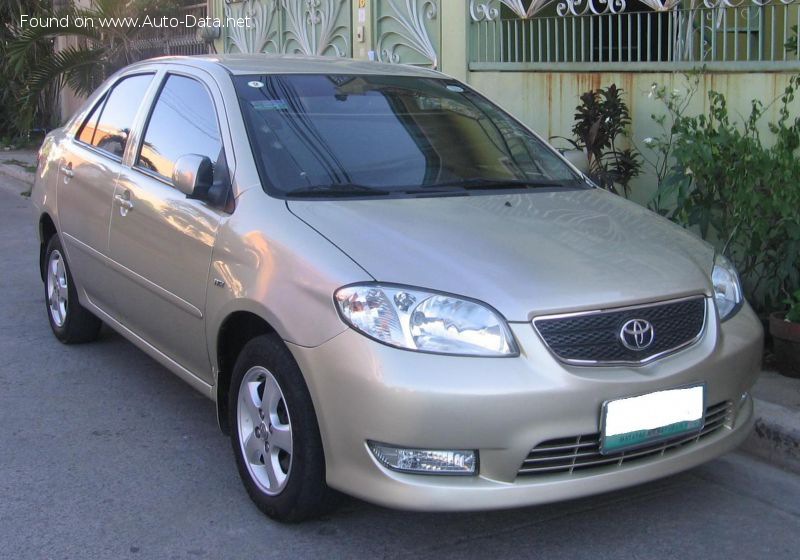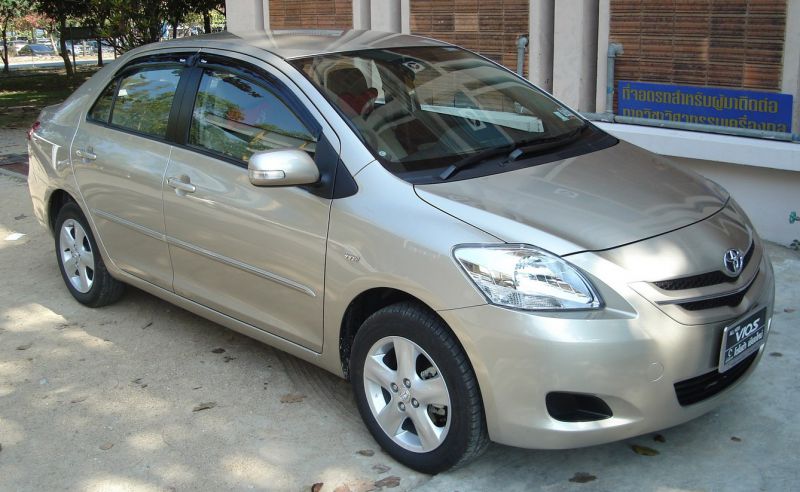
The Toyota Vios II 1.3, produced between 2007 and 2013, represents the second generation of Toyota’s subcompact sedan aimed primarily at the Asian market. While not officially sold in the United States, the Vios holds significant importance in regions like Thailand, the Philippines, and Indonesia, where it consistently ranked among the best-selling vehicles in its class. Positioned as an affordable and reliable family car, the Vios II offered a practical alternative to larger, more expensive sedans, focusing on fuel efficiency and ease of maintenance. This generation built upon the success of the first Vios, refining its design and improving its overall driving experience.
Toyota Vios II 1.3: A Regional Success Story
The Vios, in its various iterations, has been a cornerstone of Toyota’s strategy in emerging markets. The second generation, specifically the 1.3-liter variant, was designed to cater to the needs of budget-conscious buyers seeking a dependable and spacious sedan. It competed directly with models like the Honda City and Nissan Tiida in its target markets. The Vios II’s success stemmed from Toyota’s reputation for quality, combined with a competitive price point and a focus on practicality. It served as a crucial entry point into the Toyota brand for many customers.
Engine & Performance
The Toyota Vios II 1.3 is powered by a 1.3-liter inline-four cylinder gasoline engine, designated as the 2NZ-FE. This naturally aspirated engine produces 87 horsepower at 6000 rpm and 121 Nm (89.25 lb.-ft.) of torque at 4200 rpm. While not a performance-oriented vehicle, the engine provides adequate power for daily commuting and typical urban driving conditions. The power-to-weight ratio of 83.7 Hp/tonne and torque-to-weight ratio of 116.3 Nm/tonne reflect its focus on efficiency rather than outright speed. The engine utilizes a multi-port fuel injection system and a compression ratio of 11:1 to optimize fuel combustion. The front-engine, front-wheel-drive configuration contributes to its predictable handling and relatively low running costs. A five-speed manual transmission is standard, providing drivers with direct control over gear selection.
Design & Features
The Vios II maintains a traditional sedan body style with four doors and seating for five passengers. Its exterior design is characterized by clean lines and a relatively conservative aesthetic, prioritizing practicality over flamboyant styling. The vehicle measures 4300 mm (169.29 in) in length, 1690 mm (66.54 in) in width, and 1460 mm (57.48 in) in height, offering a reasonable amount of interior space for its class. The trunk provides 475 liters (16.77 cu. ft.) of cargo capacity, sufficient for everyday needs. Inside, the Vios II offers a functional and straightforward interior layout. While not lavishly equipped, it typically includes basic amenities such as air conditioning, power steering, and a basic audio system. Safety features, while limited by the standards of the time, generally include seatbelts and a driver’s airbag. The McPherson strut front suspension and semi-independent coil spring rear suspension provide a comfortable, if not particularly sporty, ride quality.
Technical Specifications
| Brand | Toyota |
| Model | Vios |
| Generation | Vios II |
| Type (Engine) | 1.3 (87 Hp) |
| Start of production | 2007 |
| End of production | 2013 |
| Powertrain Architecture | Internal Combustion engine |
| Body type | Sedan |
| Seats | 5 |
| Doors | 4 |
| Fuel Type | Petrol (Gasoline) |
| Weight-to-power ratio | 12 kg/Hp |
| Weight-to-torque ratio | 8.6 kg/Nm |
| Power | 87 Hp @ 6000 rpm |
| Power per litre | 67.1 Hp/l |
| Torque | 121 Nm @ 4200 rpm / 89.25 lb.-ft. @ 4200 rpm |
| Engine layout | Front, Transverse |
| Engine displacement | 1296 cm3 / 79.09 cu. in. |
| Number of cylinders | 4 |
| Engine configuration | Inline |
| Cylinder Bore | 72 mm / 2.83 in. |
| Piston Stroke | 79.6 mm / 3.13 in. |
| Compression ratio | 11:1 |
| Number of valves per cylinder | 4 |
| Fuel injection system | Multi-port manifold injection |
| Engine aspiration | Naturally aspirated engine |
| Kerb Weight | 1040 kg / 2292.81 lbs |
| Max. weight | 1315 kg / 2899.08 lbs |
| Max load | 275 kg / 606.27 lbs |
| Trunk (boot) space – minimum | 475 l / 16.77 cu. ft. |
| Fuel tank capacity | 42 l / 11.1 US gal | 9.24 UK gal |
| Length | 4300 mm / 169.29 in. |
| Width | 1690 mm / 66.54 in. |
| Height | 1460 mm / 57.48 in. |
| Wheelbase | 2550 mm / 100.39 in. |
| Front track | 1480 mm / 58.27 in. |
| Rear (Back) track | 1470 mm / 57.87 in. |
| Ride height (ground clearance) | 150 mm / 5.91 in. |
| Drivetrain Architecture | The Internal combustion engine (ICE) drives the front wheels of the vehicle. |
| Drive wheel | Front wheel drive |
| Number of gears and type of gearbox | 5 gears, manual transmission |
| Front suspension | Independent type McPherson |
| Rear suspension | Semi-independent, coil spring |
| Front brakes | Ventilated discs |
| Rear brakes | Drum |
| Tires size | 165/70 R14 |
| Wheel rims size | 14 |
The Toyota Vios II 1.3, while not a groundbreaking vehicle in terms of innovation, successfully fulfilled its intended purpose as an affordable, reliable, and practical sedan for the Southeast Asian market. Its enduring popularity is a testament to Toyota’s understanding of the needs and preferences of its target customers in these regions.