
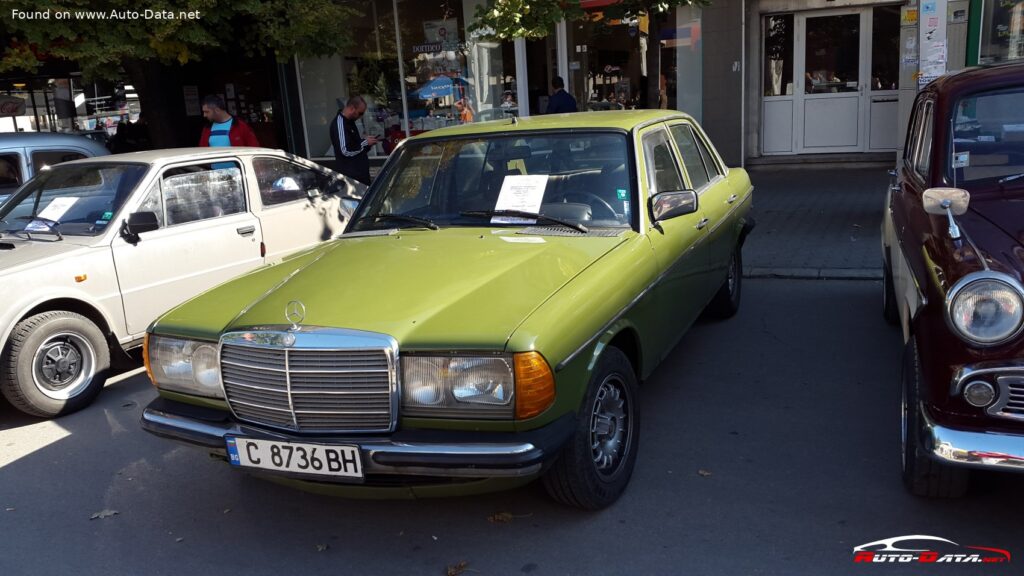
The Mercedes-Benz W123 represents a pivotal era for the German automaker, solidifying its reputation for building durable, comfortable, and safe mid-size automobiles. Produced between July 1975 and August 1980, the W123 was the successor to the W114/W115 series and served as a precursor to the W201. This generation introduced significant advancements in safety and engineering, becoming a benchmark for its class. The 200 model, powered by a 2.0-liter engine producing 94 horsepower, was a popular choice, particularly in markets where engine displacement was a factor in taxation. The W123 was not initially sold in the United States, but was later imported in limited numbers in the early 1980s, primarily the diesel variants.
The Mercedes-Benz W123 200: A Detailed Overview
The W123 was designed to offer a blend of luxury and practicality, appealing to a broad customer base. It was available in sedan (saloon), coupe, and estate (wagon) body styles, with the sedan being the most common. The 200 model, positioned as the entry-level offering, provided a more accessible price point while still delivering the core Mercedes-Benz experience. It was a significant vehicle in Europe, offering a premium experience in a practical package.
Engine & Performance
The heart of the W123 200 is its M 115 V 20 inline-four cylinder engine, displacing 1988 cubic centimeters (121.32 cubic inches). This naturally aspirated engine produces 94 horsepower at 4800 rpm and 158 Nm (116.53 lb.-ft.) of torque at 3000 rpm. While not a performance powerhouse, the engine was known for its reliability and smooth operation. Power per liter is rated at 47.3 hp/l. The engine utilizes a carburetor fuel injection system and a single overhead camshaft (SOHC) valvetrain with two valves per cylinder. Power is delivered to the rear wheels via a four-speed manual transmission. Acceleration from 0 to 100 km/h (0-62 mph) takes 15.2 seconds, while 0 to 60 mph is achieved in approximately 14.4 seconds. The top speed is rated at 160 km/h (99.42 mph). The weight-to-power ratio is 14.3 kg/Hp, and the weight-to-torque ratio is 8.5 kg/Nm.
Design & Features
The W123 sedan is a classic example of 1970s Mercedes-Benz design – understated elegance and functional practicality. Its boxy silhouette, chrome trim, and relatively simple lines contribute to its timeless appeal. The interior was well-appointed for its time, offering comfortable seating for five passengers. Safety was a key focus in the W123’s development. It featured crumple zones, a reinforced passenger cell, and disc brakes on all four wheels – advancements that were relatively uncommon in the mid-1970s. The car’s robust build quality and attention to detail contributed to its longevity and enduring popularity. The W123 offered a spacious interior for its class, with a fuel tank capacity of 65 liters (17.17 US gallons). The vehicle’s dimensions are: length 4725 mm (186.02 in), width 1786 mm (70.31 in), and height 1438 mm (56.61 in). The wheelbase measures 2795 mm (110.04 in).
Technical Specifications
| Brand | Mercedes-Benz |
| Model | W123 |
| Generation | W123 |
| Type (Engine) | 200 (94 Hp) |
| Start of production | July, 1975 |
| End of production | August, 1980 |
| Powertrain Architecture | Internal Combustion engine |
| Body type | Sedan |
| Seats | 5 |
| Doors | 4 |
| Fuel consumption (urban) | 15.1 l/100 km (15.6 US mpg, 18.7 UK mpg, 6.6 km/l) |
| Fuel consumption (extra urban) | 9.4 l/100 km (25 US mpg, 30.1 UK mpg, 10.6 km/l) |
| Fuel Type | Petrol (Gasoline) |
| Acceleration 0 – 100 km/h | 15.2 sec |
| Acceleration 0 – 62 mph | 15.2 sec |
| Acceleration 0 – 60 mph | 14.4 sec |
| Maximum speed | 160 km/h (99.42 mph) |
| Weight-to-power ratio | 14.3 kg/Hp |
| Weight-to-torque ratio | 8.5 kg/Nm |
| Power | 94 Hp @ 4800 rpm |
| Power per litre | 47.3 Hp/l |
| Torque | 158 Nm @ 3000 rpm (116.53 lb.-ft. @ 3000 rpm) |
| Engine layout | Front, Longitudinal |
| Engine Model/Code | M 115 V 20 / 115.938 |
| Engine displacement | 1988 cm3 (121.32 cu. in.) |
| Number of cylinders | 4 |
| Engine configuration | Inline |
| Cylinder Bore | 87 mm (3.43 in.) |
| Piston Stroke | 83.6 mm (3.29 in.) |
| Compression ratio | 9:1 |
| Number of valves per cylinder | 2 |
| Fuel injection system | Carburettor |
| Engine aspiration | Naturally aspirated engine |
| Valvetrain | SOHC |
| Engine oil capacity | 6 l (6.34 US qt | 5.28 UK qt) |
| Coolant | 10 l (10.57 US qt | 8.8 UK qt) |
| Kerb Weight | 1340 kg (2954.19 lbs.) |
| Max. weight | 1860 kg (4100.6 lbs.) |
| Max load | 520 kg (1146.4 lbs.) |
| Fuel tank capacity | 65 l (17.17 US gal | 14.3 UK gal) |
| Length | 4725 mm (186.02 in.) |
| Width | 1786 mm (70.31 in.) |
| Height | 1438 mm (56.61 in.) |
| Wheelbase | 2795 mm (110.04 in.) |
| Front track | 1488 mm (58.58 in.) |
| Rear track | 1446 mm (56.93 in.) |
| Drivetrain Architecture | Rear wheel drive |
| Number of gears | 4 gears, manual transmission |
| Front suspension | Double wishbone |
| Rear suspension | Trailing arm |
| Front brakes | Disc |
| Rear brakes | Disc |
| Steering type | Cone worm with recirculation balls |
| Tires size | 185/65 R14 |
| Wheel rims size | Front wheel rims: 5.5J x 15Rear wheel rims: 5.5J x 15 |
The Mercedes-Benz W123 200, while not the most powerful variant of the W123 range, remains a highly regarded classic. Its combination of durability, comfort, and understated style has ensured its continued desirability among enthusiasts and collectors. It represents a high point in Mercedes-Benz engineering and a significant chapter in automotive history.
