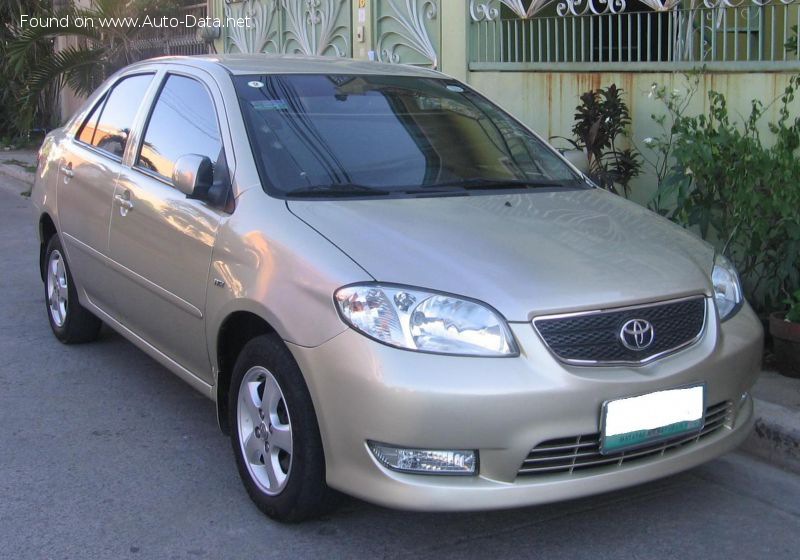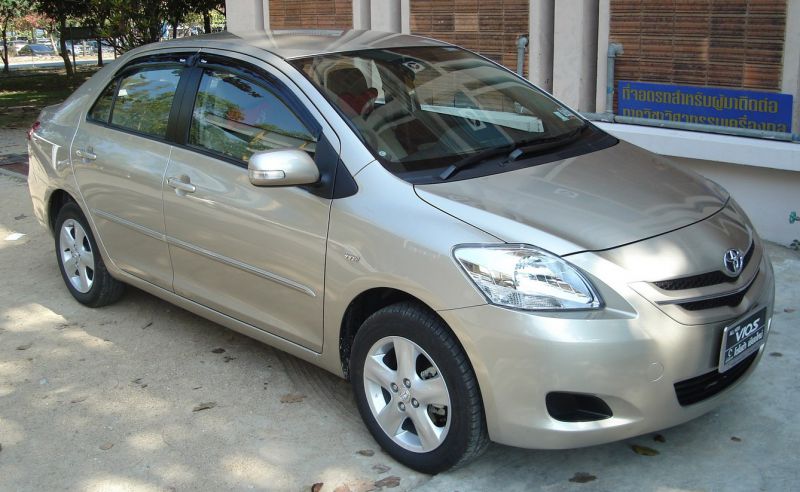
The Toyota Vios II 1.3 (87 Hp) Automatic, produced between 2007 and 2013, represents the second generation of Toyota’s subcompact sedan aimed primarily at the Asian market. While not officially sold in the United States, the Vios holds significant importance as a popular and affordable vehicle in countries like the Philippines, Thailand, and Indonesia. It served as a crucial entry point into vehicle ownership for many, offering reliable transportation and reasonable fuel efficiency. The Vios II built upon the success of the first generation, refining its design and improving its overall package to compete effectively in the burgeoning subcompact segment.
Toyota Vios II: A Regional Success Story
The Vios, in its various iterations, has consistently been a top-selling vehicle in Southeast Asia. The second generation, specifically, was designed with the needs of these markets in mind – prioritizing affordability, durability, and practicality. It often served as a replacement for older, less reliable vehicles, and became a staple for families and businesses alike. The Vios II’s success is a testament to Toyota’s understanding of emerging market demands and its ability to deliver a product that meets those needs effectively. It’s important to note that the Vios is often marketed under different names in certain regions, such as the Yaris Sedan in some Latin American countries.
Engine & Performance
The Toyota Vios II 1.3 Automatic is powered by a 1.3-liter inline four-cylinder gasoline engine. This engine produces 87 horsepower at 6000 rpm and 121 Nm (89.25 lb.-ft.) of torque at 4200 rpm. While not a performance-oriented vehicle, the engine provides adequate power for daily commuting and typical urban driving conditions. The engine features a naturally aspirated configuration and utilizes a multi-port fuel injection system. Power is delivered to the front wheels via a four-speed automatic transmission. This combination prioritizes fuel economy and ease of use over outright acceleration. The front-engine, transverse layout is a common configuration for front-wheel-drive vehicles, optimizing space utilization within the engine bay. The power-to-weight ratio of 67.1 horsepower per liter reflects the engine’s focus on efficiency rather than raw power.
Design & Features
The Vios II is a traditional four-door sedan with a relatively conservative design. Its styling was intended to appeal to a broad range of customers, prioritizing practicality and a clean aesthetic. The vehicle comfortably seats five passengers and offers a trunk capacity of 475 liters (16.77 cubic feet), providing ample space for luggage or cargo. Features were generally basic, reflecting the vehicle’s affordable price point. Standard equipment typically included air conditioning, power steering, and basic audio systems. Safety features, while improving over the first generation, were still relatively limited by modern standards. The Vios II’s suspension system consists of an independent McPherson strut setup at the front and a semi-independent coil spring arrangement at the rear, providing a comfortable ride quality for everyday use. The vehicle’s ride height (ground clearance) of 150 mm (5.91 inches) is suitable for navigating typical road conditions in its target markets.
Safety Considerations
Compared to modern vehicles, the Vios II offered a more basic level of safety equipment. While specific features varied depending on the trim level and market, standard safety features generally included seatbelts for all occupants. Higher trim levels might have included features like anti-lock brakes (ABS), but these were not universally standard. The vehicle’s body structure was designed to provide a degree of crash protection, but it did not incorporate the advanced safety technologies found in contemporary vehicles. It’s important to note that safety standards have evolved significantly since the Vios II was in production, and its safety performance should be evaluated accordingly.
Technical Specifications
| Brand | Toyota |
| Model | Vios |
| Generation | Vios II |
| Type (Engine) | 1.3 (87 Hp) Automatic |
| Start of production | 2007 |
| End of production | 2013 |
| Powertrain Architecture | Internal Combustion engine |
| Body type | Sedan |
| Seats | 5 |
| Doors | 4 |
| Fuel Type | Petrol (Gasoline) |
| Power | 87 Hp @ 6000 rpm |
| Power per litre | 67.1 Hp/l |
| Torque | 121 Nm @ 4200 rpm / 89.25 lb.-ft. @ 4200 rpm |
| Engine layout | Front, Transverse |
| Engine displacement | 1296 cm3 / 79.09 cu. in. |
| Number of cylinders | 4 |
| Engine configuration | Inline |
| Cylinder Bore | 72 mm / 2.83 in. |
| Piston Stroke | 79.6 mm / 3.13 in. |
| Compression ratio | 11:1 |
| Number of valves per cylinder | 4 |
| Fuel injection system | Multi-port manifold injection |
| Engine aspiration | Naturally aspirated engine |
| Max. weight | 1315 kg / 2899.08 lbs |
| Trunk (boot) space – minimum | 475 l / 16.77 cu. ft |
| Fuel tank capacity | 42 l / 11.1 US gal | 9.24 UK gal |
| Length | 4300 mm / 169.29 in. |
| Width | 1690 mm / 66.54 in. |
| Height | 1460 mm / 57.48 in. |
| Wheelbase | 2550 mm / 100.39 in. |
| Front track | 1480 mm / 58.27 in. |
| Rear (Back) track | 1470 mm / 57.87 in. |
| Ride height (ground clearance) | 150 mm / 5.91 in. |
| Drivetrain Architecture | The Internal combustion engine (ICE) drives the front wheels of the vehicle. |
| Drive wheel | Front wheel drive |
| Number of gears and type of gearbox | 4 gears, automatic transmission |
| Front suspension | Independent type McPherson |
| Rear suspension | Semi-independent, coil spring |
| Front brakes | Ventilated discs |
| Rear brakes | Drum |
| Tires size | 165/70 R14 |
| Wheel rims size | 14 |
In conclusion, the Toyota Vios II 1.3 Automatic was a significant vehicle in its target markets, offering a blend of affordability, reliability, and practicality. While not a groundbreaking vehicle in terms of technology or performance, it successfully fulfilled its role as a dependable and accessible mode of transportation for a large segment of the population. Its enduring popularity in Southeast Asia underscores Toyota’s ability to cater to the specific needs of emerging markets.