
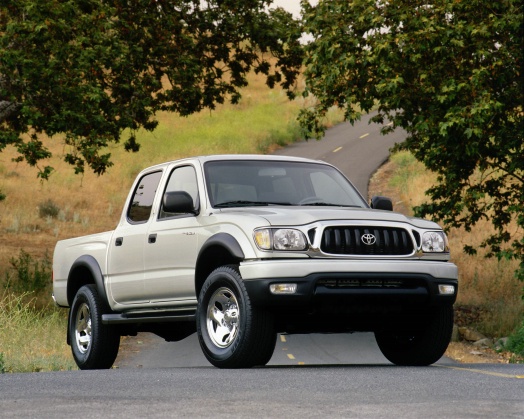
The Toyota Tacoma I Double Cab, specifically the facelifted version introduced in 2000, represents a significant iteration of Toyota’s popular compact pickup truck. Sold from 2000 to 2004, this generation Tacoma aimed to blend rugged capability with increased passenger comfort, particularly with the introduction of the Double Cab configuration. While not initially a major seller in the full-size truck dominated US market, the Tacoma carved out a niche for itself as a versatile vehicle appealing to both work and recreational users. The 2000 facelift brought subtle styling updates and refinements to the already well-regarded first-generation Tacoma, solidifying its position as a reliable and capable mid-size truck.
Toyota Tacoma I Double Cab (2000-2004): A Detailed Overview
The first-generation Toyota Tacoma, launched in 1995, was a direct replacement for the Hilux in many markets, including North America. The Double Cab variant, and particularly the 2000 facelift, addressed a growing demand for a pickup truck that could comfortably accommodate both passengers and cargo. This model offered a compelling alternative to larger, less fuel-efficient full-size trucks. The Tacoma’s reputation for durability and off-road prowess quickly established it as a favorite among enthusiasts and those requiring a dependable work vehicle.
Engine & Performance
The 2000 Toyota Tacoma I Double Cab facelift typically featured a 3.4-liter (3378 cm3 or 206.14 cu. in.) 5VZ-FE V6 engine. This naturally aspirated engine produced 190 horsepower at 4800 rpm and 298 Nm (219.79 lb.-ft.) of torque at 3600 rpm. The engine utilized a multi-port fuel injection system and a double overhead camshaft (DOHC) valvetrain, contributing to its relatively smooth operation and respectable power output for its size. Power per liter was rated at 56.2 Hp/l. The engine was longitudinally mounted in the front of the vehicle.
Power was delivered to all four wheels via a 4-speed automatic transmission and a 4×4 drivetrain. The Tacoma’s weight-to-power ratio of 8.8 kg/Hp (113 Hp/tonne) and weight-to-torque ratio of 5.6 kg/Nm (177.3 Nm/tonne) provided adequate performance for everyday driving and light-duty hauling. Fuel economy was rated at approximately 13.8 l/100 km (17 US mpg, 20.5 UK mpg) in urban conditions and 12.4 l/100 km (19 US mpg, 22.8 UK mpg) on the highway. The 70-liter (18.49 US gal, 15.4 UK gal) fuel tank offered a reasonable driving range.
Design & Features
The Toyota Tacoma I Double Cab is a four-door pickup truck designed to seat five passengers. Its body-on-frame construction provided a robust platform for both on-road and off-road driving. The 2000 facelift included minor cosmetic changes to the front fascia, headlights, and grille, giving the truck a slightly more modern appearance. The Double Cab configuration significantly increased rear passenger space compared to the standard cab models, making it a more practical choice for families or those frequently carrying passengers.
Safety features for the era included ventilated disc brakes in the front and drum brakes in the rear. Ride height (ground clearance) was a substantial 215 mm (8.46 in), enhancing its off-road capability. Standard tire sizes were 205/75 R15 and 235/55 R16, mounted on 15 or 16-inch wheel rims. While not equipped with the advanced safety technologies found in modern vehicles, the Tacoma offered a solid level of protection for its time. The truck’s overall dimensions were 5138 mm (202.28 in) in length, 1781 mm (70.12 in) in width, and 1715 mm (67.52 in) in height, with a wheelbase of 3096 mm (121.89 in).
Technical Specifications
| Brand | Toyota |
| Model | Tacoma |
| Generation | Tacoma I Double Cab (facelift 2000) |
| Type (Engine) | 3.4 V6 (190 Hp) 4WD Automatic |
| Start of production | 2000 |
| End of production | 2004 |
| Powertrain Architecture | Internal Combustion engine |
| Body type | Pick-up |
| Seats | 5 |
| Doors | 4 |
| Fuel consumption (urban) | 13.8 l/100 km (17 US mpg, 20.5 UK mpg) |
| Fuel consumption (extra urban) | 12.4 l/100 km (19 US mpg, 22.8 UK mpg) |
| Fuel Type | Petrol (Gasoline) |
| Weight-to-power ratio | 8.8 kg/Hp (113 Hp/tonne) |
| Weight-to-torque ratio | 5.6 kg/Nm (177.3 Nm/tonne) |
| Power | 190 Hp @ 4800 rpm |
| Power per litre | 56.2 Hp/l |
| Torque | 298 Nm @ 3600 rpm (219.79 lb.-ft. @ 3600 rpm) |
| Engine layout | Front, Longitudinal |
| Engine Model/Code | 5VZ-FE |
| Engine displacement | 3378 cm3 (206.14 cu. in.) |
| Number of cylinders | 6 |
| Engine configuration | V-engine |
| Cylinder Bore | 93.4 mm (3.68 in.) |
| Piston Stroke | 82.04 mm (3.23 in.) |
| Compression ratio | 9.6:1 |
| Number of valves per cylinder | 4 |
| Fuel injection system | Multi-port manifold injection |
| Engine aspiration | Naturally aspirated |
| Valvetrain | DOHC |
| Kerb Weight | 1681 kg (3705.97 lbs.) |
| Max. weight | 2315 kg (5103.7 lbs.) |
| Max load | 634 kg (1397.73 lbs.) |
| Fuel tank capacity | 70 l (18.49 US gal, 15.4 UK gal) |
| Length | 5138 mm (202.28 in.) |
| Width | 1781 mm (70.12 in.) |
| Height | 1715 mm (67.52 in.) |
| Wheelbase | 3096 mm (121.89 in.) |
| Front track | 1461 mm (57.52 in.) |
| Rear track | 1455 mm (57.28 in.) |
| Ride height (ground clearance) | 215 mm (8.46 in.) |
| Drive wheel | All wheel drive (4×4) |
| Number of gears | 4 |
| Gearbox type | Automatic transmission |
| Front brakes | Ventilated discs |
| Rear brakes | Drum |
| Tires size | 205/75 R15; 235/55 R16 |
| Wheel rims size | 15; 16 |

